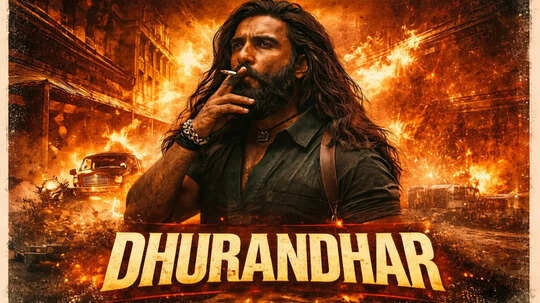
Aditya Dhar’s (Dhurandhar 2), headlined by Ranveer Singh has crossed Rs 587 crore nett in India alone within seven days of release.
The film is poised to break box office records and set its predecessor Dhurandhar, which released last year, a mile behind in terms of lifetime business. When did a film about a middle-class family, with middle-class values – something simple, relatable, attainable do business like that? Let that sink in. The success of films like is not just a box office story. The success is a symptom of a deeper transformation in Indian cinema. The rise of pan-India blockbusters, driven by spectacle, scale, and larger-than-life masculinity, has fundamentally altered what audience expect from a hero. In a new cinematic landscape that hero-worships these pan-India superstars, one cannot help but ask – is the age of the relatable, middle-class protagonist quietly fading away?
The Age of the Pan-India Superstar
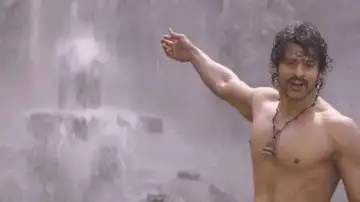
To really understand how this shift happened, one must begin by understanding how the phenomenon of the pan-India star started – which, arguably could be credited to Prabhas. Emerging from the massive success of Baahubali, Prabhas became the template for a new king of stardom -one which goes beyond language, geography and cultural specificity. His appeal lay not in relatability, but rather in scale – where mythic storytelling, larger-than-life action, and an almost superhero presence dominated the silver screen.
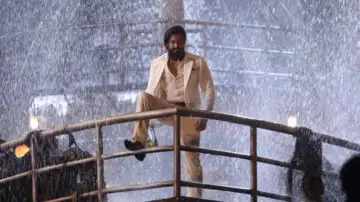
The model quickly turned into a gold-standard with films following suit and designing for nationwide consumption, rather that regional audiences. They started getting released in multiple languages simultaneously, with the idea being bigger stories, heroes, and returns. The success in the South region accelerated this trend, with South movies, in recent years, overtaking Bollywood in revenue, largely due to their mastery of the pan-India format. (1 and 2), Ram Charan and Jr NTR’s RRR (which even got an Oscar), Yash’s KGF (1 and 2) as well as Shah Rukh Khan’s Jawan are just a few examples.
Spectacle Over Substance?
In an attempt to decode the spectacle formula so prevalent in the film industry now, one has to understand that it thrives on scale – epic action sequences, stylised violence and heroic myth-making. The protagonist is not a man next door, but rather is an invincible force. The shift is telling, because it is a testament to the fact that it is not storytelling that has changed, but the emotional core of Indian cinema.
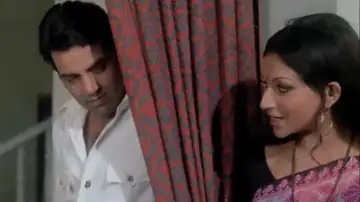
Films of Hrishikesh Mukherjee, were however, testament to a different kind of filmmaking, one that revolved around middle-class anxieties – from jobs, family, love and societal pressures. Gol Maal, Chupke Chupke, Bawarchi are all stellar examples of the genre.
Later on films like Khosla Ka Ghosla (2006), Piku (2015), Dum Laga Ke Haisha (2015) all excelled in showcasing the troubled-but-loving lives of the middle class. The trend started dying down around 2018, with no major films vying for a theatrical release save Vicky Kaushal and Sara Ali Khan’s Zara Hatke Zara Bachke in 2023. It seems, somewhere down the line, relatability got increasingly replaced by aspiration and thus the hero is not someone you identify with, but someone you idolise.
The Curious Case Of The Disappearing Middle-Class Hero
For years, Indian cinema has functioned as a mirror to the middle class. One may argue that Hindi films historically reflected the aspirations and attitudes of the country’s emerging middle classes. But that mirror is becoming distorted. In a postmodern world, blockbusters prioritise universality over specificity and in trying to appeal to a pan-India and global audience, strip away the nuances of class, region and everyday lived life. The result is a homogenised hero who belongs everywhere and nowhere.
Economics Driving the Change
One, however, has to acknowledge that the decline of the middle-class hero is not just a creative choice, but rather, an economic one. Pan-India films are expensive – requiring massive budgets, extensive marketing, and stars with nationwide pull. In such a high-risk environment, producers nowadays are perhaps less willing to gamble on small, character-driven stories. Moreover, the economics of exhibition has changed. Cinema-going itself has become less accessible. The middle-class itself does not regularly visit theatres today, with rising ticket prices being a key barrier.
When fewer people are going to theatres, filmmakers aim to maximise impact with event cinema – films that demand to be watched on the big screen. And in this competitive environment, the intimate, middle-class hero with his slice-of-life story struggles to compete in this environment.
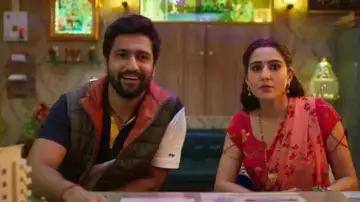
The 2023 Zara Hatke Zara Bachke with a modest budget of Rs 35 crore, had a wordwide gross of Rs 116 crore. Jawan, on the on the other hand, had an India gross of Rs 760 crore alone, with a overseas collection of Rs 400 crore. The numbers are telling.
An Evolved Star System
One has to factor in the evolution of the star system itself. Gone are the days when the story trumped the star. Today stars are brand in themselves and films are woven around that brand value. Even Zara Hatke Zara Bachke worked because Kaushal became a major star post the 2019 Aditya Dhar Uri: The Surgical Strike. With this evolved star system, their fees, entourages, and demands significantly inflate production costs, pushing filmmakers toward safer, formula-driven spectacles. And in this vicious cycle of economy, the middle-class hero, much like the middle-class in real life, becomes collateral damage.
The South Indian Influence On Cinema
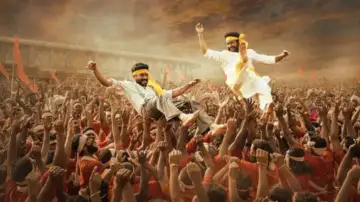
The rise of pan-India cinema is predominantly tied to the success of South India film industries. Be it Baahubali, RRR, KGF, or the more recent Hanu-Man, their films have struck a balance between rooted storytelling and universal themes, resonating with audiences across linguistic boundaries. However, barring exceptions, the trend leans toward heightened masculinity and spectacle, with he ‘violent hero’ archetype taking centre stage. Gone are the days of the simple man, their heroes are intense, brooding, and physically dominant.
Is the Middle-Class Hero Truly Dead? The OTT Space
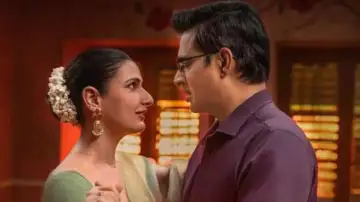
Well, the middle class hero is not entirely dead, but he is is certainly marginalised. He has not disappeared; rather he has migrated. Today, he is more likely to be found on streaming platforms rather than in theatres. OTT platforms have become the new home for smaller, more grounded stories. R Madhavan’s Aap Jaisa Koi on Netflix is a clear example of the middle class hero and his aspirations – be it in life, or love. Another compelling example of the popularity of the middle class on OTT would be he Sanya Malhotra starrer Pagglait. Though not a hero-dominated narrative, the film wonderfully explores middle-class values and lifestyle. This shift reflects a bifurcation of Indian cinema – one where theatrical cinema is spectacle-driven, star-led, pan-India blockbusters and digital or direct to OTT cinema is Intimate, character-driven, middle-class narratives. The middle-class hero is not dead, he has simply been pushed out of the mainstream theatrical space.
The Dhurandhar 2 Effect
Films like are the culmination of all these trends, designed as cinematic events. Their success reinforces the belief that this is the formula that works. But what happens when cinema stops reflecting the everyday lived life of millions of commoners? Will the audience still have an appetite for larger than life heroes? Are event cinema the norm or reflection of a turbulent reality prevalent across the world? Indian cinema – from its inception, has thrived on its ability to connect with audiences across classes. From the struggles of the working class to the dreams of the middle class, films have always been both escapism and reflection. And if that balance tilts too far toward escapism, cinema risks losing its emotional grounding. What happens when event cinema stops working?

The Road Ahead
The future of the middle-class hero depends on whether the industry can find a middle ground. It is not that there is no audience for such films. There is a growing recognition that emotional depth and relatability cannot be entirely abandoned. Take for example films like Gaurav Madan’s Barah By Barah that thrived in the independent circuits and festivals before finally getting a theatrical release in India. Or Sabar Bonda, a homosexual love story that was celebrated for its poignancy. The challenge is to integrate these elements into the larger-than-life framework of pan-India cinema. Because ultimately, scale alone cannot sustain cinema. Audiences may cheer for the invincible hero now, but it is the ones who feel real who are remembered.
One cannot deny the fact that the rise of pan-India stars and spectacle driven cinema helped revitalise and reshape Indian filmmaking. While it expanded the industry’s reach and ambition, it also sidelined a crucial element – the relatable, middle-class hero. Ranveer Singh’s Dhurandhar 2 is not the cause of this shift, but a rather a reflection of it, representing a cinema that prioritises scale over subtlety, universality over specificity, and aspiration over relatability.