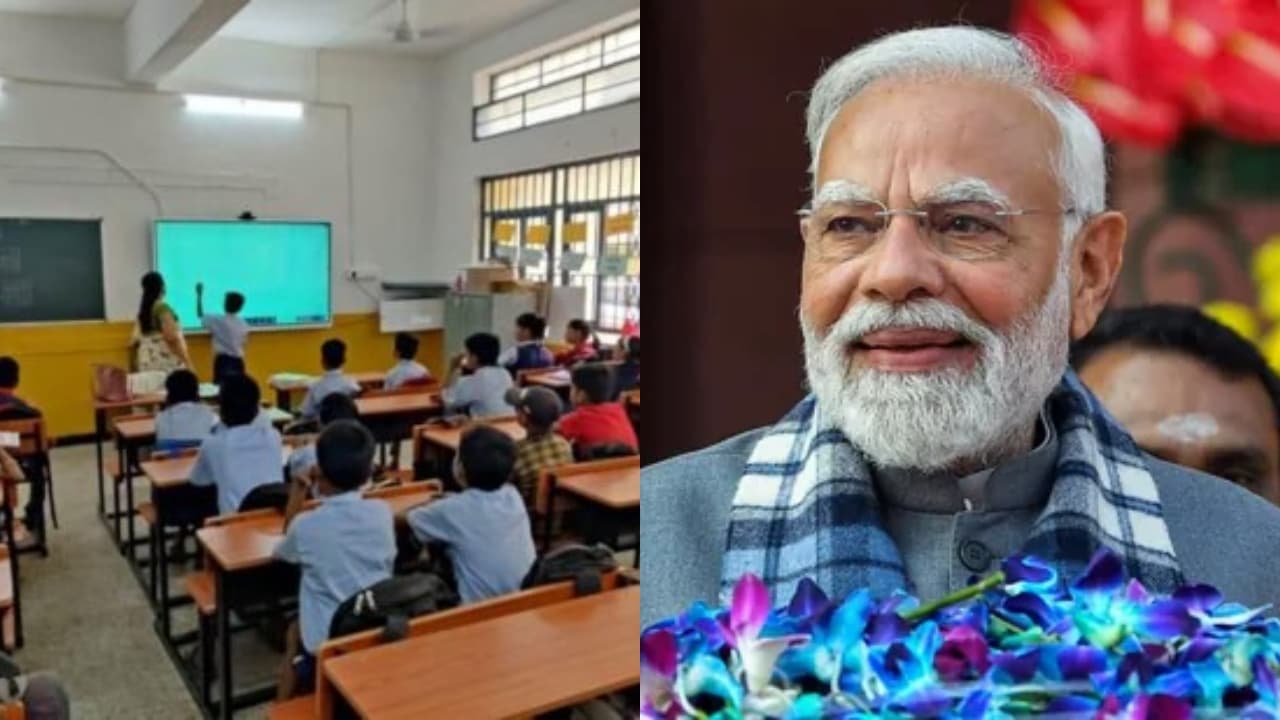
The Centre has released data showing a significant disparity in Samagra Shiksha fund allocation, with opposition-ruled states like Kerala, Tamil Nadu, and West Bengal being systematically deprived of funds.
New Delhi: The Centre has released details of fund allocation under the Samagra Shiksha scheme, exposing a significant disparity in disbursements to states based on their participation in the Pradhan Mantri Schools for Rising India (PM SHRI) initiative. The data reveals that opposition-ruled states have been systematically deprived of education funding as leverage to compel adoption of the centrally-sponsored PM SHRI program.
Kerala’s Case Study
Kerala presents the starkest example of financial withholding. Although the Centre announced an allocation of Rs 1,572.75 crore under Samagra Shiksha from 2022 to the present, the state has received only Rs 412.23 crore-a gap of approximately Rs 1,160 crore.
The pattern of disbursement reveals deliberate conditionality. In the current financial year, Rs 92.41 crore was sanctioned and subsequently released, but only after Kerala’s state government agreed to sign a memorandum of understanding with respect to the PM SHRI scheme. Prior to this agreement, the Centre had explicitly withheld funds, citing the state’s refusal to participate in the initiative as justification.
Broader Pattern Across Opposition-Ruled Territories
Kerala’s experience mirrors those of other states governed by opposition parties. Tamil Nadu faced complete fund suspension throughout the 2024-25 financial year. However, following a court intervention, the Centre released Rs 450.60 crore to the state this year-a move suggesting judicial pressure forced reconsideration of the withholding policy.
West Bengal has been entirely excluded from fund disbursements, receiving no allocation either in the previous financial year or the current one. The state’s non-participation in PM SHRI has resulted in a complete freeze of Samagra Shiksha payments.
By contrast, Congress-ruled states and other jurisdictions aligned with the Centre’s policy priorities receive education funding allocations in the thousands of crores annually, establishing a two-tiered system of fund distribution contingent upon scheme participation rather than educational need or demographic factors.
Understanding the PM SHRI Scheme
The PM SHRI initiative-Pradhan Mantri Schools for Rising India-operates as a centrally sponsored program designed to elevate educational infrastructure and learning outcomes across India. The scheme targets selective schools in each administrative block for comprehensive transformation into centers of educational excellence.
The mechanism involves systematic upgrades to participating institutions. Schools enrolled in PM SHRI receive equipping with smart classrooms, contemporary educational technologies, specialized laboratories, modern libraries, and enhanced sports facilities. Each selected school receives a financial allocation of up to one crore rupees distributed across a five-year implementation period, with the Centre contributing 60 percent of costs and state governments bearing 40 percent.
Nationally, 14,500 schools operated by central government agencies, state administrations, and local bodies have been identified for comprehensive upgrading under the scheme. In Kerala specifically, approximately 300 schools-two from each block panchayat-are eligible for inclusion and potential benefits.
Political Opposition and Allegations
Left-aligned political movements and state governments have mounted sustained opposition to PM SHRI since its inception, contending that the scheme incorporates communal dimensions and commercial imperatives into educational policy. Critics argue that the centrally-mandated education curriculum required under PM SHRI schools undermines state autonomy in pedagogical matters and represents an encroachment on federalist principles.
The resistance reflects broader concerns about educational governance, curriculum determination, and the balance between central mandate and state discretion in public education policy.
Fund Withholding as Enforcement Mechanism
The Centre’s approach to non-compliant states began in earnest last year. By systematically suspending Samagra Shiksha disbursements to states that declined PM SHRI participation, the Centre created a de facto coercive mechanism-states must accept the PM SHRI framework to access education funding that had previously been allocated without such conditions.
This strategy has created a fiscal crisis for opposition-ruled territories, simultaneously depriving students and schools in those states of infrastructure investments while incentivizing state compliance through financial pressure. The approach transforms education funding into a lever of political leverage rather than a needs-based allocation system.
The Tamil Nadu court order-which compelled fund release despite the state’s non-participation in PM SHRI-suggests judicial scrutiny of the Centre’s withholding practice may eventually constrain this enforcement mechanism. However, states like West Bengal remain without redress, continuing to operate under complete fund suspension.