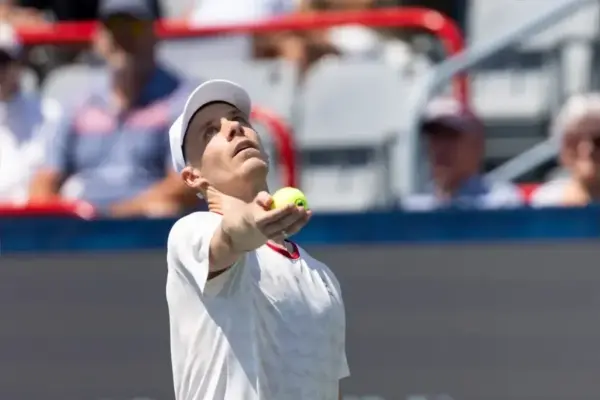
Denis Shapovalov’s 2026 campaign has taken a dramatic hit as the Canadian was forced to retire from his first-round match against Zachary Svajda at the Montreal Masters 1000, citing a persistent ankle injury that has plagued him since the Los Cabos final.
The 27-year-old acknowledged the severity of his physical struggles in a press conference, revealing the toll the injury has taken on his entire body and his frustration at being unable to compete on home soil.
“I’ve been carrying this ankle injury since the Los Cabos final,” Shapovalov admitted. “It feels like I either twisted it badly or hurt it during that match. The pain has been intense in the days following, and traveling hasn’t helped. Playing in Canada, I wanted to give everything for my fans, but unfortunately, I couldn’t finish the match. I began to feel the repercussions elsewhere too-muscle tension, discomfort in my hamstrings, quads, and even my knee. All of this came from compensating for the ankle pain.” Shapovalov’s candid reflection underscored the physical cost of pushing through injury: “Probably, I shouldn’t have played in Montreal. It’s frustrating, but now I have to recover and hope to be ready for Cincinnati.”
Shapovalov’s woes are not isolated but part of a troubling pattern that has marred his season. After gaining momentum at Indian Wells, his form plummeted following Miami, with injuries disrupting his rhythm despite moments of promise, such as during the Monaco week. “It’s been one thing after another, which is incredibly frustrating. Even at Wimbledon, I played with a fractured rib, and here, I competed with a fully inflamed ankle. I keep fighting to stay at the level of these top players,” he explained. The Canadian highlighted his resilience, noting a strong performance at Los Cabos just the week before, but stressed the urgent need for rest: “The key for me is finding time to recover and return in good shape.”
Beyond his physical troubles, Shapovalov did not hold back criticism of the ATP leadership for a grueling calendar that leaves little room for recuperation. “The current tour is really unforgiving,” he said bluntly. “There are very few weeks where you can stop, rest, and truly recover. It’s tough. We have to keep going, but maybe I’ll have to make harder decisions and prioritize my body more. Jack Draper has had to do this recently, and maybe I’ll need to as well. When I’m healthy and playing consistently, I can perform at a very high level. That has to be my focus.”
Denis Shapovalov’s admission paints a stark picture of the physical and mental demands facing elite tennis players and raises pressing questions about the sustainability of the current ATP schedule. His resolve to recover and return remains firm, but the Canadian’s candid remarks highlight the urgent need for balance between competition and health.