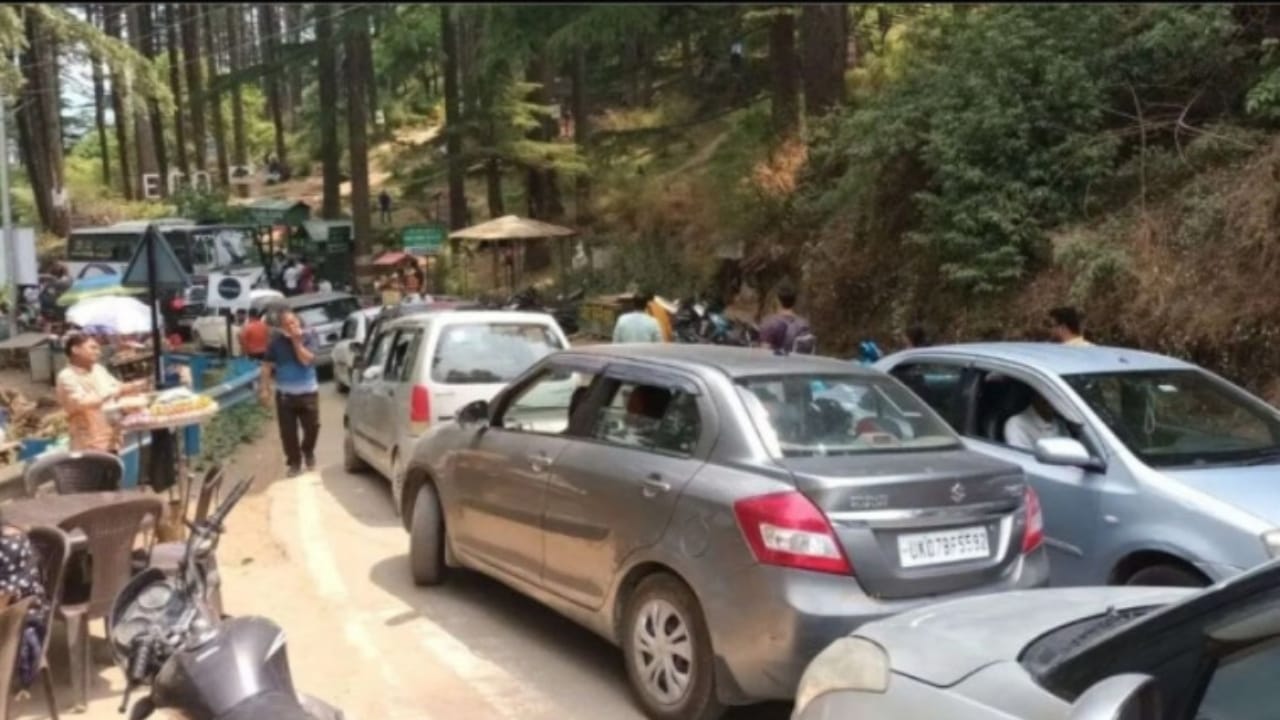
Dehradun: The capital city of Uttarakhand is struggling with severe traffic congestion that has now become uncontrollable. With vehicle numbers rising rapidly, the pressure on roads and junctions has exceeded their design capacity by nearly six times.
The opening of the Delhi‑Dehradun Expressway, while reducing travel time, has added to the challenge by increasing the inflow of vehicles into the city.
The only solution to the traffic mess on the Dehradun side of the Expressway is to make a Mega Parking in Ganeshpur with 5000 cars and provide facilities for tourists & travellers. The tourist or local should not be made to rot with the promise of 2.5 hours on the Delhi Dehradun… pic.twitter.com/nv3lzY20Sl
— Anoop Nautiyal (@Anoopnautiyal1) May 1, 2026
Fuel wastage rising
Transport experts warn that traffic jams are not only wasting valuable time but also causing massive fuel wastage. Studies show that a typical car burns 0.6 to 1 litre of fuel per hour when idling. SUVs and heavy vehicles consume even more, while two‑wheelers use 0.15 to 0.3 litres per hour.
If a vehicle is stuck in traffic for 30 minutes daily, it consumes about 0.4 litres of fuel unnecessarily. This translates into an additional consumption of up to 40 percent compared to normal driving conditions.
60,000 litres wasted daily
Calculations reveal the scale of the problem. With around five lakh vehicles moving in Dehradun every day, even a 10‑minute traffic jam results in huge losses. The total jam hours amount to over 83,000 daily. Assuming average fuel consumption of 0.7 litres per vehicle, nearly 58,000 to 60,000 litres of fuel are wasted every single day.
This wastage is alarming at a time when global fuel prices are rising due to international crises. Experts say the situation is unsustainable and requires urgent intervention.
Impact on daily life
For residents, the jams mean longer travel times, higher expenses, and increased pollution. Commuters report spending hours stuck at major junctions, while delivery services and emergency vehicles face delays. The frustration is visible among drivers and pedestrians alike, as congestion has become a daily ordeal.
Need for solutions
Locals and transport experts argue that better traffic management is essential. Suggestions include stricter regulation of vehicle entry, improved public transport, and smart traffic systems to ease congestion. Without systematic planning, the city risks worsening fuel wastage and environmental damage.
The Delhi‑Dehradun Expressway, though a major infrastructure achievement, has inadvertently added to the city’s burden by channeling more vehicles into already crowded roads. Authorities are being urged to balance development with sustainable traffic solutions.