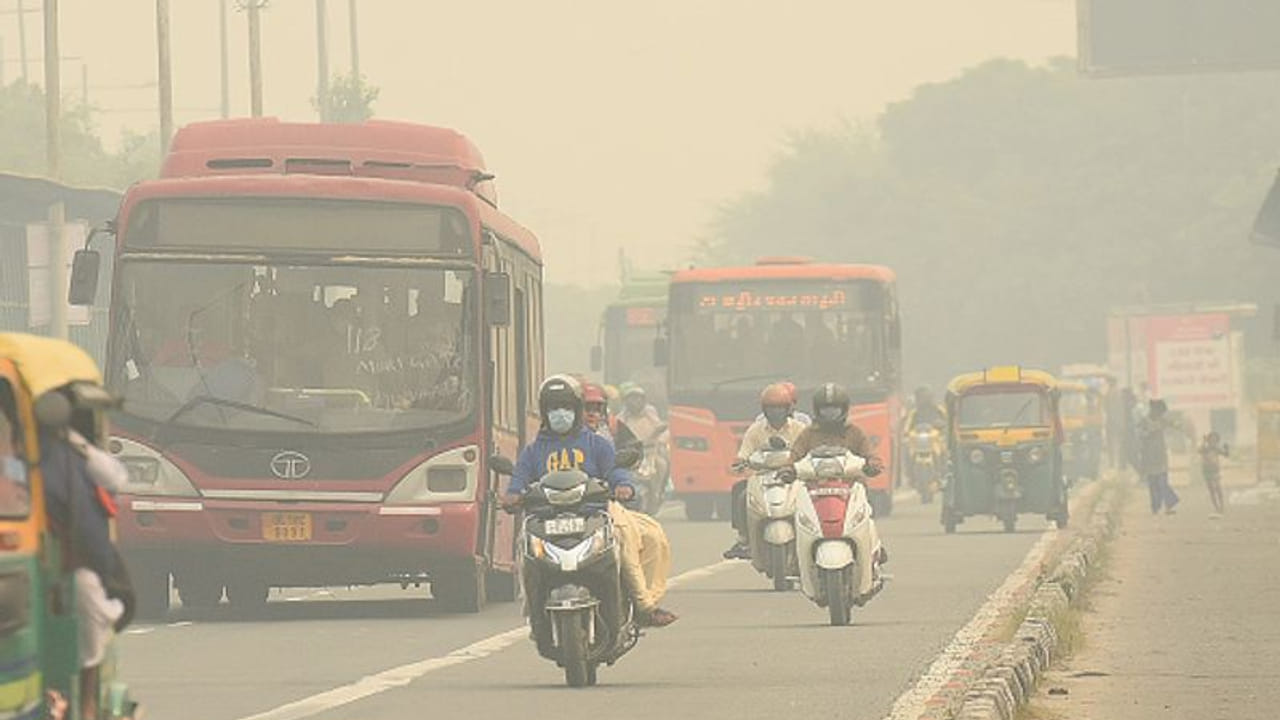
The weather conditions expected over Delhi in the coming days may make it harder for pollutants to disperse. The Air Quality Early Warning System has warned that unfavourable meteorological conditions could lead to a further build-up of pollution.
Two important measures used to understand how pollution spreads are mixing depth and ventilation index.
Mixing depth refers to the height up to which pollutants can rise and mix in the atmosphere. When this height is low, polluted air remains trapped closer to the ground instead of spreading upwards.
Delhi’s predicted maximum mixing depth was around 1,100 metres on Thursday. It is expected to fall to 1,000 metres on Friday before rising to 1,400 metres on Saturday and 1,500 metres on Sunday.
The ventilation index measures the atmosphere’s ability to disperse pollutants. A lower reading means that polluted air is less likely to move away from an area.
The index was forecast at 5,000 square metres per second on Thursday and is expected to drop sharply to 1,000 square metres per second on Friday. It may improve to 2,800 on Saturday and 3,100 on Sunday.
According to the Early Warning System, a ventilation index below 6,000 square metres per second, along with an average wind speed below 10 kilometres per hour, creates unfavourable conditions for pollution dispersal.
These conditions could allow pollutants to remain close to the ground, adding to the city’s already poor air quality.