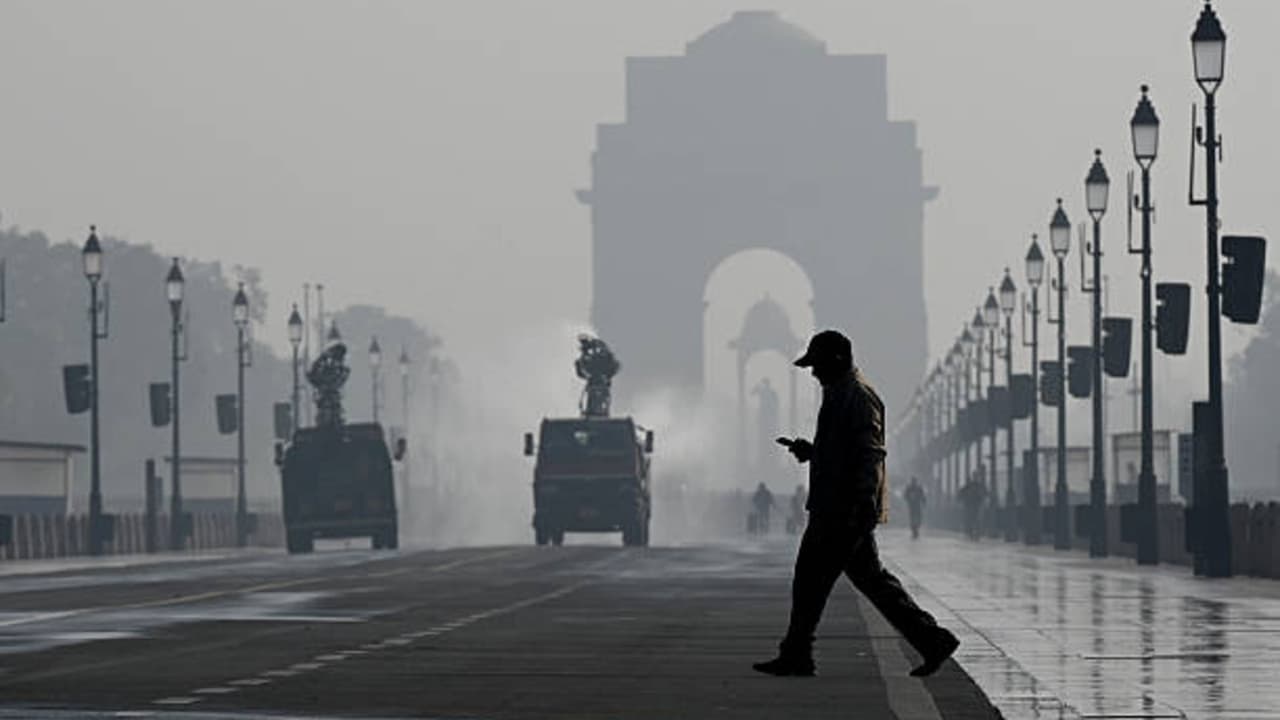
Delhi Air Pollution: After increasing pollution in Delhi, ₹ 5,000 fine has been imposed on burning garbage in the open and coal in tandoor has been banned. But will these strict measures be able to improve the poisonous air of the capital or is this just the beginning of some bigger action?
New Delhi. The air in Delhi is continuously getting worse. Every day the AQI is swinging from ‘very poor’ to ‘poor’ category, but relief is nowhere in sight. In such a situation, the Delhi government has now taken the strictest steps. A fine of ₹5,000 will be imposed on those burning garbage in the open and the use of coal and burning wood in tandoors has been immediately banned in all hotels and restaurants in the city. Will these steps really clean Delhi’s air or is this just the beginning of some bigger action?
Has Delhi’s AQI reached dangerous levels?
The air quality index in Delhi has continuously remained in the ‘very poor’ category for the last few weeks. There was a slight decline on Tuesday and AQI was recorded at 291, which falls in the ‘poor’ category. AQI also remained between 260 and 310 in major areas of Delhi like Bawana, Alipore, Jahangirpuri, Burari Crossing, Punjabi Bagh and Anand Vihar. This level has a direct impact on people’s health if it remains for a long time.
Is open burning of garbage the biggest pollution factor?
Chief Minister Rekha Gupta clearly said that burning garbage in the open will not be tolerated at all in Delhi. Instructions have been given to the MCD and the district administration to impose a direct fine of ₹ 5,000 on anyone caught burning garbage. According to the government, people often burn garbage, leaves or wood during the cold season, due to which air pollution spreads rapidly at the local level.
Scroll to load tweet…
Why was the use of coal in tandoor banned in Delhi?
Delhi Pollution Control Committee (DPCC) said that cooking with coal in hotels and restaurants contributes a lot to pollution. An order has been issued under Section 31(A) of the Air (Prevention and Control of Pollution) Act, 1981 that all tandoors which use coal or firewood should be closed immediately. This step is part of Stage-I action of GRAP (Graded Response Action Plan).
Will coal ban clean Delhi’s air?
Coal smoke produces heavy particulate matter (PM 2.5). Its effect is immediate and the local AQI falls rapidly. The government claims that this step will reduce the toxic layer in the air, but experts say that the solution will be found only if strict action is also taken on vehicle smoke, construction dust and industrial emissions.
What further steps can be taken?
Stages II and III of GRAP may also be implemented in Delhi further, which include halting construction work, shutting down diesel generators and more stringent traffic controls. The government has indicated that if AQI does not improve then major decisions can be taken.