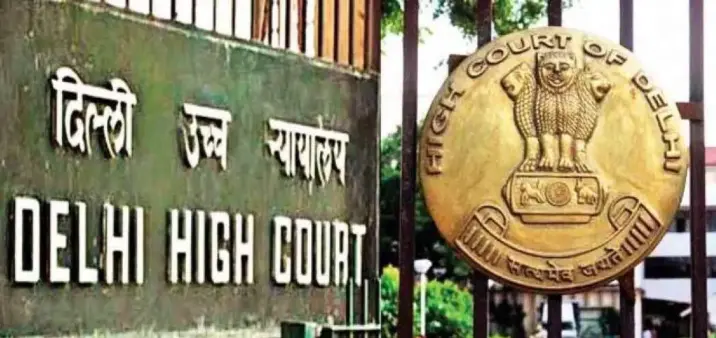
In a significant development, the Delhi High Court has issued a notice to the Delhi Police regarding Umar Khalid’s request for regular bail in connection with the 2020 northeast Delhi riots case, which is being viewed as part of a larger conspiracy.
This notice was announced on Friday.
A Division Bench, comprising Justices Prathiba M. Singh and Vikas Mahajan, has also acknowledged Khalid’s plea for interim bail and scheduled a further hearing for August 27, which will include the regular bail application of his co-accused, Sharjeel Imam.
Khalid is contesting the Karkardooma Court’s decision that denied him regular bail in a case filed under the Unlawful Activities (Prevention) Act (UAPA) and other legal provisions.
During the court session, senior advocate Trideep Pais, representing Khalid, argued that in addition to challenging the trial court’s refusal of regular bail, Khalid is seeking interim bail based on the Supreme Court’s referral of a significant question to a larger Bench regarding bail in UAPA cases, particularly in instances of prolonged detention and trial delays.
Pais emphasized that Khalid should be granted interim bail while awaiting the larger Bench’s decision.
Earlier this month, Additional Sessions Judge Sameer Bajpai from the Karkardooma Court rejected the regular bail requests from both Khalid and Imam, stating that the trial court was obligated to adhere to the Supreme Court’s January 5 ruling, which had denied them bail, rendering their new applications inadmissible.
The trial court clarified that the Supreme Court had indicated that the two accused could only renew their bail requests after the examination of protected witnesses relied upon by the prosecution or one year after the January 5 order, whichever comes first.
“The Court has no choice but to comply with the Supreme Court’s judgment dated January 5, 2026, which dismissed the petitions of both applicants,” the trial court remarked.
It further stated that, in light of the Supreme Court’s directives, it could not consider the new bail applications or provide relief to the applicants.
During the trial court proceedings, the defense argued that circumstances had changed since the Supreme Court’s January 5 ruling. They referenced a subsequent order from the apex court that granted six months of interim bail to co-accused Tasleem Ahmed and Khalid Saifi, while also referring the issue of prolonged detention and trial delays to a larger Bench.
The prosecution opposed the bail requests, asserting that no significant changes in circumstances warranted a reevaluation of the matter and that the Supreme Court had already dismissed the bail applications of both Khalid and Imam.
This case pertains to the alleged broader conspiracy behind the communal unrest that erupted in northeast Delhi in February 2020.
Khalid and Imam are among several individuals charged under the UAPA and other legal statutes.
Earlier this year, the Supreme Court rejected the bail applications of Khalid and Imam, stating that the evidence presented by the prosecution indicated prima facie grounds that invoked the statutory restrictions on bail under Section 43D(5) of the UAPA, while granting bail to five other co-accused individuals.
Recently, the Supreme Court granted six months of interim bail to co-accused Tasleem Ahmed and Khalid Saifi, while referring the matter of prolonged detention and trial delays to a larger Bench to determine if such factors could justify bail despite the limitations imposed by Section 43D(5) of the UAPA.