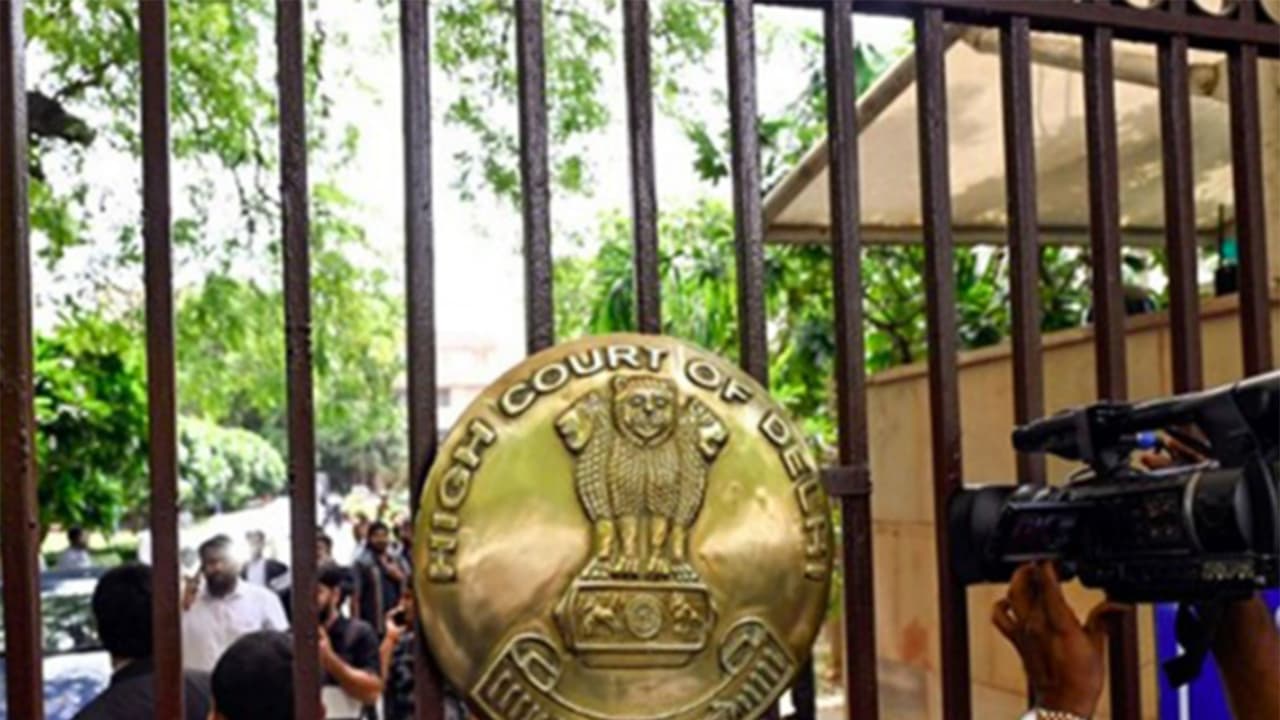
The Delhi High Court issued notice on a plea challenging a ban on protests and public meetings at Delhi University. It has sought responses from DU and Delhi Police on the restrictions, which petitioners call an infringement of fundamental rights.
The Delhi High Court on Thursday issued notice on a petition challenging orders that prohibit public meetings and protests within the Delhi University campus. The court has sought responses from Delhi University, Delhi Police, and concerned colleges regarding the restrictions imposed earlier this year.
The matter was heard by a division bench comprising Chief Justice Devendra Kumar Upadhyay and Justice Tejas Karia. The petition challenges a February 17 order issued by the University’s proctor, which imposed a one-month prohibition on public meetings, rallies, demonstrations, processions, and protests on the campus.
Petitioners Challenge Restrictions
During the hearing, the court was also informed that the Civil Lines police subdivision had imposed prohibitory orders under Section 144 of the Criminal Procedure Code, which have reportedly been extended until April. The petitioners have sought the court’s intervention to declare the University’s order unconstitutional, arguing that it infringes the fundamental rights of students under Article 19(1)(a), 19(1)(b), and 19(1)(d) of the Constitution, which guarantee freedom of speech, peaceful assembly, and movement.
It was also submitted that, following the University’s order, Kirori Mal College and Dayal Singh College had issued similar directives, which have also been challenged in the petitions.
University and Police Defend Orders
During the proceedings, counsel representing Delhi University informed the court that Kirori Mal College falls within the Civil Lines police jurisdiction where the Section 144 order is in force, whereas Dayal Singh College does not come under that subdivision. Counsel for the petitioners argued that the restrictions were affecting normal student activities on campus. It was submitted that the order banning public meetings was being interpreted in a manner that prevented students from even gathering in small groups around tea or food stalls. The petitioners maintained that peaceful protests and assemblies should not be prohibited.
On the other hand, counsel for Delhi Police informed the court that the prohibitory order had been issued based on intelligence inputs suggesting the possibility of clashes between two groups of students. The police also referred to an earlier incident where a police station was allegedly surrounded by protesters, stating that the measure was taken to prevent any similar law and order situation.
High Court’s Observations
The bench questioned the necessity of the University issuing a separate order when a Section 144 order was already in force. The court observed that the language of the University’s directive appeared broad enough to include even peaceful gatherings and protests. The judges orally remarked that if the Section 144 order was already in place, enforcement action could have been taken by the police in case of any violation.
After hearing the parties briefly, the High Court issued notice to the respondents and directed them to file their replies. The bench also clarified that no further time would be granted for filing responses, considering the nature of the issue involved.
Before concluding the hearing, the court also observed that certain legal conditions must be satisfied before passing prohibitory orders under Section 163 of the Bharatiya Nagarik Suraksha Sanhita (BNSS), which is similar in language and scope to Section 144 of the CrPC. The bench noted that while individual liberties cannot be misused, the court was examining the matter given that it involves the protection of fundamental rights under Article 19 of the Constitution. The case has been listed for further hearing on March 25. (ANI)
(Except for the headline, this story has not been edited by Asianet Newsable English staff and is published from a syndicated feed.)