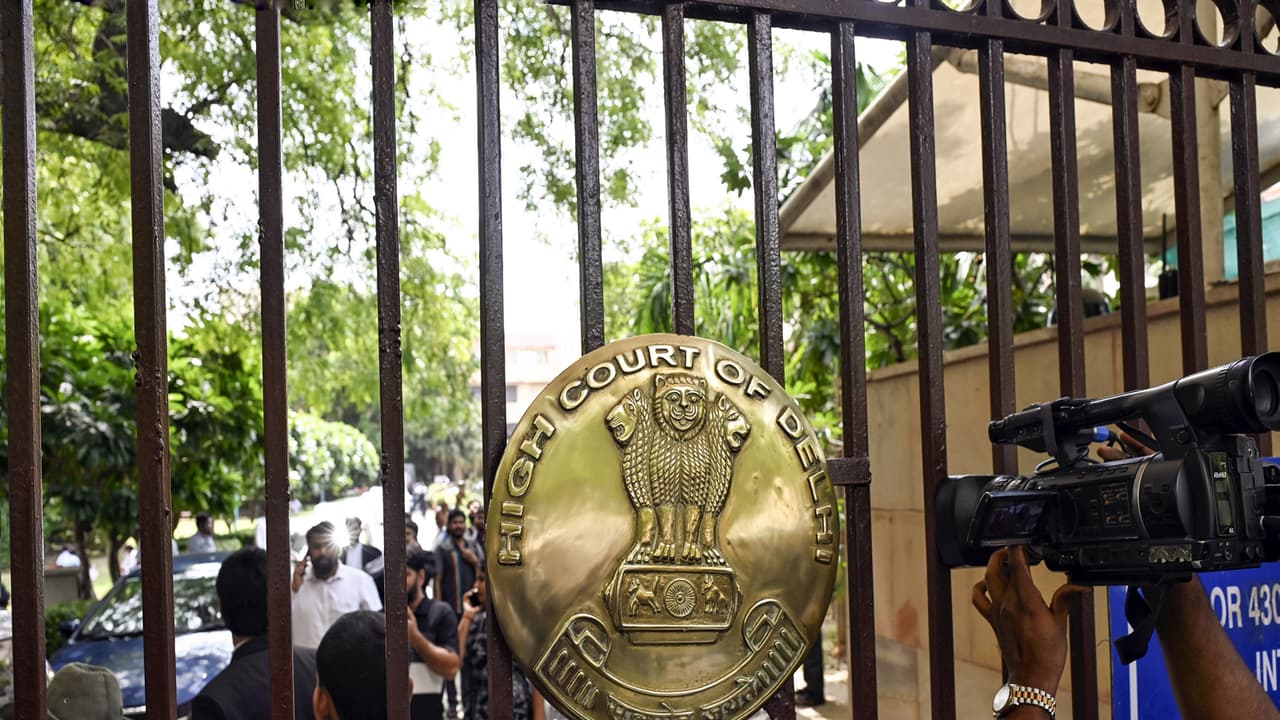
The Delhi High Court dismissed a petition challenging AAP leader Manish Sisodia’s 2020 election win, citing a complete lack of material facts. The court rejected allegations of illegal campaigning and suppressing criminal records as vague and baseless.
The Delhi High Court on Saturday dismissed an election petition seeking to set aside the 2020 Assembly election victory of Aam Aadmi Party leader Manish Sisodia from the Patparganj constituency, holding that the plea suffered from a complete lack of material facts and failed to disclose any legally sustainable cause of action.
Petition Dismissed for Lack of Material Facts
In a detailed judgment pronounced on January 17, Justice Jasmeet Singh allowed the respondent’s application for rejection of the petition at the threshold under Order VII Rule 11 of the Code of Civil Procedure, observing that interference with an electoral mandate is permissible only in exceptional circumstances and strictly in accordance with the Representation of the People Act, 1951.
The election petition was filed by Pratap Chandra, a defeated candidate who secured 95 votes in the 2020 Delhi Assembly elections, alleging large-scale violations of Section 126 of the Representation of the People Act during the “silence period” and suppression of criminal antecedents by Sisodia in his nomination affidavit.
Allegations Found Vague and Unsustainable
Rejecting these allegations, the Court held that the petition merely contained “general and vague averments” without pleading the essential material facts required under Section 83 of the Act. The Court underlined that to challenge an election under Section 100(1)(d), a petitioner must specifically plead and demonstrate how the alleged illegality “materially affected” the election result–something entirely absent in the present case.
On Illegal Campaigning
On the allegation of illegal campaigning, the Court noted that the photographs relied upon by the petitioner showed only generic party hoardings displaying the party symbol and name, without any reference to Sisodia. There was no pleading that such displays were authorised, consented to, or even within the knowledge of the returned candidate, nor that they were put up within the prohibited 48-hour period in the concerned polling area. Static party hoardings, the Court held, cannot by themselves amount to “propagation” under Section 126.
On Concealment of FIR
The Court also rejected the claim that Sisodia had concealed the FIR in his Form 26 affidavit. It clarified that, under Section 33A of the Act, disclosure is mandatory only when charges have been framed or cognisance has been taken by a competent court. Mere registration of an FIR does not trigger the disclosure obligation. Significantly, the Court found that the petitioner had not even pleaded that Sisodia had knowledge of the FIR at the relevant time, an omission which was fatal to the allegation of deliberate concealment.
‘Not a Forum for Roving Inquiries’
Emphasising that an election petition is a serious statutory proceeding and not a forum for fishing or roving inquiries, the Court concluded that the pleadings failed to meet the mandatory requirements of law. Holding that the petition did not disclose any cause of action under the Representation of the People Act, the High Court dismissed the election petition in its entirety. (ANI)
(Except for the headline, this story has not been edited by Asianet Newsable English staff and is published from a syndicated feed.)