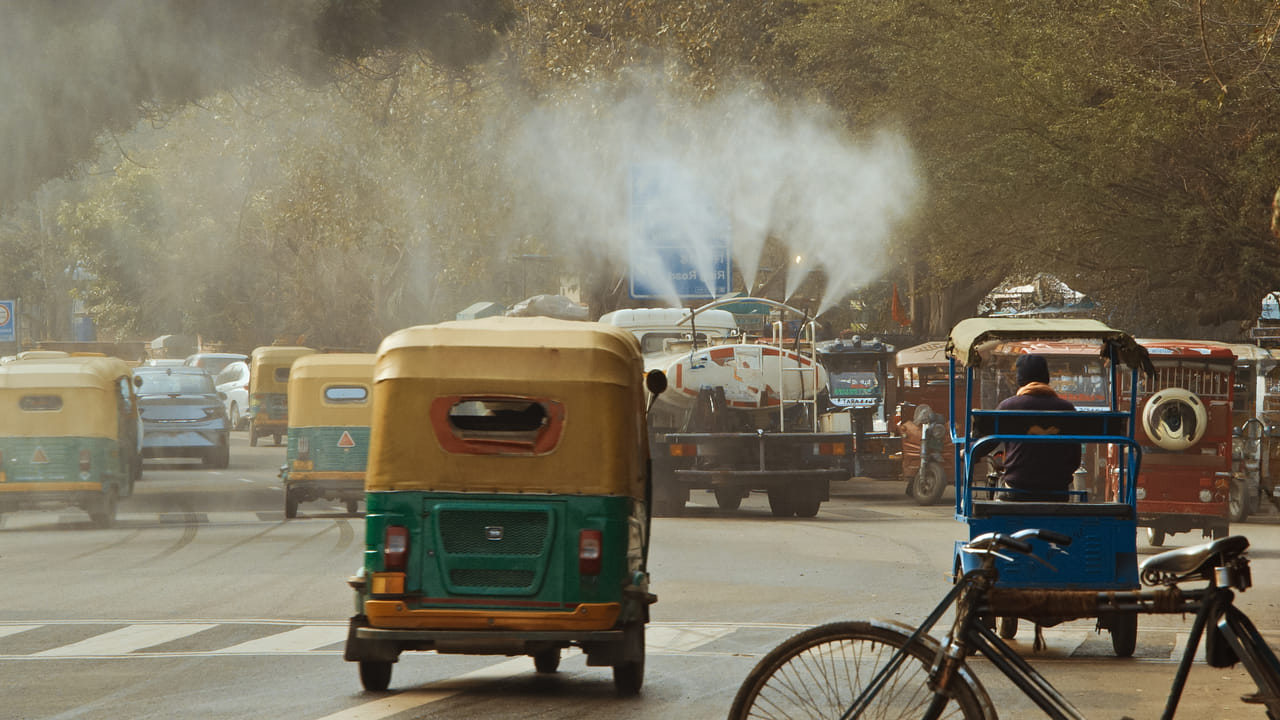
Fine particulate matter, known as PM2.5, remained the dominant pollutant in Delhi. These particles measure 2.5 micrometres or less in diameter. Because they are extremely small, they can travel deep into the lungs and even enter the bloodstream, posing health risks.
Estimates from the Air Quality Early Warning System showed that secondary organic aerosols were the largest contributor to the city’s real-time PM2.5 concentration on Tuesday, accounting for 32.2 per cent.
Biomass burning, which includes stubble burning and the use of solid fuels such as wood and dung cakes, contributed 18 per cent. Waste burning accounted for 15.7 per cent, while vehicular emissions contributed 14.5 per cent.
Other sources included secondary inorganic aerosols at 11.9 per cent, coal combustion at 2.9 per cent, firecrackers at 2.3 per cent, industrial sources at 1.7 per cent, and road dust and soil at 0.7 per cent.
The figures show that Delhi’s pollution comes from several sources, rather than a single activity. The relative contribution of these sources can also change with weather conditions.