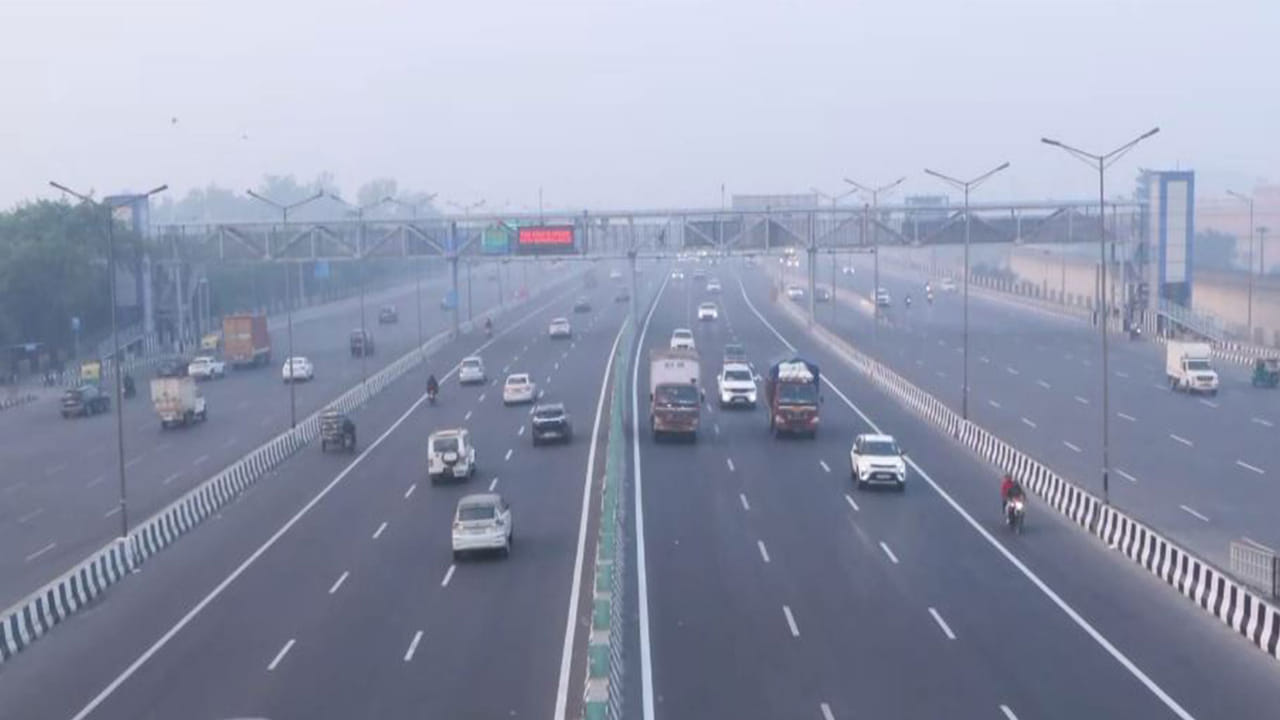
Delhi’s air quality improves as the AQI drops to 236. Despite reaching the ‘poor’ category, the government remains committed to pollution control through site inspections, road cleaning, and enforcement of environmental regulations.
New Delhi [India], November 22 (ANI): Delhi breathes a little easier, but not easy enough. Air Quality Index (AQI) is down to 236 from 265, yet the capital is still stuck in the “poor” zone on Sunday at 7 am, according to the Central Pollution Control Board (CPCB). The city registered an AQI of 265 in the 4 pm CPCB bulletin, based on a 24-hour average from 56 out of 59 stations.
According to the CPCB, the Chandini Chowk station recorded the worst air quality with an AQI of 304, falling into the ‘very poor’ category. Meanwhile, Anand Vihar (251), Ashok Vihar (244), Bawana (267), Narela (210), Okhla Phase 2 (220), Punjabi Bagh (298), Rohini (260), Sonia Vihar (223), and Patparganj (224) are all in the ‘poor’ category. However, several areas in the national capital recorded relatively better air quality, with Vasundhara Enclave registering an AQI of 198 in the ‘moderate’ category, followed by Mandir Marg at 199, Major Dhyan Chand Stadium at 146, Alipur at 178, and IGI Airport Terminal 3 at 200.
According to CPCB classification, an AQI between 0 and 50 is considered ‘good’, 51-100 ‘satisfactory’, 101-200 ‘moderate’, 201-300 ‘poor’, 301-400 ‘very poor’ and 401-500 ‘severe’. Earlier, Delhi Chief Minister Rekha Gupta on November 18 reviewed Delhi’s pollution-control measures at a high-level meeting held at the Delhi Pollution Control Committee’s (DPCC) Integrated Command and Control Centre (ICCC). According to the press release, the CM said that Delhi had seen some relief this November compared with the past decade but made it clear that the government would continue taking strict action against all sources of pollution.
During the meeting, Gupta asked all departments to work together and ensure that their efforts bring visible results on the ground. She specifically directed the Municipal Corporation of Delhi (MCD) and Public Works Department (PWD) to intensify cleaning of roads, footpaths and central verges, with a focus on removing accumulated dust and silt through mechanised sweeping, water sprinkling and road washing.
Officials informed the meeting that nodal officers from 13 districts conducted 41 inspections between November 2 and 17. MCD zonal deputy commissioners also carried out 134 inspections covering 301 locations between November 2 and 16. Of the 68,137 complaints received by various agencies, 61,507 have been resolved. The Chief Minister asked departments to clear the remaining complaints, particularly those related to potholes and unpaved roads, the release said.
The government has also increased inspections at construction and demolition sites. Between November 1 and 17, officials inspected 8,874 sites and found violations at 554 locations. Closure directions were issued to 112 sites, 462 show-cause notices were served and environmental compensation of over ₹2.65 crore was imposed. Gupta directed officials to ensure proper installation of green nets, barricades and windbreakers instead of treating dust-control measures as a formality, the release said.
The availability of road-cleaning equipment was also reviewed. Against the requirement of 171 mechanised road sweeping machines, 108 are currently available, while the MCD is deploying 70 additional machines. The civic body is also procuring picker machines with a capacity of 1,000 litres. Around 600 are expected to be available by December 2026, with the remaining machines scheduled for January 2027. Gupta said pollution control required consistent efforts from every department and could not be limited to meetings and official reports. She urged officials to remain active on the ground and appealed to citizens to contribute towards reducing pollution in the capital, the release said. (ANI)