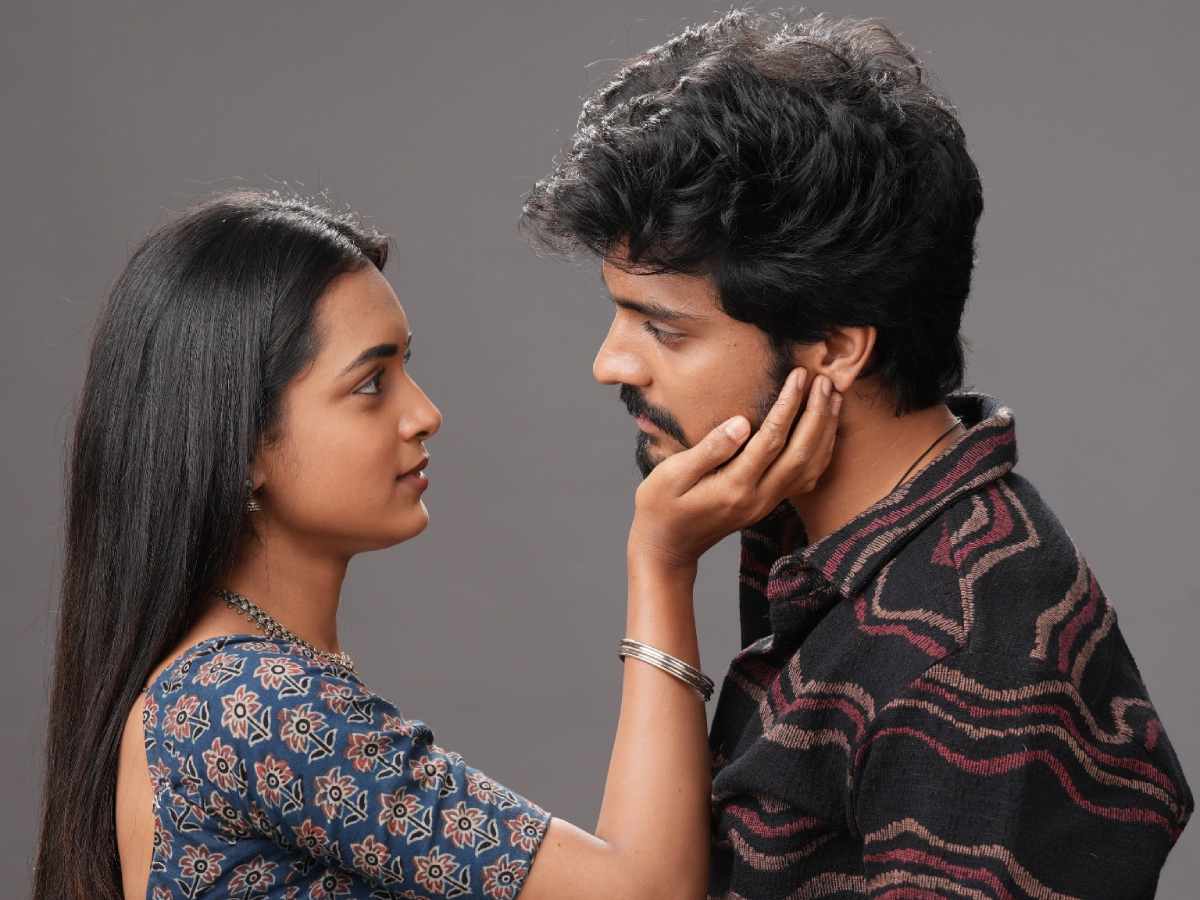
Munna (Harshith Reddy), the son of a lower middle-class family in Hyderabad, is a carefree youngster who spends his days roaming around with friends. One day, when his mother sends him to pay the electricity bill at a Mee Seva center, he reluctantly agrees. Irritated by the crowd and long queue, he vows never to return. But that resolution vanishes the moment he spots Amulya (Smeha Manimegalai), an employee at the center.
Mesmerized by her beauty, Munna begins finding excuses to visit the Mee Seva office every day. He even starts collecting bills from people in his locality just so that he can see her regularly. Inevitably, he proposes to her, but she rejects him and warns him to stay away.
Yet Munna refuses to give up. He keeps watching over her from a distance. When her superior harasses her, he thrashes him. When a group of local rowdies pass comments on her, he takes them on as well. Completely consumed by his feelings, he believes these acts will win her heart.
However, Ammu has a different perspective. She tells him that she earns a living through her job and supplements her income by teaching music at home. Pointing out how irresponsible he is, she tells him that if he truly loves her, he must first learn to stand on his own feet. She throws him a challenge: secure a government job like hers and then come back to her. Only then will she consider his proposal.
But can a young man who has not even completed his graduation land a government job, and that too within a short period? What happens next? More importantly, why does Ammu impose such a condition, and what secret is she hiding from him?
Analysis
Director Srikanth Sangishetti deserves credit for giving a fresh twist to what initially appears to be a routine love story. For a good portion of its running time, “Deewana” operates in the familiar territory of youthful dramas that Telugu cinema has served repeatedly over the years. The setting, characterization, and narrative style feel comfortably familiar.
The hero’s carefree lifestyle, street fights, drinking sessions, and one-sided love track seem straight out of many youth-centric entertainers. However, the film gradually reveals that there is more beneath the surface. The interval twist arrives like a jolt and completely alters the audience’s perception of the story. It is the interval block that distinguishes this from the crowd of similar love stories.
The second half is driven primarily by emotion. There are a few cinematic liberties and implausible moments, particularly involving the hero’s rapid progress in preparing for a job examination.
One of the more interesting aspects is that the hero and heroine hardly meet during the second half. There is not even a regular dream song between them. While the director employs some familiar commercial tropes elsewhere, he also breaks away from several romantic clichés.
Srikanth also weaves in several messages through the narrative: the importance of education, the need to look beyond physical attraction in love, and the value of becoming self-reliant, especially for youngsters from economically challenged backgrounds. These themes emerge organically and strengthen the emotional impact.
Harshith Reddy delivers an impressive performance as a directionless youngster who gradually transforms into a responsible individual. He convincingly portrays both shades of the character and is particularly effective in the emotional scenes. Smeha Manimegalai gets a substantial role and performs with confidence. Naresh and Jhansi are dependable as the parents and lend credibility to the family portions.
Music emerges as one of the film’s biggest strengths. The songs are catchy. However, the film does suffer from a slightly stretched runtime.
Bottom Line: “Deewana” is neither a completely conventional love story nor an entirely path-breaking one. What makes it click is the unexpected twist surrounding the heroine and the emotional journey that unfolds thereafter. Despite relying on a few familiar tropes, pacing issues, and some ideas that do not fully land, the film ultimately scores with its emotional payoff, making “Deewana” a neat watch.