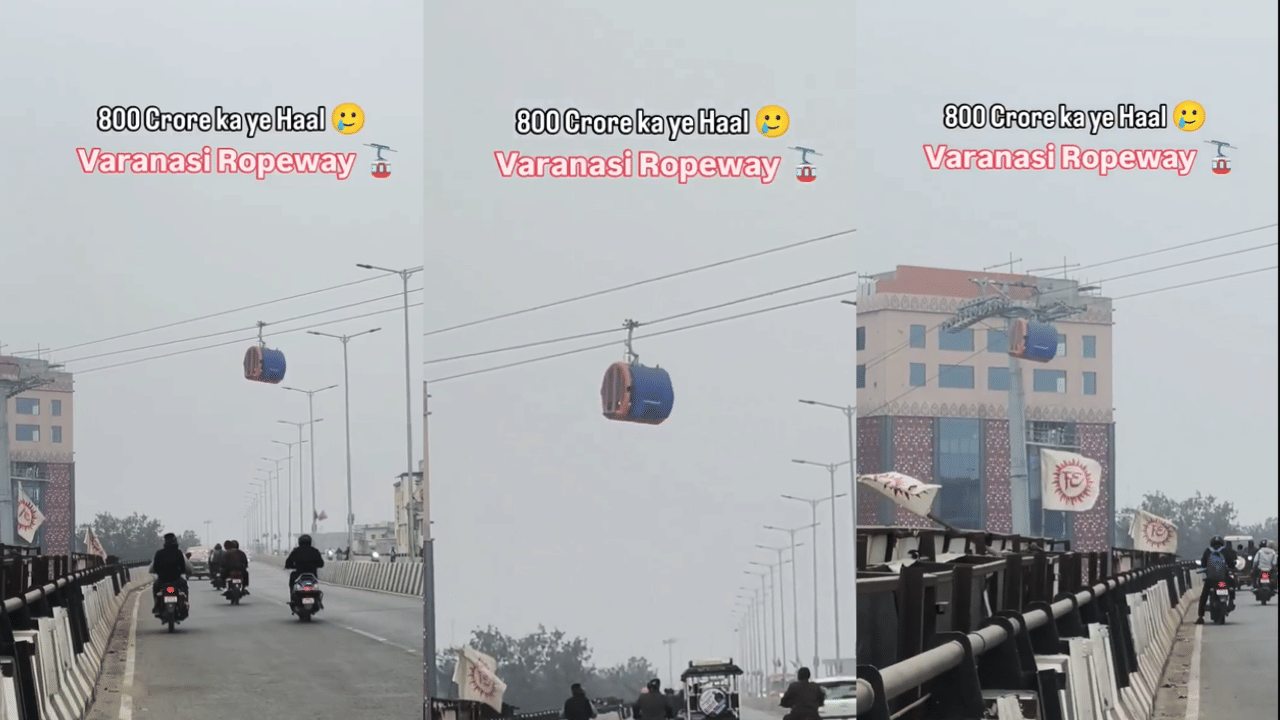
Varanasi: India’s first urban aerial cable car system, the Kashi Ropeway, has sparked debate on social media after a video showed its cabin swaying during trial runs in Varanasi.
The ropeway links Varanasi Cantonment railway station to Godowlia Chowk, close to the Kashi Vishwanath Temple. Once operational, it is expected to significantly reduce travel time for pilgrims and tourists, cutting the journey from nearly an hour to about 16 minutes.
A video shared on X by user Nitin (@nkk_123) showed the ropeway cabin moving noticeably due to strong winds along the 3.85-kilometre stretch. The visuals quickly drew attention online, with several users expressing concern over passenger safety. Some described the project as a “death trap”, questioning how comfortable or secure the ride would feel for commuters.
Kashi Ropeway trail run
This is the new ropeway made at the cost of Rs 815 crore in Banaras. Hawa ka jhonka is making it swivel so badly. Total distance of ropeway is 3.85kms and Imagine the condition of people travelling in it. You will be dying every minute out of fear. #Varanasi pic.twitter.com/6FqWwKF53A
— ηᎥ†Ꭵղ (@nkk_123) January 6, 2026
“This is the new ropeway made at the cost of Rs 815 crore in Banaras. Hawa ka jhonka is making it swivel so badly. Total distance of ropeway is 3.85kms and Imagine the condition of people travelling in it. You will be dying every minute out of fear,” Nitin tweeted.
The video has gone viral, garnering more than 156k views. One user said, “₹815 crore ka ropeway hai— safety feature: “bhagwan bharose.” Ticket pe likha hona chahiye: “Experience thrill, exit via moksha.”” Another wrote, “Direct connection with God.”
A third user added, “People can have Khatron ke Khiladi experience here.” Yet another asked, “Why do we even need a ropeway in the middle of a city?”
The Rs 815 crore project entered its trial phase in October 2025. Officials, however, have dismissed safety concerns, stating that the movement seen in the video is part of the ropeway’s design.
According to authorities, the cabins are engineered to rotate freely. This feature allows them to adjust to wind pressure rather than resist it, reducing structural stress. They added that the system meets European safety standards commonly followed by similar ropeways across the world.
No safety incidents have been reported during trials so far.