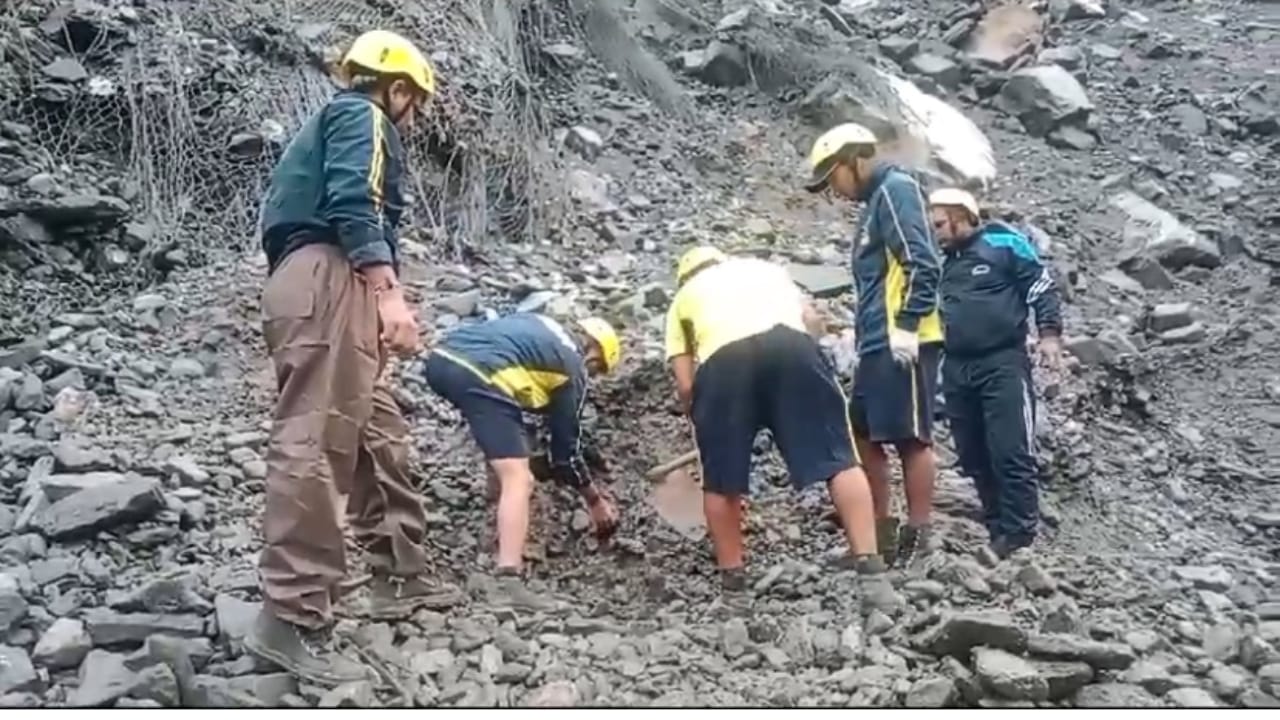
Dehradun: Uttarakhand, already known as a disaster-prone Himalayan state, is facing increasing threats from landslides. A recent study by the Wadia Institute of Himalayan Geology reveals that deadly landslides have risen sharply in the last 23 years, claiming 1,516 lives in 64 incidents.
Minor landslides usually happen after short rainfall spells of less than 24 hours, while major landslides occur when rain continues for 48 to 72 hours. Rising groundwater levels and changing rainfall patterns have further increased the risk.
Earthquakes and rainfall connection
Scientists found that most landslides occurred near the Main Central Thrust, a seismically active zone. Small earthquakes frequently shake the region, weakening rocks and loosening their joints. When heavy rainfall follows, water seeps into these cracks, causing ruptures.
Rise after 2000
The study shows that 67 percent of fatal landslides occurred after the year 2000. Similarly, 84 percent of extreme rainfall events were recorded during this period. The highest number of fatal landslides, 52 incidents, took place during the monsoon months of June to September. The year 2017 alone saw five deadly landslides.
Rock types and vulnerability
Scientists also studied the types of rocks where landslides occurred. The highest number of incidents were reported in gneiss rocks (19), followed by quartzite (14). Landslides were also recorded in limestone mountains. Researchers Yashpal Sundariyal, Anirudh Chauhan, and Sameeksha Kaushik contributed to the study, which was published in the Journal of Earth System Science.
Major landslides in history
Uttarakhand has witnessed several devastating landslides:
Malpa, Pithoragarh (1998): 210 people killed.
Nainital (1880): 151 deaths.
Shivnandi, Rudraprayag (1951): 100 killed.
Madmaheshwar Valley (1998): 103 deaths.
Neelkanth area (1990): 100 killed.
These tragedies underline the vulnerability of the Himalayan terrain and the urgent need for disaster preparedness.
Efforts to mitigate risks
Authorities and scientists are working to reduce the impact of landslides. Monitoring rainfall patterns, strengthening early warning systems, and studying rock formations are part of ongoing efforts. Public awareness campaigns and stricter construction guidelines in fragile zones are also being emphasized.
Uttarakhand’s mountains are becoming increasingly fragile
The study highlights that Uttarakhand’s mountains are becoming increasingly fragile due to the combined effects of earthquakes and rainfall. With climate change altering weather patterns, the risk of landslides is expected to grow. Experts stress that better planning, monitoring, and community preparedness are essential to save lives and reduce damage.