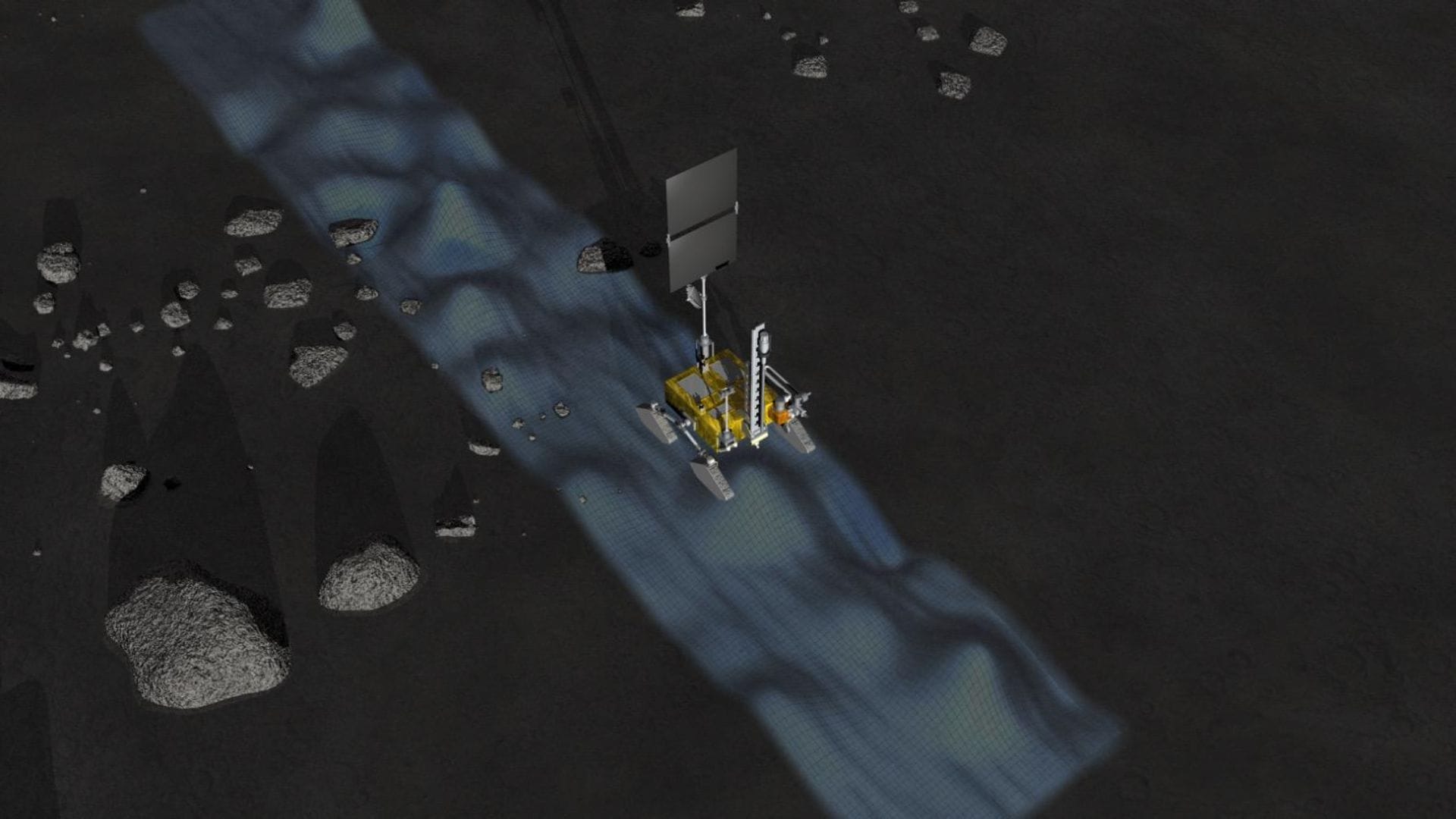
New Delhi: Indian researchers have analysed the multisensor data from the Chandrayaan 1 and Chandrayaan 2 missions to map the morphology, minerology and petrology of lunar craters, along with their potential for retaining deposits of water ice. The analysis provides critical insights for future human exploration of the moon, as well as the Chandrayaan-5/LUPEX mission which is a collaboration between India and Japan. The Chandrayaan 5 mission will map the distribution of water and other volatiles on the lunar surface. The research was presented at the 57th Lunar and Planetary Science Conference, with the researchers analysing optical, hyperspectral infrared and microwave datasets to quantify the characteristics of impact craters across diverse lunar terrains.
The depth-to-diameter ratios were measured for a number of craters, revealing values below 0.2 for craters under 400 metres in diameter, indicating the mechanical properties of the regolith or lunar soil. The Infrared Infrared Spectrometer data from Chandrayaan 2 was used to classify rocks in the Clavius D crater as mafic basalt and ultramafic picrite, both of which are rich in magnesium, iron, olivine and pyroxene with silica content below 40 per cent. The Moon Minerology Mapper on Chandrayaan 1 was used to identify olivine and plagioclase distribution in the Boguslavsky crater, which is close to the landing site of the Chandrayaan 3 mission.
Humans can live on the Moon
The Chandrayaan 2 instruments also indicate the presence of thick ice layers or ice-grain impurities in the permanently shadowed Hermite A crater, close to the lunar north pole. The analysis demonstrates that Chandrayaan instruments can reliably detect hydroxyl signatures and cold-trapped volatiles at sub 100 metre resolution. The researchers conclude that the integrated craterology from existing missions directly supports resource prospecting for water ice and minerals, which is essential for establishing a sustained human presence on the Moon. ISRO and JAXA plan to launch the Chandrayaan 5/LUPEX mission in the 2028-29 timeframe.