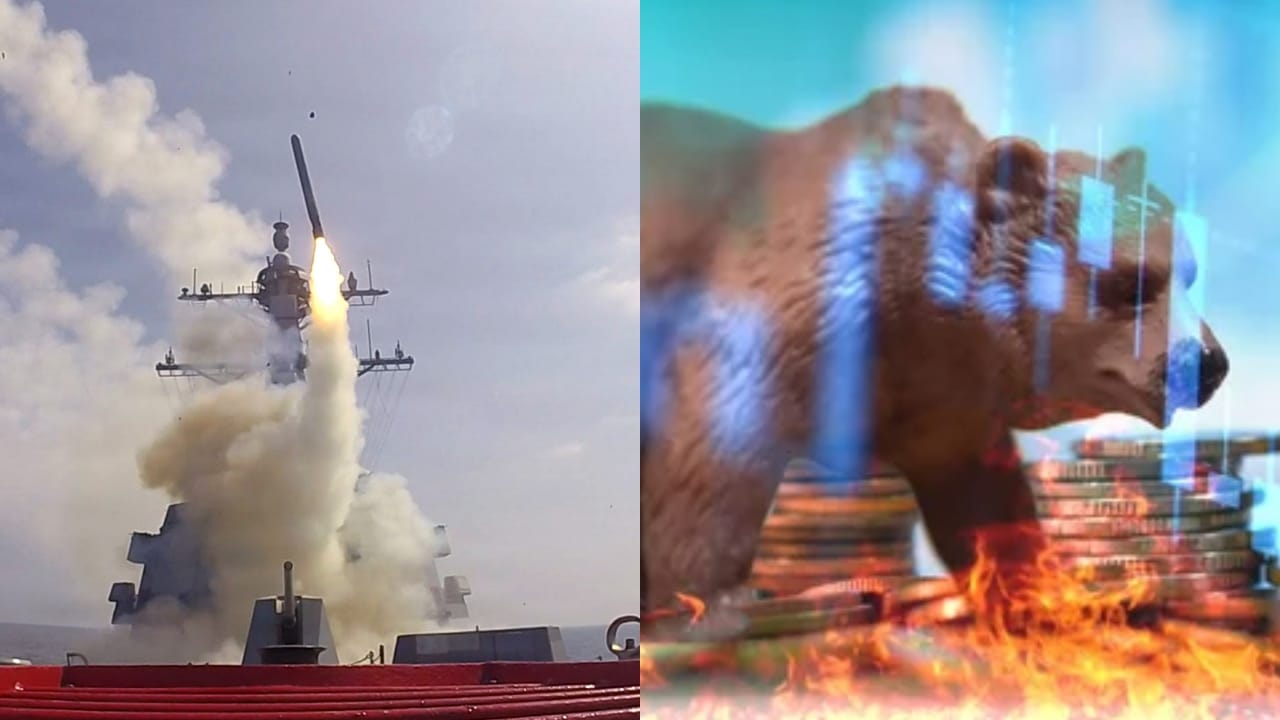
Kolkata: The current crisis in the world energy markets is worse than the two oil shocks of the 1970s and the impact of the Russia-Ukraine war on gas put together, Fatih Birol, the chief of the International Energy Agency has said. Against the backdrop of the headline grabbing statement, comes the warning from the US-based investment bank Goldman Sachs. The institution has sounded caution on Indian equities. It has downgraded its market stance to “marketweight,” cut its Nifty target, and said that a cycle of “energy-shock-induced” cut in earnings is on its way. Moreover, prolonged elevated high oil prices due to the West Asia can impact India’s macro outlook as well.
Cut in Nifty target
Goldman Sachs has trimmed its Nifty target by end-March 2027 significantly from 29,300 as stated earlier to 25,900. The implication: “Indian equities will deliver INR/USD returns of 13%/12% over the next 12 months (lower than the 19% USD gain expected for MXAPJ).” “The projected returns will be driven partly by earnings growth of 8%/13% in CY26/27 and partly by a modest valuation re-rating to our lower NIFTY fair-value of 19.5x (earlier 20.8x) as earnings are being cut,” the investment bank added.
Earlier this week, equity research and brokerage firm Bernstein also cut Nifty’s year-end target to 26,000. In a worst-case situation, Nifty can slide to 19,000.
Risks tilted to downside
Goldman also said, “Over the next three to six months, we see risks tilted to the downside as we believe the market may not yet be fully assessing the full impact of the earnings cut and a less clear picture of earnings in the short term may lead to higher risk premium demands.” It also said that “when earnings are declining, forward returns at an initial multiple of 18-20 times have been weak.” They also point out that “when earnings stabilize after 2-3 quarters, which has been a common period of decline during past energy crises, an increase in earnings can drive share prices higher.”
Brent price projection
According to analysts of Goldman Sachs, Brent could average $105 in March and $115 in April. Then it can gradually come down to $80 in Q4 and remain at that level through 2027. “Within Asia, India is particularly vulnerable to a potential energy crisis, given its low per capita income economy and high dependence on energy imports,” the report mentioned.
‘Overweight’ to ‘marketweight’
“Amid deteriorating macro conditions and slower earnings growth, we have reduced Indian equities from ‘overweight’ to ‘marketweight’ in our regional allocation, as the risk/reward ratio is less attractive compared to North Asian markets,” Goldman said in its report. It also added, “We maintain a strong exposure to banks (NIM growth in a high interest rate environment, good asset quality), defensive consumption, including essentials, telecom companies (no change in demand), and defense (strategically important to the government).”
Since India imports more than 85% of its crude oil requirements and more than 65% of its natural gas needs, the West Asia conflict can hit it hard. It is raising input costs for businesses, expanding the current account deficit, dragging down the value of the rupee against the US dollar and raising inflationary pressures. It will have a direct impact on consumption levels and trim the GDP growth figures. The report also points to these ominous signs.
(Disclaimer: This article is only meant to provide information. News9 does not recommend buying or selling shares or subscriptions of any IPO, Mutual Funds, precious metals, commodity, REITs, InvITs and any form of alternative investment instruments and crypto assets.)