Union Home and Cooperation Minister Amit Shah today underscored that cooperation is the cornerstone of a sustainable, profitable and resilient agricultural future, asserting that India’s agrarian economy can realise its full potential only when agriculture, animal husbandry and allied sectors are firmly linked with cooperative institutions.
Addressing a high-level cooperative conference here on the theme “Role of Cooperation in Sustainable Agriculture”, Shah said Haryana was setting new benchmarks in farmer prosperity by effectively integrating agriculture with cooperative systems. He credited Prime Minister Narendra Modi for giving a renewed national direction to the cooperative movement through the creation of the Ministry of Cooperation and the vision of “Sahkar se Samriddhi”.
Shah noted that nearly 70 per cent of India’s population depends directly or indirectly on agriculture and animal husbandry, and while these sectors generate maximum employment, their true strength lies in cooperative models that ensure fair profit distribution. Citing Amul as a global example, he said the cooperative distributes nearly Rs 90,000 crore annually to about 36 lakh women milk producers, empowering producers rather than intermediaries.
Highlighting the government’s agricultural roadmap, Shah said modern farming rests on three pillars – low water usage, natural farming and low risk. He added that agriculture was moving away from subsidy dependence towards sustainability through scientific irrigation, soil health-based planning, reduced chemical use, climate-resilient practices and the Digital Agriculture Mission. He also pointed out that the agriculture budget had increased more than five-fold since 2014, while rural development allocations had more than doubled.
During the event, Shah digitally inaugurated a milk chilling centre in Bhiwani, a HAFED flour mill in Rewari, launched the Cooperation Year portal, introduced a RuPay Platinum Card for cooperative bank customers and announced a cooperative-based Bharat Taxi service.
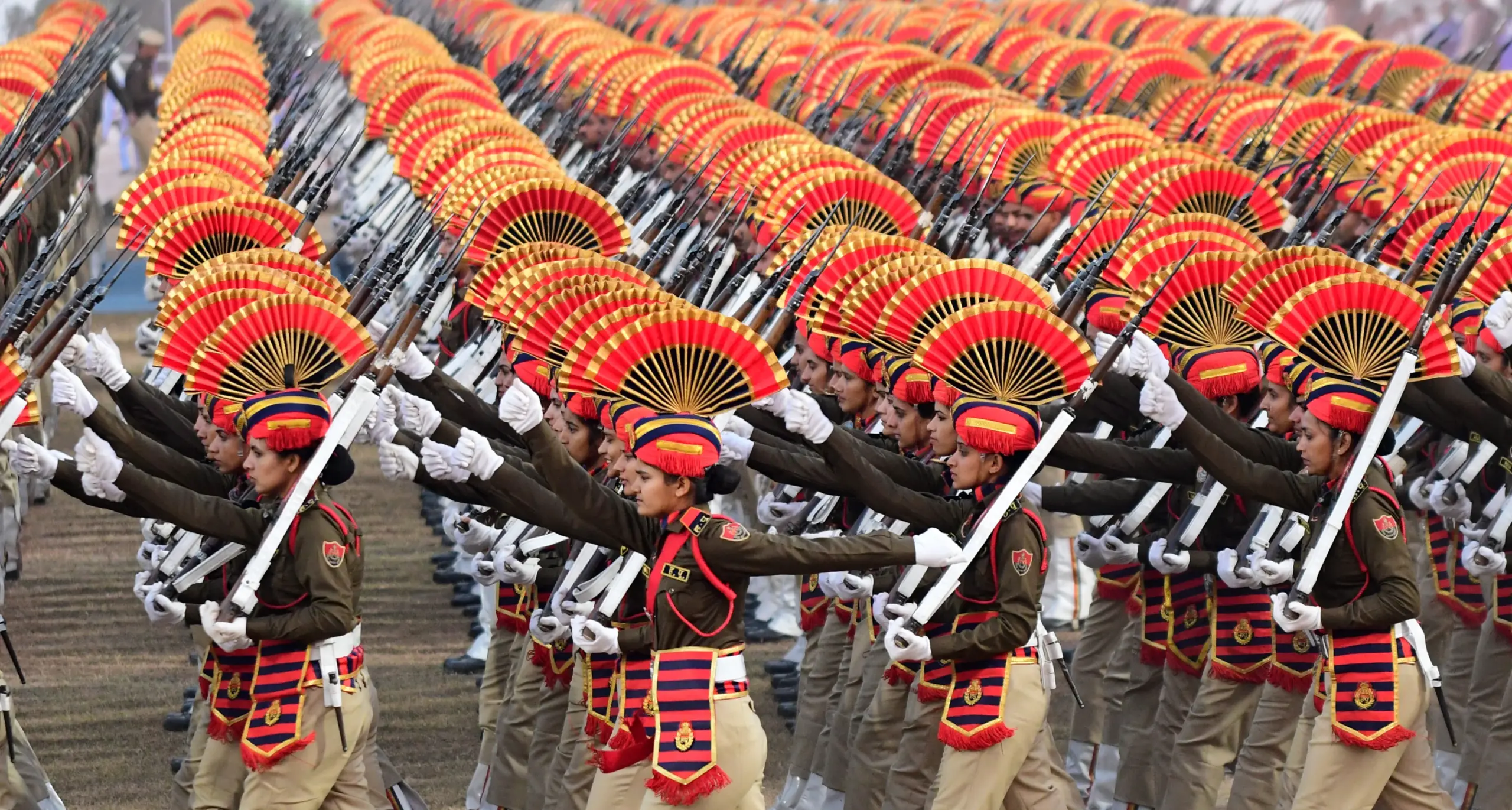
Later, Shah attended the passing-out parade of Haryana Police Recruit Basic Course Batch-93 at Tau Devi Lal Stadium, Panchkula, where 5,061 recruits were inducted – the largest such ceremony in the country. He took the salute as a chief guest. Chief Minister Nayab Singh Saini described the occasion as a celebration of discipline, patriotism and duty, stating that “security, good governance and sensitivity” now define Haryana’s policing culture. The recruits were trained for 39 weeks, including modules on new criminal laws and cybercrime.
In the evening, Shah unveiled a 41-foot bronze statue of former Prime Minister Atal Bihari Vajpayee at Atal Park, MDC Sector 1 – the tallest of its kind in the tricity. He also released a coffee table book on Vajpayee’s life, virtually inaugurated 250 Atal e-Libraries, visited an exhibition on Vajpayee’s association with Haryana and inaugurated the Atal Smriti Blood Donation Camp, where 211 units of blood were collected.