New Delhi: Amid the ongoing tension over LPG shortage due to the Middle East crisis, the Indian Institute of Technology (IIT) Bombay developed an indigenous technology to combat the same. The institute has successfully converted dry leaves into cooking fuel using its patented biomass gasification technology.
The research, which began back in 2014 under Professor Sanjay Mahajani, comes at a time when global supply disruptions have raised prices and potential shortages of LPG.
While addressing the reporters, Sanjay Mahajani said, “I am a faculty member here in the Department of Chemical Engineering at IIT Bombay. My research focuses on gasification and energy conversion. These dried leaves and twigs, if we simply burn them, do, in fact, yield energy. However, the situation here is that IIT Bombay possesses a vast green cover; consequently, a large volume of leaves and twigs fall onto the pathways and grounds. So, we reasoned that since this waste material inherently contains energy, why not harness it for our own internal applications? Given the extensive cooking activities and various thermal applications within the IIT campus, we decided to explore using this waste as a fuel source for those needs.”
#WATCH | Mumbai, Maharashtra: The Indian Institute of Technology (IIT) Bombay has developed an indigenous technology to combat the rising prices and potential shortages of LPG (cooking gas). Through its patented biomass gasification technology, the institute has successfully… pic.twitter.com/rVVIFDrKGV
— ANI (@ANI) March 31, 2026
How does it work?
The professor explained the whole process and said it’s not that simple. Firstly, dry leaves are collected, shredded and processed into pellets. Then these pellets are heated in a low-oxygen chamber from where they undergo pyrolysis and gasification, producing a fuel-rich gas mixture. This gas burns cleanly with a steady flame suitable for cooking.
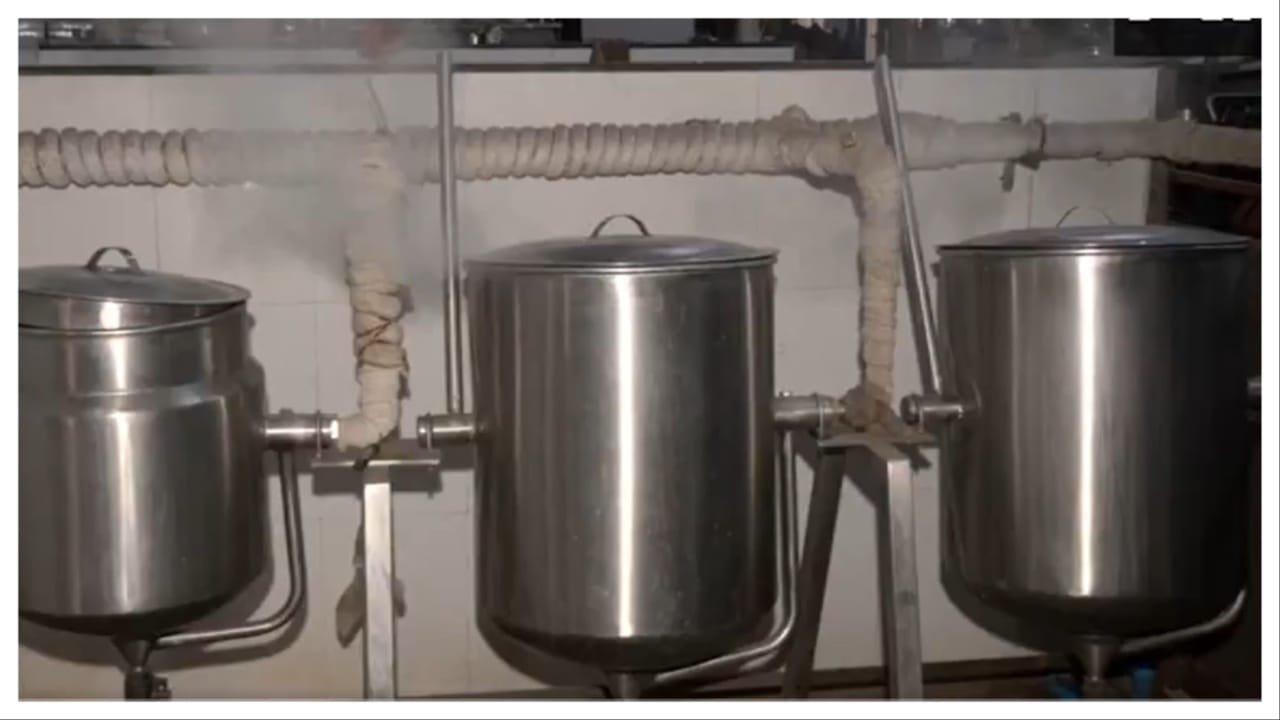
He added that the process is considered ‘Producer gas’ and said it contains carbon monoxide and hydrogen, which makes it easily combustible. When the combustion takes place, the resulting emissions are extremely low. When this gas is combusted, the energy released is used to generate steam from water. Then this steam is channelled into the canteen, where IIT Bombay develops indigenous technology to combat LPG shortage.
Can this help tackle LPG crisis?
This is a big breakthrough, but not a full replacement idea, as the innovation only provides a partial, sustainable alternative for cooking. This could easily help curb the rising fuel prices in institutions and community kitchens, reducing dependency on imported LPG.