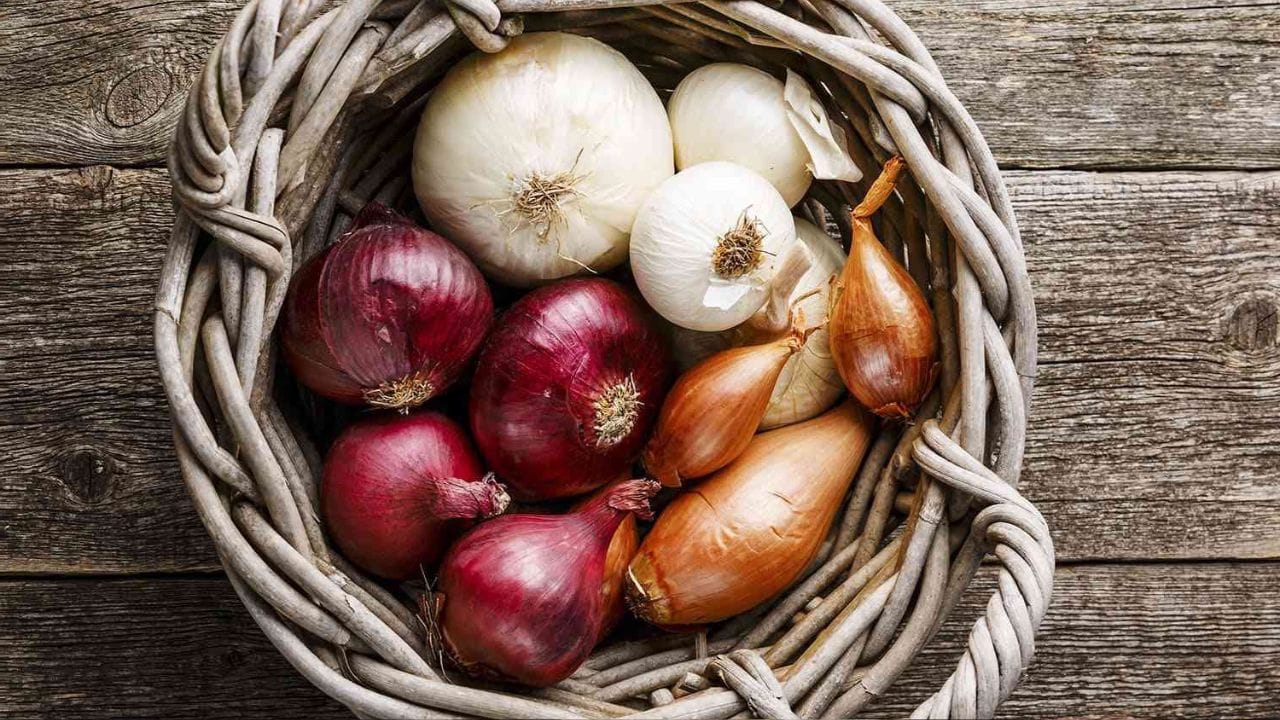
New Delhi: There are few kitchen staples as humble yet irreplaceable as onions. They form the base of countless Indian gravies, global sauces, and comforting home-cooked meals. But despite being such a simple ingredient, buying the wrong onions or storing them incorrectly can lead to sprouting, mould, sogginess, and wastage you never planned for. Most people don’t realise that onions are living vegetables; they continue to respire, absorb moisture, and break down over time depending on how you treat them.
With prices fluctuating every season and freshness directly affecting the flavour of your food, choosing the right onions and storing them properly becomes a small but smart kitchen skill. This guide breaks down everything you need to know to extend the shelf life naturally.
How to buy onion
1. Look for firm, heavy bulbs
The best onions feel heavier than they look. Pick one up and gently squeeze, it should feel solid, without soft spots, dents, or signs of moisture inside.
2. Check the outer skin
A good-quality onion has:
- Dry, papery outer layers
- Uniform colour
- No black patches, mould, or moisture stains
Avoid onions with peeling layers or dampness; they spoil faster.
3. Examine the neck area
The top end (neck) should be tight, dry, and fully closed. A thick, moist or open neck indicates poor drying during harvest, leading to early rotting.
4. Avoid sprouting bulbs
If you see any green shoots emerging, skip them. Sprouting means the onion has already started ageing and will taste sharper, not sweeter.
5. Choose the right type for the right use
- Red onions: Strong flavour, great for Indian cooking, curries, and tadkas
- Yellow onions: Universal cooking onion for soups, French-based recipes, caramelisation
- White onions: Crisp and fresh, perfect for salads, salsas, chaats
- Small shallots: Sweeter and milder, excellent for gourmet recipes
Choosing based on usage ensures better flavour and less waste.
6. Avoid onions stored under direct sun
Heat accelerates spoilage and softens their texture. Always buy onions stored in a cool, ventilated pile in the market.
How to store onions
1. Keep in a dry, cool and ventilated place
Onions hate humidity, place them in a cool and dark spot such as a pantry, ventilated cabinet or a counter corner away from sunlight.
Ideal temperature: 10–25°C
Ideal humidity: Low
2. Use breathable baskets or mesh
Never store onions in plastic bags. Moisture gets trapped and speeds up decay. Instead use:
- Mesh bags
- Net bags
- Bamboo baskets
- Steel wire baskets
Air circulation is crucial to preventing mould.
3. Do NOT store onions and potatoes together
This is one of the most common mistakes. Potatoes release moisture and gases that accelerate onion spoilage, making them sprout faster.
Store them in separate corners of your kitchen.
4. Inspect onions weekly
A single rotten onion can spoil an entire batch.
Check for:
- Softening
- Black mould
- Musty smell
- Leaking moisture
Remove any affected onions immediately.
5. For cut or peeled onions: refrigerate correctly
Once cut, onions must be stored properly:
- Place in an airtight glass or steel container
- Refrigerate for up to 3–4 days
- Avoid plastic as it absorbs odour
If you want to store chopped onions for meal prep:
- Store in airtight containers
- Use within 2 days for the best taste
6. Freeze onions for long-term use
If you bought onions in bulk:
- Chop or slice them
- Place in freezer-safe bags
- Freeze for up to 3 months
Use directly from frozen for curries, biryanis, soups, and gravies.
Note: Frozen onions lose crunch—best for cooked dishes only.
7. Store fried onions properly
Fried onions are a staple in many Indian kitchens.
To store:
- Fry until deep golden-brown
- Drain oil completely
- Spread on tissue to remove moisture
- Store in an airtight glass jar
- Refrigerate for 2–3 weeks
- Freeze for up to 2 months
With the right storage practices, you’ll not only save money and reduce waste but also ensure your dishes taste fresher, sweeter, and more flavourful every time.