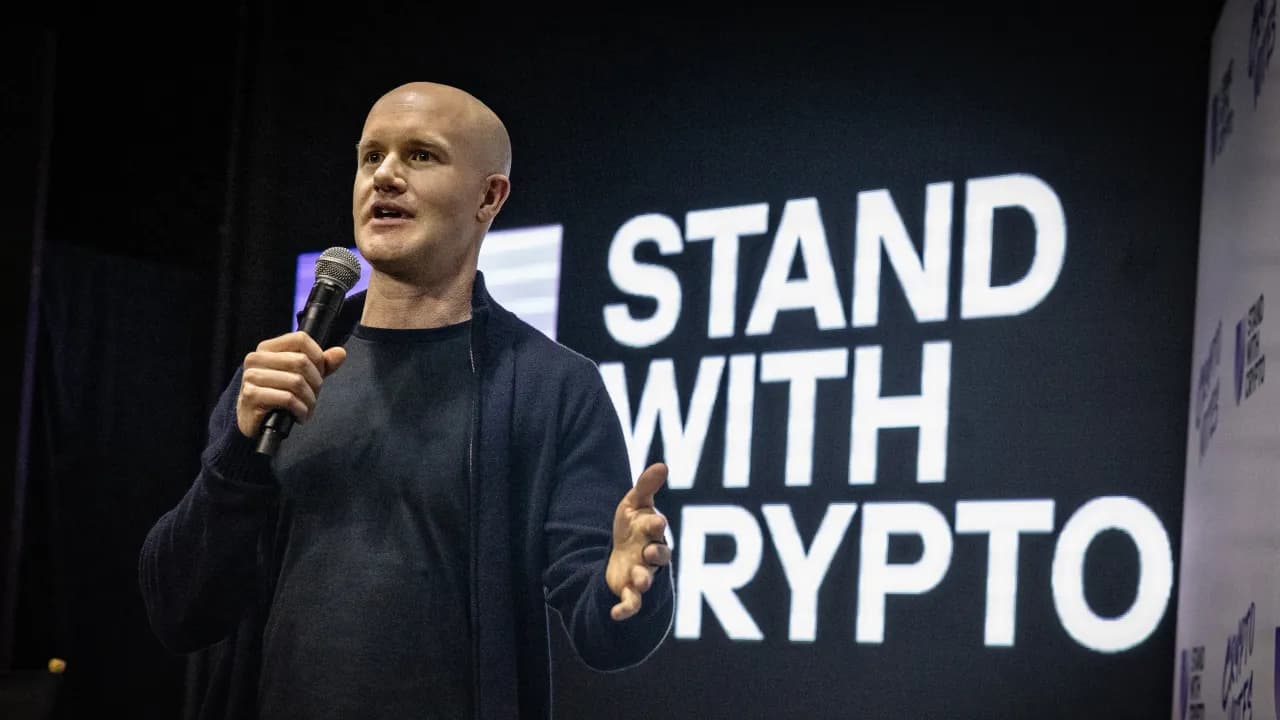
Brian Armstrong reiterated the need for balanced regulation as the firm continues its policy and legal push in Washington.
- As autonomous AI systems enter the economy, Coinbase CEO Brian Armstrong said banking regulations based on human identity create friction.
- Armstrong noted that Coinbase has spent years in Washington advocating for clearer regulations to limit rogue actors and legitimize the industry.
- Coinbase is suing the FDIC, alleging pressure on banks to deny services to crypto businesses.
Artificial intelligence may soon book flights, pay subscriptions, and execute transactions on its own, but it won’t be opening a bank account anytime soon. That’s why Coinbase (COIN) CEO Brian Armstrong believes stablecoins could become the default payment layer for AI agents to transact under existing financial rules.
Speaking with Goldman Sachs CEO David Solomon at the firm’s Builders & Innovators Summit on Wednesday, Armstrong said current financial regulations are built around human identity, creating friction as artificial intelligence systems begin to operate autonomously in the economy.
Coinbase Global (COIN) closed at $239 on Wednesday. On Stocktwits, retail sentiment around Coinbase dropped from ‘neutral’ to ‘bearish’ territory, with chatter dropping from ‘normal’ to ‘low’.
Why AI Agents Need Stablecoins?
Armstrong noted that Coinbase expects AI-powered agents to carry out payments on behalf of users, from booking travel to paying for digital services, but warned that traditional banking rails are not designed for that shift.
“We believe that AI agents are going to do this with stablecoins because they can’t get a credit card or bank account opened themselves,” Armstrong said. He added that existing compliance rules create structural barriers. “All current financial services regulations require know-your-customer checks, meaning individuals must provide identification to access financial services,” Armstrong said, adding that such frameworks will need to evolve as AI adoption accelerates.
Pushing For Regulatory Clarity
Armstrong also said regulatory uncertainty remains one of the biggest challenges for crypto companies, noting that Coinbase has spent years engaging lawmakers in Washington to seek clearer rules.
“Going back like six or seven years ago, we started to really show up in DC and start to request, like, we would like to get clearer rules. We’d like legislation,” he said. “We think that this is necessary to prevent bad actors and clean up the industry.”
While acknowledging that oversight is inevitable, Armstrong stressed the importance of balance. “There’s going to be a regulatory structure around this of some kind,” he said, adding that policymakers must “strike the right balance” so regulation does not stifle innovation.
“That innovation creates growth in the economy, creates less friction, creates more speed,” Armstrong said.
FDIC Lawsuit
Armstrong’s remarks come as Coinbase continues its legal battle with U.S. regulators. The exchange had sued the Federal Deposit Insurance Corporation (FDIC) under the Freedom of Information Act (FOIA), alleging that the agency pressured banks to limit or halt services for crypto firms through so-called “pause letters.”
Coinbase argued that those actions discouraged banks from working with crypto companies, effectively cutting off access to the traditional banking system, a practice the firm has described as “debanking.”
Read also: Binance’s CZ Says Trust Wallet Will Refund $7M After Security Hack, Points To Possible Insider Job
For updates and corrections, email newsroom[at]stocktwits[dot]com<