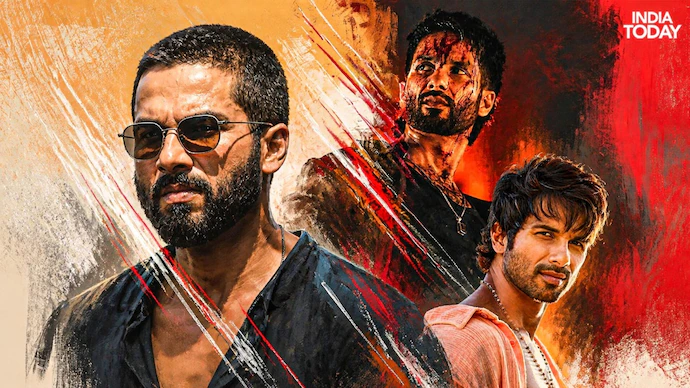
Every few years, Shahid Kapoor reminds us how good he is. Every few years, Bollywood seems to forget. There is a peculiar frustration that comes with watching a talented actor disappear in plain sight. Not disappear because they are bad or because they have stopped trying, but because their film seems unsure of what to do with them.
That is the lingering feeling after watching Cocktail 2. Set against the postcard-perfect backdrop of Sicily, packed with glamorous parties, attractive people and a 16-year-old relationship drama, the film has all the ingredients of a glossy Bollywood entertainer. It also has ,an actor who, at his best, can communicate heartbreak, rage and vulnerability with astonishing ease.
And yet, somehow, he feels strangely absent.
The irony is difficult to ignore. While walks away with much of the film’s emotional weight and some of its most memorable moments in the hottest outfits from Anaita Shroff Adajania’s wardrobe, Shahid’s Kunal often feels like a supporting player in his own story. too, struggles with parts of her performance, though credit is due for her noticeably improved Hindi diction and sincere effort. But it is Shahid’s performance that leaves one most surprised – and perhaps most disappointed.
Not because he is poor. Because he is capable of so much more.
In the film’s key emotional moments, particularly those involving a long-term relationship falling apart, director Homi Adajania did him bad. Shahid’s reactions feel oddly muted. The heartbreak never quite hits. The anguish remains on the surface. Scenes that should have devastated instead drift by politely (accompanied by oddly placed BGM), as though the emotions have been carefully ironed out before reaching the screen.
For an actor whose greatest strength has always been emotional expression, it feels unusual…it feels jarring.
This is, after all, the same Shahid Kapoor who gave us Haider – a performance so layered and haunting that it remains one of modern Hindi cinema’s finest. This is the actor who transformed himself in Kaminey, effortlessly switching between vulnerability and unpredictability. This is the man who made audiences fall in love with Aditya Kashyap in Jab We Met, creating a character so warm and emotionally available that people still quote him nearly two decades later.
Those performances were not accidents. They revealed an actor capable of remarkable depth when given material worthy of his talent.
Which raises an uncomfortable question: has Shahid changed, or have the scripts stopped challenging him? The answer may lie somewhere in between, but Cocktail 2 points more convincingly towards the latter.
Kunal is not a badly written character. He is simply not written enough. The film appears far more interested in the journeys of its female protagonists than in exploring the inner life of its male lead. Shahid spends much of the narrative reacting rather than driving events. His emotional conflicts are mentioned but rarely examined. His heartbreak is explained rather than experienced. His feelings are backed by a hilarious car chase sequence long before the actual acknowledgement.
Actors can elevate weak writing only up to a point. Even the most gifted performer needs a script that trusts them with complexity.
Bollywood, however, has long had a curious relationship with Shahid Kapoor. The industry readily acknowledges his talent, praises his versatility and celebrates his performances. Yet it often casts him in films that seem content to use only a fraction of what he can offer.
He is frequently positioned as the charming leading man, the stylish romantic hero, the dependable star presence. But somewhere along the way, filmmakers forget that he is also one of the most emotionally intelligent actors of his generation.
The result is a career filled with flashes of brilliance interrupted by roles that feel oddly safe.
There is a quiet sarcasm in how the industry constantly talks about Shahid’s “potential” when he has already proven himself repeatedly. Few mainstream actors possess his range. Fewer still can move so comfortably between commercial cinema and character-driven storytelling.
Yet every few years, audiences find themselves asking the same question: why isn’t Bollywood giving Shahid Kapoor better roles?
Perhaps it is because the industry remains obsessed with formulas. Glossy love stories, exotic locations and chart-topping soundtracks are easier to package than complicated human beings. Perhaps filmmakers assume Shahid’s charisma alone is enough.
But charisma has never been the most interesting thing about him.
What made Haider, Kaminey and Jab We Met special was not merely Shahid’s screen presence. It was the opportunity those films gave him to be messy, conflicted, vulnerable and unpredictable.
Cocktail 2 is unlikely to damage his career. The film is entertaining enough and audiences have clearly shown up for it. Yet beneath its commercial success lies a familiar disappointment.
Because every now and then, the camera catches a fleeting glimpse of the Shahid Kapoor we know is still there. The real tragedy is that Bollywood keeps seeing those glimpses too – and still writes him smaller than he deserves.