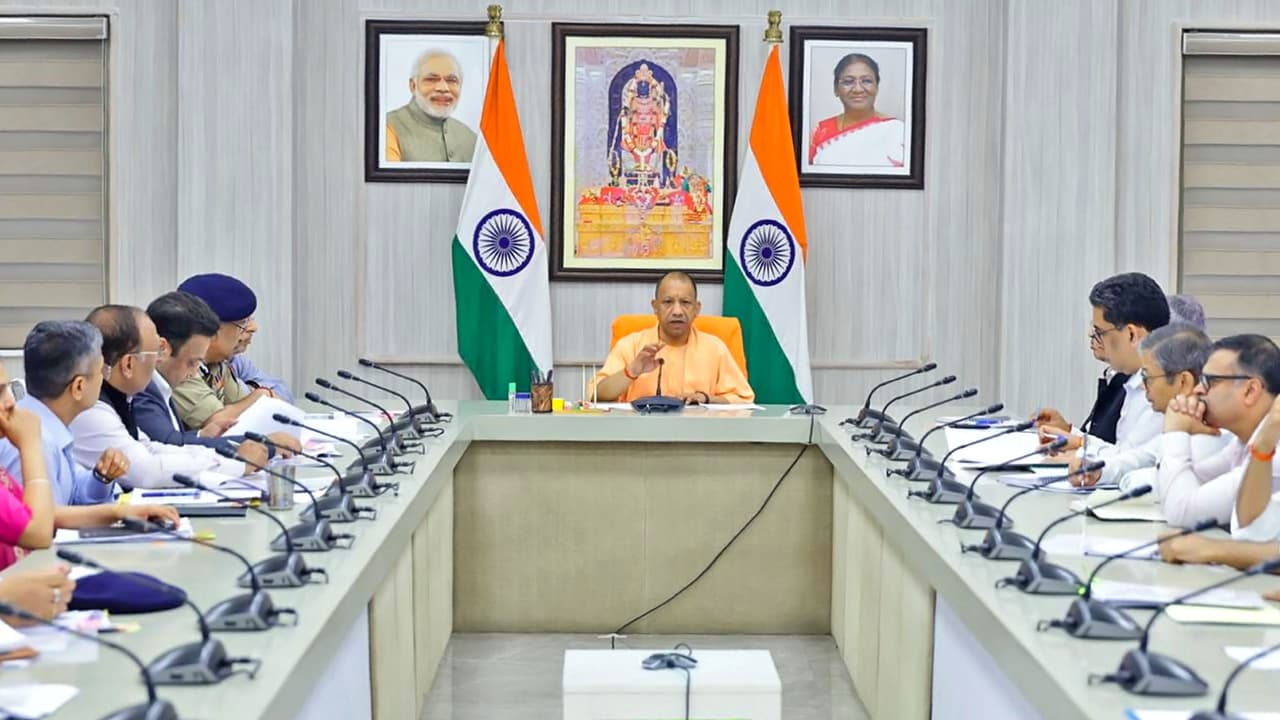
Many important decisions were taken in the cabinet meeting of Yogi government. Approval was given to amend the Prohibition of Beggary Act, implement Anand Marriage Registration Rules 2026 for the Sikh community and provide cashless medical facility of up to Rs 5 lakh to teachers and employees of higher education.
Lucknow. The proposal to amend the Uttar Pradesh Prohibition of Beggary Act was approved in the cabinet meeting chaired by Chief Minister Yogi Adityanath. This decision has been taken in compliance with the Supreme Court’s order dated 7 May 2025. Under the proposed amendment, the provisions related to leprosy will be removed from Section 21 of the Act. In addition, the law will be brought into line with the Mental Healthcare Act 2017 so that it is in line with modern health standards and human rights principles.
The purpose of this change is to eliminate discrimination against people affected by leprosy, so that they can live a life with dignity in the society. After the approval of the Cabinet, the Uttar Pradesh Prohibition of Beggary (Amendment) Bill 2026 will now be introduced in the state legislature for further processing.
Anand Marriage Registration Rules 2026 implemented for Sikh community
The cabinet meeting approved the proposal to implement “Uttar Pradesh Anand Marriage Registration Rules 2026” to simplify the marriage registration of the Sikh community. This manual has been created to simplify the official registration of Anand Karaj marriage prevalent in Sikhism. This system is being implemented on the basis of the rights given to the state government under Section 6 of the Anand Marriage Act 1909 (Amended 2012). Apart from this, this decision has been taken in compliance with the instructions of the Supreme Court dated September 4, 2025 in the case of Amanjot Singh Chaddha vs. Union of India and others.
Registrar system from tehsil to state level
Under the new rules, officers at different levels will be made registrars for marriage registration.
- Tehsil Level: Sub District Magistrate (SDM) Registrar
- District Level: District Magistrate District Registrar
- Divisional Level: Divisional Commissioner Divisional Registrar
- State Level: Director Minority Welfare & Waqf Chief Registrar
According to the rules, the parties to the marriage or their relatives will be able to apply within three months of the marriage. A court fee stamp of Rs 1500 will have to be attached with the application. If application is made after the stipulated time, late fee will have to be paid as per rules.
Provisions related to appeal and certified copy
Under the new system, if any party is not satisfied with the decision of the Registrar, then he will be able to appeal to the District Registrar. There is also a provision for appeal to the Divisional Registrar against the order of the District Registrar. Rules related to maintenance of marriage register and obtaining certified copy are also included in the rules. With this system, official registration of marriages of Sikh community in the state will become easy and transparent.
Cashless medical facility to teachers and staff of higher education
An important proposal related to the Higher Education Department has also been approved in the cabinet meeting. Under this, the state government has decided to provide cashless medical facilities to higher education teachers and non-teaching staff. State Higher Education Minister Yogendra Upadhyay said that Chief Minister Yogi Adityanath has always been sensitive towards teachers and the education sector. Teachers play an important role in society building, but till now they did not have the facility of medical reimbursement. For this reason, the Chief Minister had announced this scheme on 5 September 2025 (Teacher’s Day).
Which teachers and employees will get the benefit of the scheme
Teachers from the following institutions will be included under this scheme:
- teachers of non-government aided colleges
- Teachers of self-financed courses
- Teachers of self-financed recognized colleges
- teachers working in state universities
As per the instructions of the Chief Minister, non-teaching staff have also been included in the scheme. Under the scheme, beneficiaries and their dependent family members will get the facility of cashless treatment in government and affiliated private hospitals.
Plan premiums, benefits and expenses
Under this scheme:
- Premium will cost Rs 2479.70 per teacher or employee
- More than 2 lakh teachers and employees will be benefited
- The government will have to spend about Rs 50 crore every year
This scheme will be operated through the State Comprehensive Health and Integrated Services Agency (SACHIS).
Treatment will be provided as per Ayushman Bharat standards
Under the scheme, beneficiaries will be provided cashless medical facility up to Rs 5 lakh. The treatment rates will be as per the standards set by the Pradhan Mantri Ayushman Bharat Yojana and the National Health Authority. The Higher Education Department will provide details of beneficiaries and their dependents to Sachij by 30th June every year.
People who are already taking benefits from other health schemes like Pradhan Mantri Ayushman Yojana or Mukhyamantri Arogya Yojana will not be given the benefit of this scheme. The government believes that this scheme will increase social security of teachers and employees and provide better health security to their families.