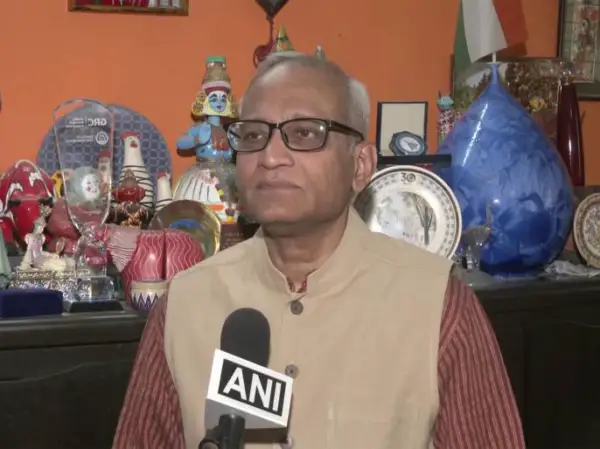
Jawaharlal Nehru University (JNU) Professor Srikanth Kondapalli, an expert in Chinese Studies, has highlighted China’s ‘salami slicing’ strategy along the Arunachal Pradesh border.
He warns that the continuous deployment of troops and offensive weapons near the Line of Actual Control (LAC) significantly increases the risk of future conflict between India and China.
Kondapalli noted that border transgressions are a regular occurrence, with 300 to 400 incidents reported annually, averaging almost one per day. These can be intentional, aimed at asserting territorial claims, or unintentional due to challenging terrain. He particularly raised concerns about deliberate incursions where China incrementally advances into areas claimed by India, citing Lungchu in Arunachal Pradesh’s Upper Subansiri district and Takshing as examples.
The professor identified several other sensitive areas across the eastern, middle, and western sectors, including Asaphila, Namka Chu, Sumdorong Chu, Yangtse, Barahoti, Pangong Tso, and Demchok, where such incidents frequently occur. He emphasized that while many remain local confrontations, they could escalate if patrols from both sides try to enforce competing claims, drawing parallels to the Galwan Valley clash of June 2020.
Kondapalli also pointed out the incomplete de-escalation process despite diplomatic efforts. He explained that ‘disengagement’ moves troops away, but ‘de-escalation’ requires withdrawing offensive weapons, and ‘de-induction’ involves returning troops to lower elevations. He stated that even after high-level meetings, offensive weapon systems remain close by, creating a constant risk. The Ministry of External Affairs acknowledges that Chinese forces deviating from established patrolling patterns can disturb border tranquility, though diplomatic and military channels are used to resolve issues.