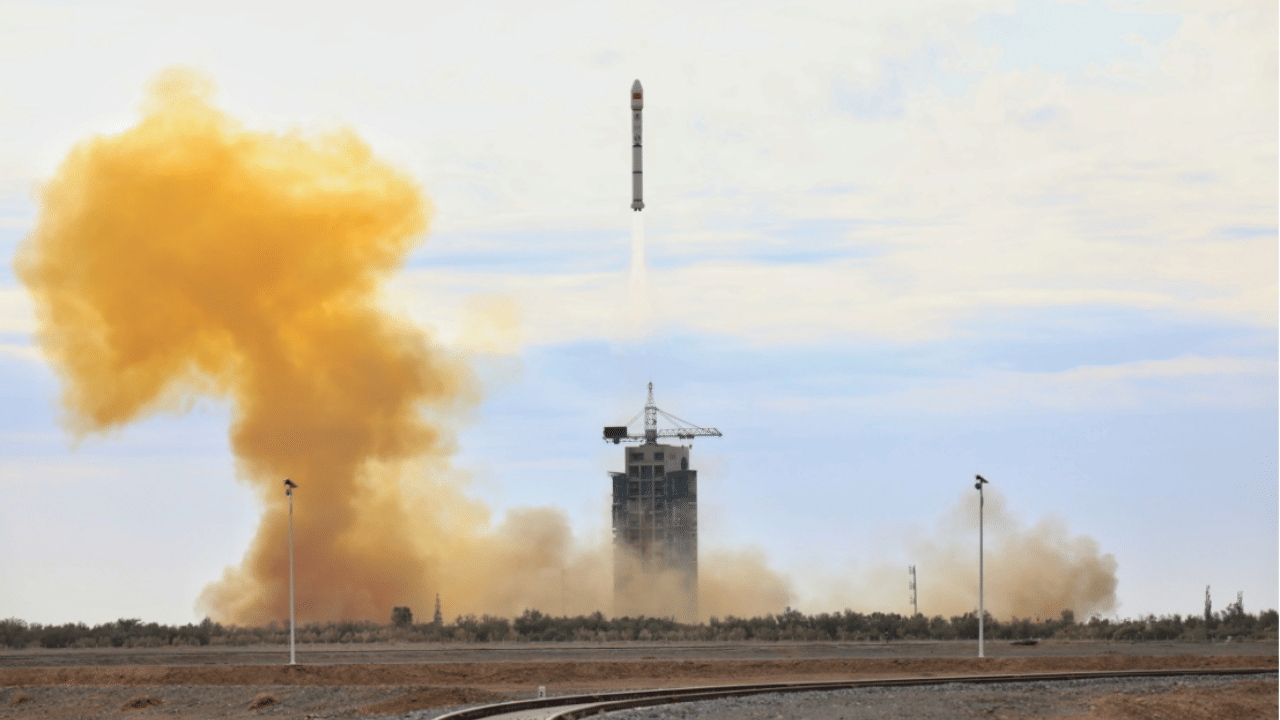
New Delhi: China is looking forward to an aggressive year in space exploration in 2026 and a series of high-profile missions to widen its technological advantage and scientific opportunities. The officials of the China National Space Administration (CNSA) have confirmed that in the future, there will be the exploration of asteroids, crewed missions, and significant developments on reusable rocket technology.
At a press conference before China’s Space Day, CNSA system engineering official Liu Yunfeng emphasised a fast pace in the country. The 92 space launches documented in China in 2025 alone, a sharp 35% increase in space launches annually, are an indication of its increasing capability and ambition in the international space race.
Asteroid missions and deep space exploration take centre
One of the key features of the 2026 roadmap in China is the advancement of the Tianwen-2 mission. The probe is already on its way to asteroid 2016 HO3 and will soon start closely monitoring it, which will be the first attempt of China to sample-return an asteroid.
In the meantime, the previous Tianwen-1 mission has been achieving its results, and 3.5 terabytes of Mars data are already being published worldwide, which speaks in favour of China as a partner in global space science.
Crewed missions and lunar plans gain momentum
China is also investing twice as much in human spaceflight. Missions such as Shenzhou-23 will be implemented in a larger vision to consolidate its crewed programme. The CNSA officials state that the plans for a future lunar exploration programme are gradually advancing, with emergency launch facilities that have been tested during recent missions.
Reusable rockets and satellite systems expand
Reusable rocket development is becoming a key priority. Already, the first flight tests have been undertaken on new models, including the Zhuque-3 and Long March-12A, which are already indicative of cost-effective launches in China.
Simultaneously, the nation is still increasing its satellite infrastructure. The BeiDou Navigation Satellite System is increasingly experiencing broader use in industries, and satellite internet constellations are entering the mass production stages.
On April 24, 2011, Chengdu, China, will honour its 11th Space Day, which is a day that is marked in memory of the first satellite China launched in 1970, the Dongfanghong-1. The China Space Conference will include 20-plus academic sessions, exhibitions and forums as part of the event, which will be held between April 23 and 25.
According to the officials, the event will showcase space science, commercial aerospace and the innovation of technology, which will underscore the long-term vision of China of leading in space.