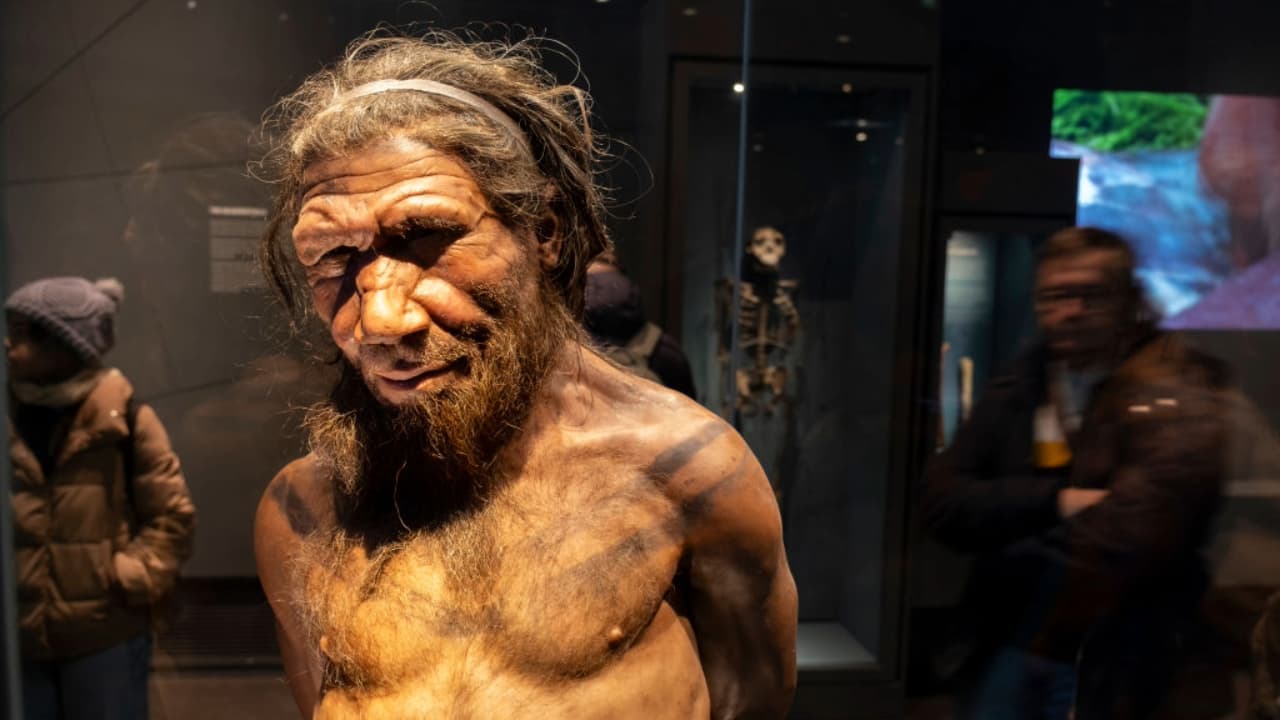
A new study on remains from the Goyet caves in Belgium suggests Neanderthal women and children were targeted, killed, and eaten around 45,000 years ago. This finding adds a grim layer to our understanding of the final period of Neanderthal history.
Evidence suggests that ancient humans may have consumed Neanderthal children, according to a disturbing new study. The research indicates that Neanderthal women and children were targeted and eaten after being killed, dating back around 45,000 years. The findings are based on a detailed examination of human remains discovered in a cave in Belgium.
The remains were found in the Goyet caves, a location first explored in the 1800s and now considered one of the most significant Neanderthal sites in northern Europe. Previous research had already shown signs of cannibalism at the site, but the latest study offers more unsettling details about the victims. The study was published in Scientific Reports.
Studying Bone Remains
Scientists analysed bones from six individuals and found that they were all either women or children, with no adult males present. The researchers believe this was not accidental. Some of the bones show clear cut marks and breakage, suggesting the bodies were butchered, possibly cooked, and eaten.
According to the research team, this selection of victims indicates deliberate targeting. Isabelle Crevecoeur, one of the lead scientists, explained that choosing women and children likely weakened nearby groups and may have been linked to territorial conflict rather than hunger alone.
What Was Found During the Study?
The researchers used a combination of DNA testing, chemical isotope analysis, and detailed bone examination to build profiles of the victims. The genetic evidence showed that four of the individuals were small women, around 1.5 metres tall, and they did not come from the local area. The other two victims were young boys, one an infant and the other aged between six and twelve years.
Further analysis revealed circular marks on the bones, which were made deliberately to break the bones and extract the marrow, a highly nutritious food source. This level of processing strongly suggests that the bodies were treated similarly to hunted animals.
Exocannibalism
The researchers believe these individuals were brought to the cave from elsewhere and eaten there. This behaviour, known as “exocannibalism,” involves consuming members of outside groups rather than one’s own community. Similar behaviour has been observed in chimpanzees, where attacks on neighbouring groups help establish dominance or control territory.
It is still unclear who carried out the cannibalism. One possibility is that early Homo sapiens were responsible, hunting Neanderthals as competitors. However, the researchers think it is more likely that the cannibals were other Neanderthals. Some of the human bones were later used to sharpen stone tools, a practice most commonly linked to Neanderthals.
Patrick Semal, another member of the research team, said the findings suggest rising tensions between groups during the final period of Neanderthal history. At this time, Neanderthal populations were shrinking, while Homo sapiens were spreading across Europe.
Who Were the Targets?
The study’s authors stress that the deaths cannot be explained by natural causes or food shortages. Animal remains found at the site show that there was plenty of food available. Instead, the evidence points to violent conflict, with weaker members of neighbouring groups being deliberately targeted.
Although Homo sapiens had not yet been firmly identified in the region at the time, they were living around 600 kilometres away in what is now Germany. This means their involvement cannot be fully ruled out, but the balance of evidence favours conflict between Neanderthal groups themselves.
Scientists have long debated why Neanderthals disappeared. Recent studies suggest they did not vanish completely but were gradually absorbed into Homo sapiens populations through interbreeding. Today, many people still carry traces of Neanderthal DNA.
Neanderthals lived alongside our species for thousands of years. They were strong, stocky humans with large noses and prominent brow ridges. This new research adds to the growing picture of a harsh and violent world during humanity’s early history, where survival sometimes came at a terrible cost.