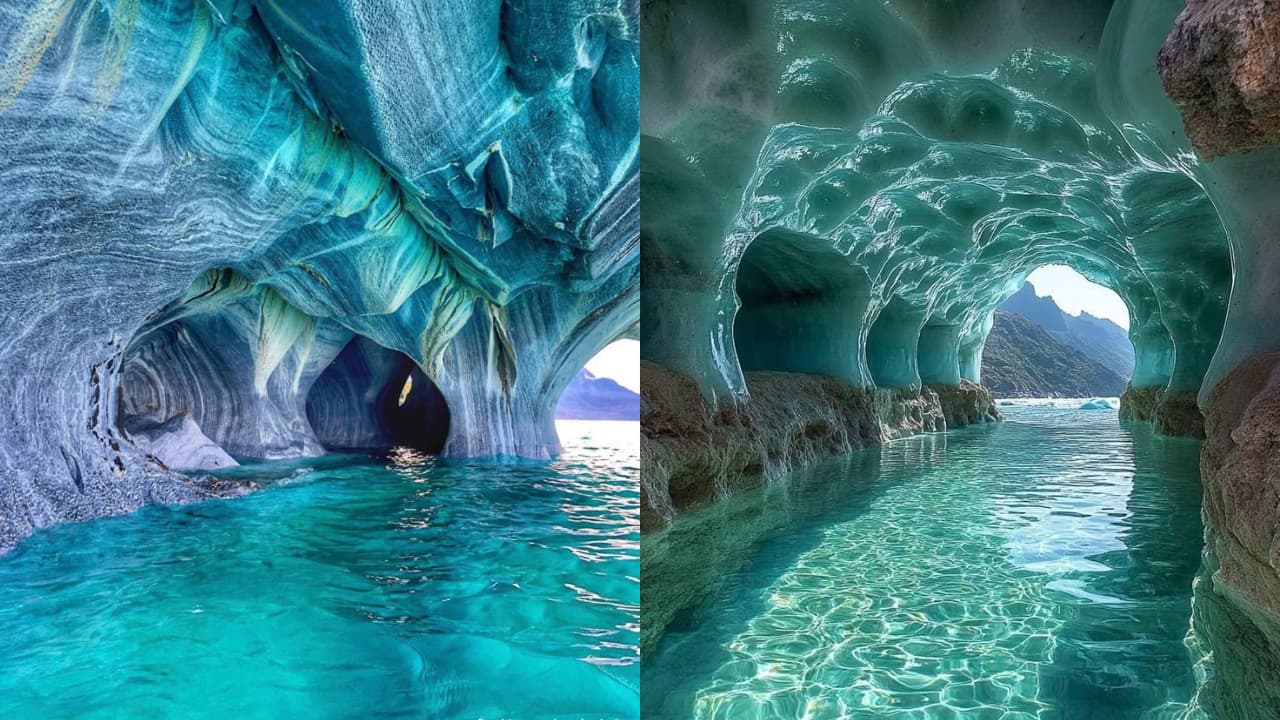
<p>Chile’s Marble Caves feature stunning turquoise waters, intricate marble patterns and natural arches. Located on General Carrera Lake in Patagonia, these unique formations attract travellers who explore the spectacular landscape by boat or kayak.</p><img><p>Chile is known for its diverse landscapes, from the vibrant capital of Santiago to the rugged wilderness of Patagonia. Beyond its bustling cities lies another remarkable attraction: the Marble Caves.</p><p>Located in southern Chile, these natural formations feature intricate patterns, smooth rock walls and striking turquoise waters, making them a fascinating destination for nature lovers and adventure enthusiasts.</p><img><p>Situated along the shores of General Carrera Lake in Chile’s Aysén Region, the Marble Caves are famous for their swirling patterns in shades of grey, white and blue.</p><p>These designs are entirely natural, created by water gradually eroding the marble over thousands of years.</p><p>The contrast between the sculpted rock formations and the lake’s vivid turquoise waters makes this destination particularly striking.</p><img><p>The main formations include the Marble Cathedral (Catedral de Mármol), Marble Chapel (Capilla de Mármol) and Marble Cave (Caverna de Mármol).</p><p>Their distinctive arches, curved walls and smooth surfaces have developed through prolonged exposure to water.</p><p>The formations are best viewed from the lake, where visitors can appreciate their intricate details.</p><img><p>The caves were shaped by waves repeatedly washing against the marble, gradually creating hollows, arches and smooth walls.</p><p>Researchers estimate that the formations developed over approximately 10,000 to 15,000 years, following the retreat of glaciers from the region.</p><p>Weathering and erosion continued to shape the exposed rock, creating the landscape visitors see today.</p>View this post on Instagram<p>A post shared by Earth Is Unreal | Travel & Nature (@earth.is.unreal)</p><p></p><img><p>The lake’s striking turquoise colour is linked to its glacial origins. Fine particles of rock, known as glacial flour, remain suspended in the water and scatter sunlight, contributing to its distinctive blue-green appearance.</p><p>The colour can vary depending on the lighting and weather conditions, giving the caves a changing visual appeal.</p><img><p>Kayaking is a popular way to explore the Marble Caves, allowing visitors to admire the intricate rock patterns, arches and curved ceilings from close range. Boat tours are another option.</p><p>As conditions on the lake can change, visitors should follow local guidance and choose authorised operators.</p><img><p>The caves are accessible from Puerto Río Tranquilo, a small settlement on the western shore of General Carrera Lake.</p><p>Visitors can join boat tours or kayaking excursions to reach the formations.</p><p>As the area is remote, travellers should check road conditions, weather forecasts and tour availability before setting out.</p><img><p>With their naturally sculpted marble walls and turquoise waters, Chile’s Marble Caves offer a memorable experience for travellers exploring Patagonia.</p><p>Whether viewed from a kayak or a boat, this remarkable natural attraction showcases Chile’s diverse landscapes and appeals to visitors interested in nature, photography and adventure.</p>View this post on Instagram<p>A post shared by Earth Is Unreal | Travel & Nature (@earth.is.unreal)</p><p></p>