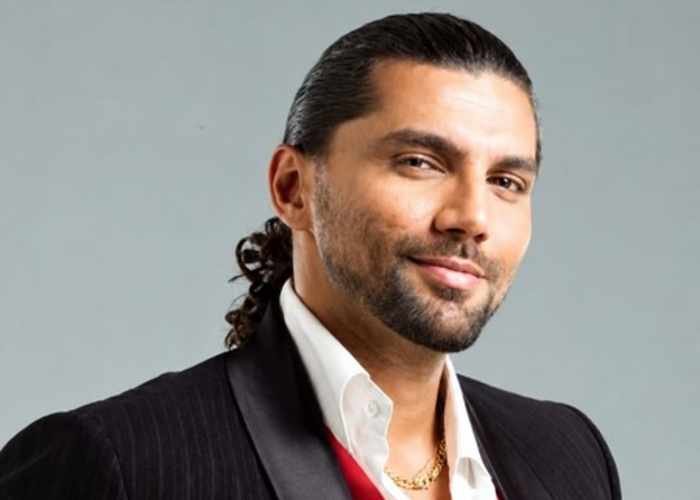
Television actor Chetan Hansraj has recalled his early days in the industry, revealing that his television journey began in the 1980s with B.R. Chopra’s iconic serial Mahabharat and that his “second innings” began with Balaji shows in 2004.
Recalling his debut, Chetan said he started his television career with Mahabharat, which was produced by B.R. Chopra and directed by his son Ravi Chopra.
“I actually started my television journey way back in the eighties with Mahabharat. That was B.R. Chopra’s Mahabharat, the first massive show on Indian television. I was a part of it then,” he said.
After that, Chetan stayed away from television for several years before returning to the medium in 2001 with the horror anthology series Ssshhhh…Koi Hai.
“After that, I didn’t really do much television for a long time. I came back to TV directly in 2001 with Ssshhhh…Koi Hai and then from 2004 onwards, I majorly did Balaji shows. That’s when my second innings on television truly started,” he said.
Chetan subsequently established himself as one of Indian television’s recognisable antagonists, appearing in popular shows including Kkavyanjali, Kaisa Ye Pyar Hai, Kyunki Saas Bhi Kabhi Bahu Thi, Baa Bahoo Aur Baby, Jodha Akbar, Devon Ke Dev…Mahadev, Mahakali – Anth Hi Aarambh Hai, Naagin 3 and Shiv Shakti – Tap Tyaag Tandav.
He has also participated in reality shows such as Fear Factor India, Iss Jungle Se Mujhe Bachao and Lock Upp. His film credits include Bodyguard, Once Upon a Time in Mumbai Dobaara, Shootout at Wadala and Hero.
Reflecting on the current television landscape, Chetan said the medium has not evolved as much as it could have.
“Honestly, I feel television has immense potential, but it is not being utilized or fed the way it should be. We are still stuck making the same old daily soaps, revolving around the same stories and the same formulas,” he said.
He noted that audiences are increasingly consuming content on OTT platforms and smartphones, but television continues to command a substantial audience, particularly in smaller cities and towns.
Chetan said television needs to evolve in terms of storytelling, treatment and pacing to retain viewers who are now accustomed to the variety offered by OTT platforms.