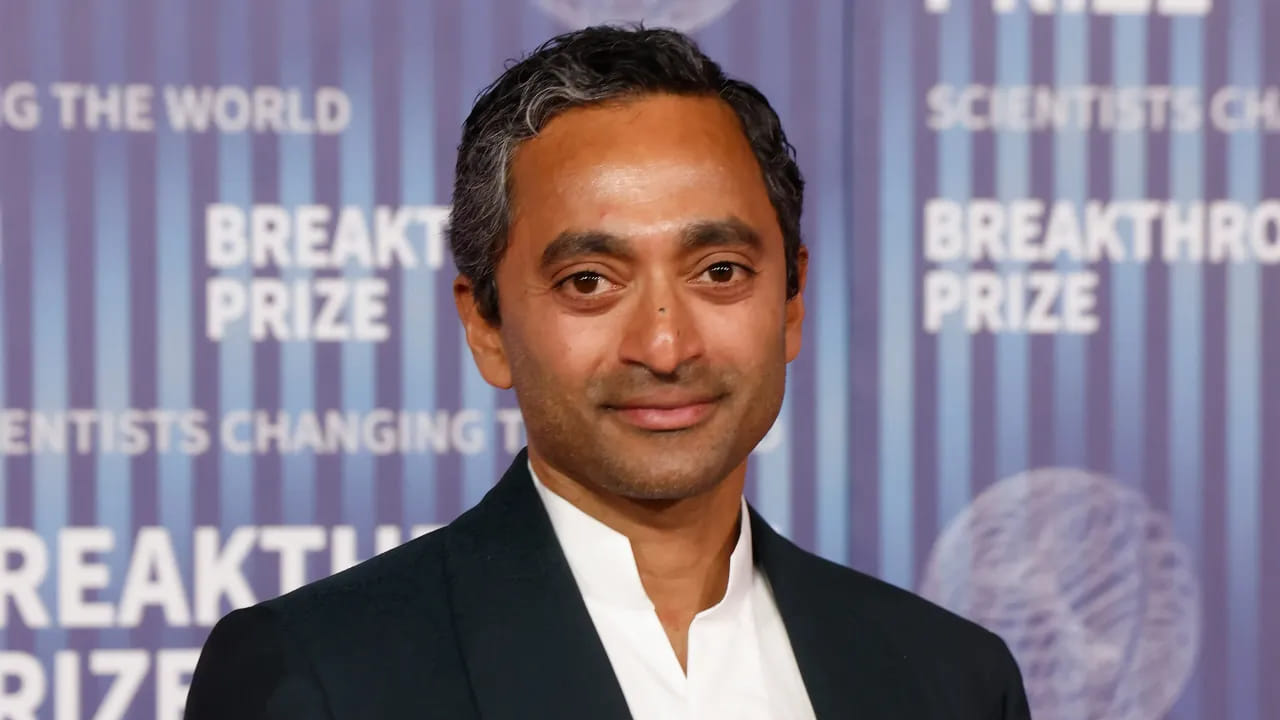
Palihapitiya argued that any decision to reinstate Huang could raise serious corporate governance concerns.
- Palihapitiya acknowledged that Huang was an “exceptional, legendary founder and CEO” who built what he called “the most important company in the most important industry in the world.”
- He added that Huang’s contributions to Nvidia were extraordinary, describing him as “biblically good.”
- However, Palihapitiya said Huang’s accomplishments alone shouldn’t justify bringing him back into a public company whose valuation and reputation have been affected by the controversy.
Chamath Palihapitiya weighed in on Nvidia’s leadership controversy, praising Jensen Huang’s legacy while cautioning against bringing the former CEO back into the company.
Speaking on the latest episode of the All-In Podcast, Palihapitiya argued that any decision to reinstate Huang could raise serious corporate governance concerns, even as he acknowledged the magnitude of Huang’s contributions to Nvidia and the artificial intelligence industry.
Nvidia shares fell more than 14% in Friday’s regular trading, but gained nearly 4% during the afterhours session.
Reinstating Huang Could Put Nvidia’s Governance At Risk, Warns Palihapitiya
The venture capitalist acknowledged that Huang was an “exceptional, legendary founder and CEO” who built what he called “the most important company in the most important industry in the world.” He added that Huang’s contributions to Nvidia were extraordinary, describing him as “biblically good.”
However, Palihapitiya said Huang’s accomplishments alone shouldn’t justify bringing him back into a public company whose valuation and reputation have been affected by the controversy. He argued that reinstating a leader under such circumstances could undermine corporate governance and create risks for stakeholders.
“You can’t reinstate somebody like that into a public company with that much valuation that has been destroyed, because it just completely throws governance out the window and it puts everybody at risk, everybody, including the company,” Palihapitiya said.
He added that the full extent of Huang’s mistakes was still unclear, making it difficult to form a definitive opinion about the broader situation. Palihapitiya said that was precisely why reinstatement wasn’t an option, arguing that Nvidia’s leadership needed to maintain governance standards rather than make exceptions.
Palihapitiya Defends Colette Kress Amid Backlash
Palihapitiya also expressed sympathy for Colette Kress, who he said was being placed in an awkward position as the person communicating the company’s leadership decision.
He described Kress as “excellent” and argued that criticism directed at her was misplaced, given that she was simply delivering the company’s message rather than making the underlying decisions.
“And the unfortunate part is I think Colette is excellent, and she’s put in the awkward situation of having to be the message bearer of that,” Palihapitiya said.
He also criticized online attacks against Kress, saying that internet trolls were unfairly targeting her for a situation that wasn’t her responsibility.
Why Huang Stepped Down, And Why Wall Street Still Sees Him As Irreplaceable
Huang announced his decision to step down as Nvidia CEO, president and a member of the board earlier this month. CFO Colette Kress was appointed interim CEO as the company began searching for a successor.
The leadership change followed reports detailing Huang’s alleged extramarital affairs, including allegations involving a Chinese intelligence asset and an executive who reportedly directly answered to him.
Despite the controversy, Yorkville Ives partner Dan Ives argued that Huang remains uniquely important to Nvidia’s AI ambitions, describing the company as having an unusually high dependence on its leader.
“Jensen’s worth $1 trillion to the story,” Ives said.
Ives continued to express confidence in Nvidia’s position in the AI industry, arguing that Huang’s influence, industry relationships and leadership are difficult to replicate.
“My view is there’s one chip in the world view in the AI revolution, it’s Nvidia,” Ives said. “You can’t change that. That’s not changing.”
What Retail Investors Think Of NVDA Stock
Retail sentiment on Stocktwits around Nvidia trended in the ‘extremely bullish’ territory at the time of writing.
NVDA stock is down 33% year-to-date and 31% over the past 12 months. The S&P 500 ETF (SPY) is up 6% over the past 12 months, while the Invesco QQQ Trust (QQQ) is up 4% over the past 12 months.
For updates and corrections, email newsroom[at]stocktwits[dot]com.<