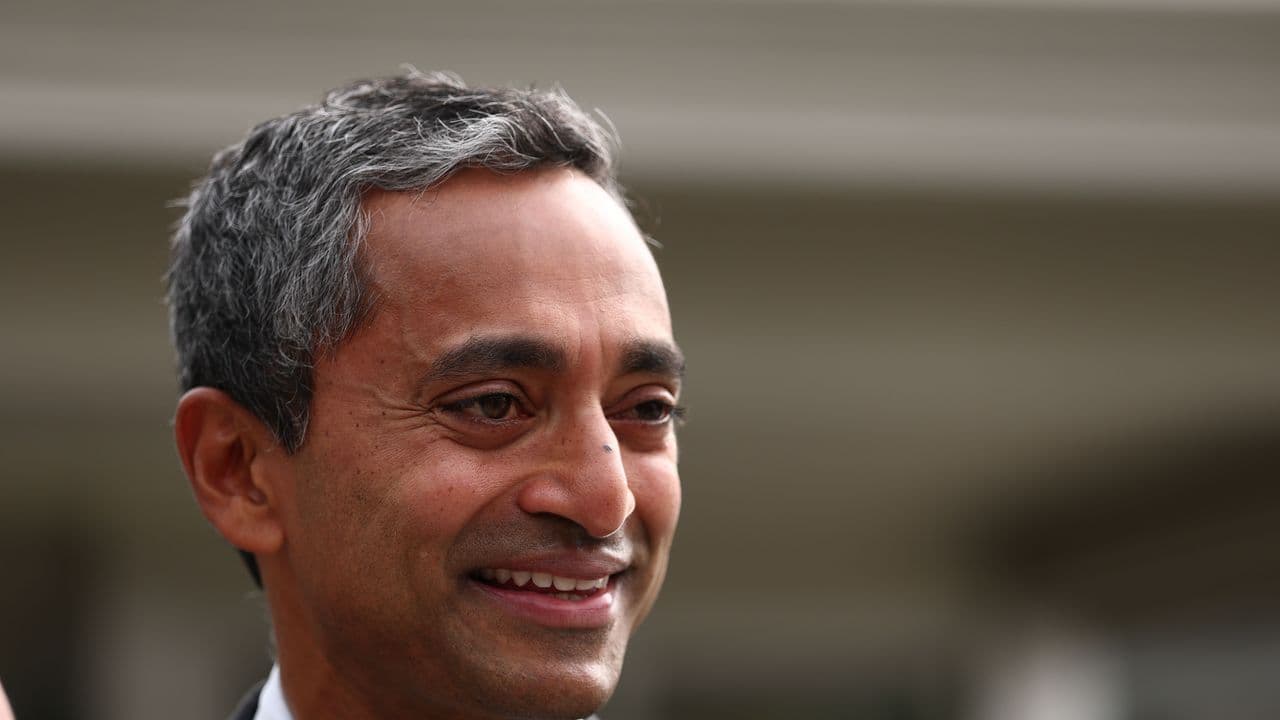
Palihapitiya highlighted power and physical infrastructure as possible lasting constraints in the AI race after Microsoft announced its own silicon chips.
- Chamath wrote that silicon companies will move up the stack while application companies move down it, so that “everyone competes with everyone” and soon offers its own silicon, cloud and applications.
- He asked what lasting constraint can support long-term markets and margins: distribution, a data moat, or a physical factor such as power.
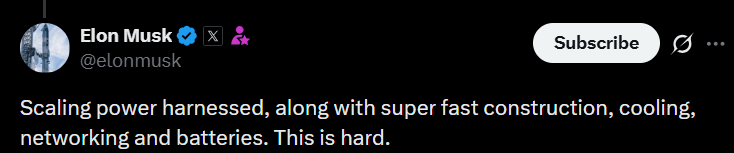
- “Scaling power harnessed, along with super-fast construction, cooling, networking and batteries,” Musk replied.
Venture capitalist Chamath Palihapitiya on Monday highlighted power and physical infrastructure as possible lasting constraints in the AI race, on the heels of Microsoft announcing its own silicon chips.
“You should expect the silicon chip companies to move up the stack as the application companies move down the stack. In AI, it is increasingly true that everyone competes with everyone. Everyone will soon offer their own LPS, silicon, cloud and applications,” Palihapitiya wrote in a post on X.
“The question is what will the constraint be that you can build a long term market and margins around… Is it distribution? Is it a data moat? Is it a physical constraint like power?,” he further posed.
Microsoft’s Custom Chip Push
The exchange followed an announcement by Microsoft CEO Satya Nadella that the company is making “our biggest bet yet on our own silicon.” Nadella said Microsoft will scale its Maia chip family to multi-gigawatt deployments starting next year, positioning it as the primary inference system for its own products and services.
He introduced the Maia 300, which “delivers 40% more tokens per watt compared to leading GPU-based systems,” and noted that the earlier Maia 200 is already deployed across the US, Europe, and Australia, delivering up to 1.7x more tokens per watt in Teams and Copilot.
Musk Weighs In On Constraints
Palihapitiya framed Microsoft’s move as part of a broader industry trend in which application companies design their own chips while chipmakers expand into software, cloud, and applications. The result, he argued, is intensifying competition across the full stack.
“Scaling power harnessed, along with super fast construction, cooling, networking and batteries. This is hard,” billionaire CEO Elon Musk said in response. Musk is part of the AI race through his two companies- Tesla and SpaceX, both of which are attempting AI development.
How Did MSFT, TSLA, And SPCX Retail Traders React?
On Stocktwits, retail sentiment around MSFT and TSLA was bearish at the time of writing, while sentiment around SPCX was neutral.
While MSFT has gained 12% year-to-date, TSLA has dropped 16%. SPCX, meanwhile, is trading at around $163, up from its IPO price of $135 but below its all-time high levels near $226.
For updates and corrections, email newsroom[at]stocktwits[dot]com.<