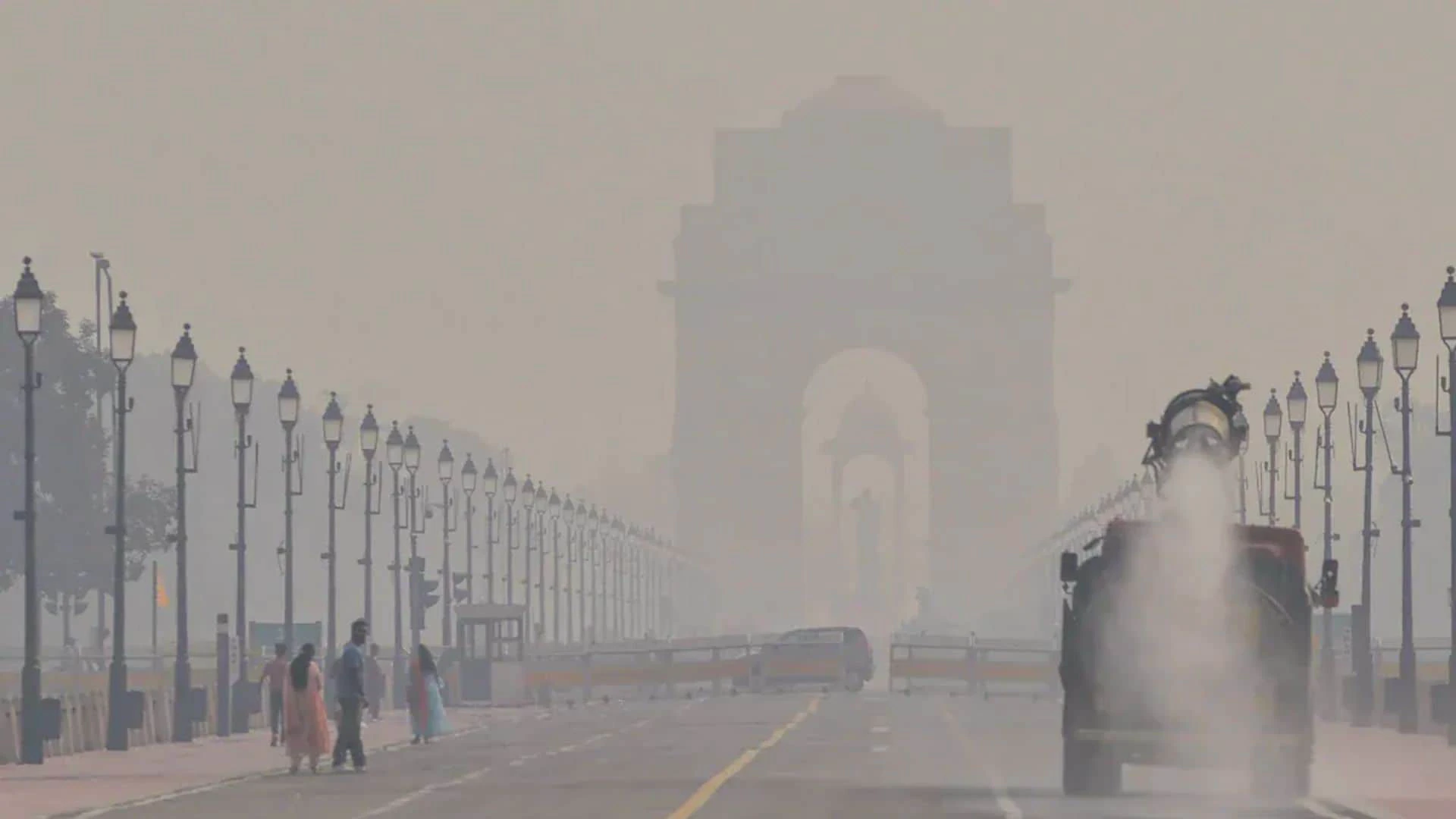
The government on Friday opposed tax relief for air purifiers – a plea made to the Delhi High Court citing the horrid toxic smog that has blanketed the city over the past few weeks.
Appearing for the government, Additional Solicitor General N Venkataraman told Justice Vikas Mahajan and Justice Vinod Kumar the 48 hours granted to respond to the petition.
But, the government argued, a plea to reduce GST on air purifiers – from 18 per cent to five per cent, to make them more affordable for poorer families – is untenable because rates are applied by the Goods and Services Tax Council after a process involving deliberation by stakeholders, licensing, and regulation, and this cannot be ‘scuttled’ through a writ petition.
The government also argued the GST Council is not empowered to decide if air purifiers are ‘medical devices’ – a classification that triggers the lower tax rate. This, the government said, could only be decided by the Health Ministry, which has not been made part of this case.
A ‘Pandora’s box’ will be opened if taxes of air purifiers are cut, ASG Venkataraman said.
However, the ASG offered a caveat; he said the government had not made a final decision.
On Thursday the court handed the government a choice – ‘provide fresh air or reduce GST on air purifiers’. A division bench of Chief Justice DK Upadhyaya and Justice Tushar Rao Gedela said reducing taxes was the “minimum” the government should do amid a ‘health emergency’.
The court underscored that public health context.
Referring to the hazardous air quality in Delhi and the surrounding regions, the court pointed out an air purifier can cost between Rs 10,000 and Rs 15,000, and asked the government why taxes could not be reduced to a level that will make it affordable for even the poorer sections.
The petition was filed by advocate Kapil Madan, who maintained it was not adversarial and argued that even a bare reading of the relevant notifications – i.e., Schedule I, which attracts the five per cent GST – would show air purifiers are being taxed under an incorrect category.
When the court asked the ASG why the Council could not take this call, it was told a Parliamentary Standing Committee recommendation on the issue is under consideration.
Delhi’s air quality crisis
Hazardous air quality in Delhi has been linked to nearly 15 per cent of all deaths in 2023, making it the city’s single largest health risk, according to Global Burden of Disease (GBD) data.
But, despite these alarming figures, the centre has maintained there is “no conclusive evidence” directly linking air pollution to mortality, calling it one of several contributing factors.
The AQI crisis in Delhi is not a new phenomenon. It is an annual problem exacerbated this year by the Supreme Court permitting the bursting of firecrackers during Diwali, an allowance hailed by the Bharatiya Janata Party that returned to power in the city after the February election.
Air purifiers have, thus, become an indispensable product in most homes, at least those who can afford the product. But lakhs of others, including the city’s homeless population, have no protection from the toxic air or access to medical care when they develop respiratory diseases.