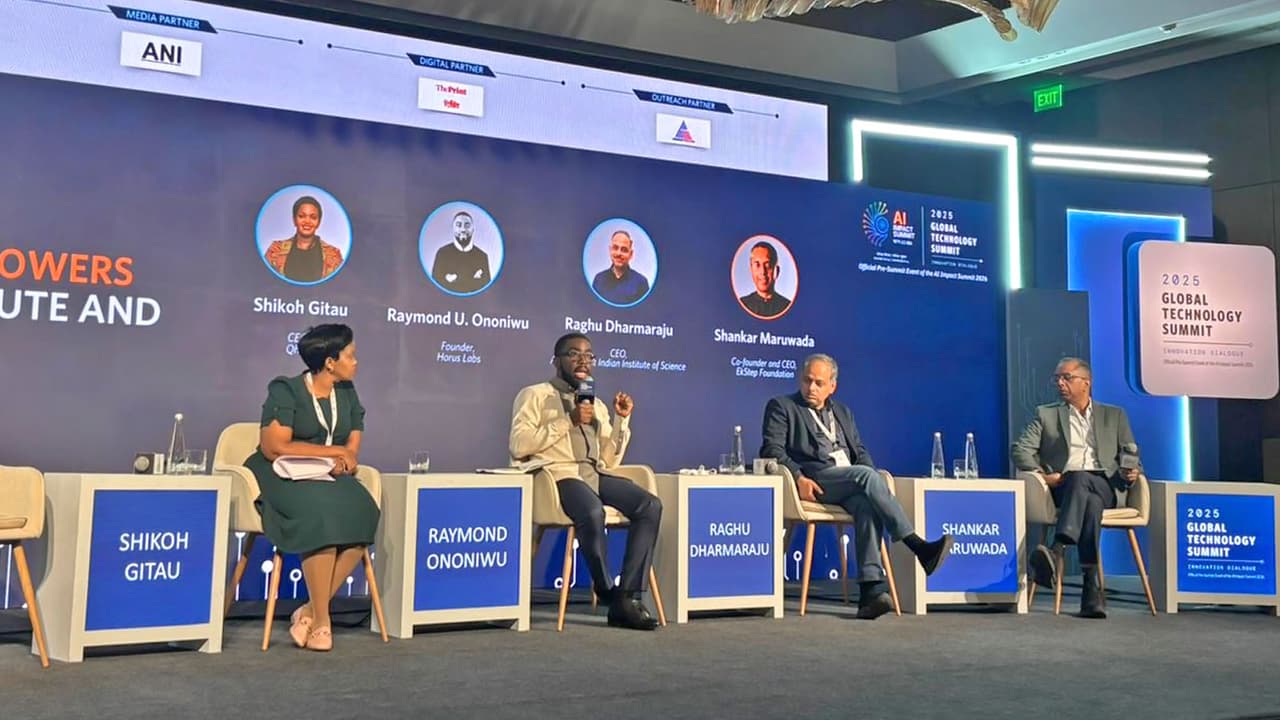
It was discussed at Carnegie India’s Global Technology Summit Innovation Dialogue 2025 that the future of AI and computing is not just about technology, but also about sovereignty, smart design and culture. Countries need to create AI models to keep their systems secure.
Author: Shruti Mittal
Carnegie India Global Technology Summit 2025: Global Technology Summit Innovation Dialogue 2025 was organized by Carnegie India with the Ministry of External Affairs, which was the pre-summit event of India AI Impact Summit 2026. In this, many important issues on AI and technology innovation were discussed this year. A special session of this event was ‘The Spine that Powers Use-Cases: Compute and its Discontents’. This panel discussed how computing infrastructure impacts our AI plans and innovation. Here experiences were shared from building renewable data centers in Africa, helping governments drive digital transformation, and advancing AI and digital public goods in India. Three main things emerged from this discussion.
Threat of sovereignty and dependency
Today computing i.e. computer power has become necessary for every country. If the country does not have its own capacity, it will have to completely depend on external platforms. This means that work may stop if the platform is down. Startups may suffer sudden losses when global companies change the rules. Governments will have to think about how to balance the cloud and their own systems. It is not safe to leave sensitive data, such as defence, health or intelligence records, entirely on external platforms. At the same time, cloud may also be required due to sudden increase in demand. Its solution is a layered strategy, which is a combination of a balance of the country’s own core capabilities, edge-solutions and selective cloud use.
Smart engineering, not much power
AI models demand a lot of computing power, but not every task requires the most power. In public health, caching common questions or running models on mobile can reduce costs. Money and time can be wasted in always trying to increase accuracy. For example, a screening tool with a 90% accurate result may still work if it reaches the right people in a timely manner. The biggest thing is that computing is only a means of helping, not an objective in itself. Innovators must now design systems that work with less resources.
Models and Cultural Imprint
The panel also said that AI models are not neutral. They reflect the values and beliefs of the societies that created them. For example, respect for elders is deeply rooted in African culture, but this recognition would not be reflected if the model was developed outside. If computing capacity remains concentrated in a few regions, the cultural preferences of those regions will dominate the digital world. Therefore, it is important to include not only technical sovereignty but also local languages, rules and cultural contexts in the models.
practical agenda
This Carnegie India discussion made it clear that sovereign capability, design and cultural image are not just ideas, but real challenges. If not handled properly, AI solutions may remain limited to pilots. Meaning, just making technology is not enough. Governments should invest in infrastructure that provides both flexibility and safety. Innovators must design systems that work with limited resources. From a social perspective it is also important to understand that computing is not just power, but it decides which values will prevail in the digital world.
who is shruti mittal
Shruti Mittal, who wrote this article, is a research analyst at Carnegie India. His current research field is related to Artificial Intelligence (AI), Semiconductors, Compute and Data Governance. Additionally, he is interested in how open development and diffusion of technologies can bring social and economic benefits to the Global South (developing countries).