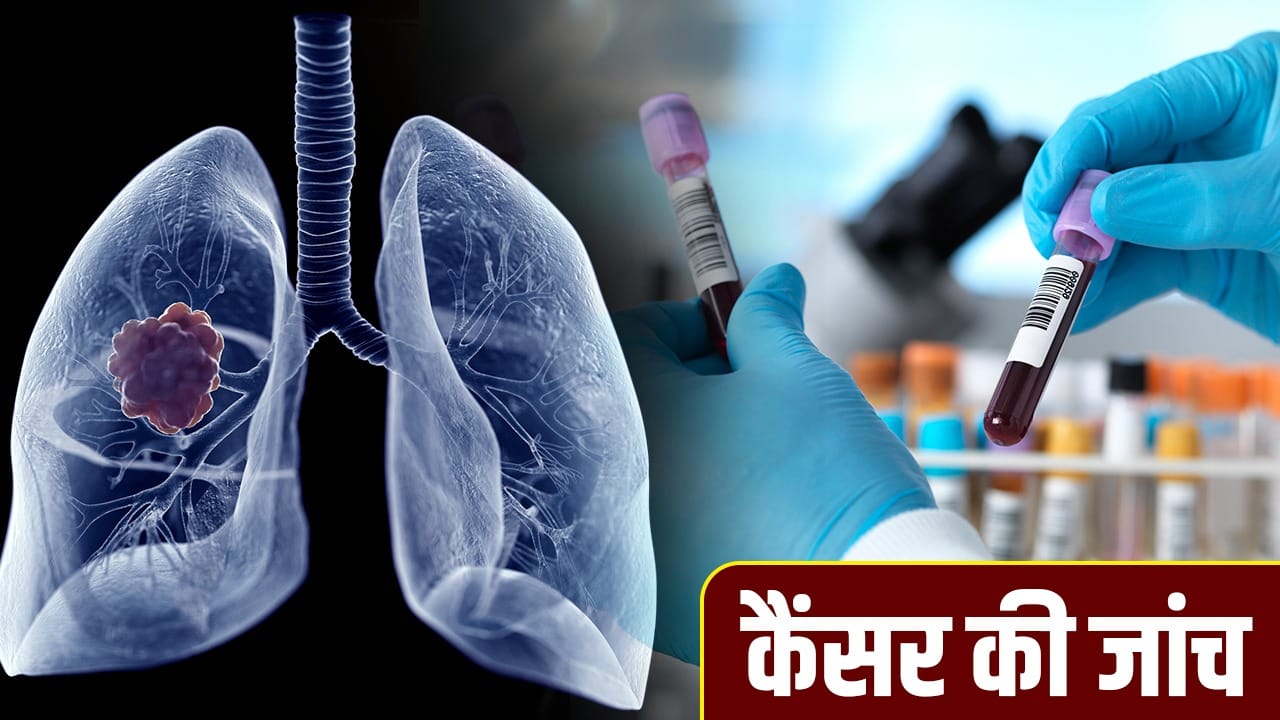
lung cancer screening
Lung cancer is a fatal disease. Most of its cases come in the last stage. The reason for this is that the disease is not identified on time. But now scientists have developed a blood test. Through this, even single cancer cells present in the blood can be identified. This technology has become a ray of hope in the detection of lung cancer.
This blood test has been developed by a team of researchers from University Hospitals of North Midlands NHS Trust (UHNM), Keele University and Loughborough University. This technique is called Fourier Transform Infrared (FT-IR) microspectroscopy. In which a sample of the patient’s blood is taken and cancer Cells are identified.
This is how cancer is diagnosed
In this technique, first of all a blood sample is taken. After this, a light is shone on the sample and this light examines each cell in detail. If any cancer cells are seen in it, it has a special print and it is identified through computer based analysis. With this test, even single cancer cells present in the blood can be detected. This identification is difficult in any other test. With this test, early detection can be possible. Compared to other cancer tests, this test takes less time and can bring a big change in cancer screening and monitoring.
Investigation is done through biopsy or tissue sampling.
At present, biopsy or tissue sampling is done to detect cancer. These can not only be painful, but also expensive. It takes several days for the report to arrive and the patient faces a lot of trouble during the biopsy. However, the new blood test will cause less pain to the patients and the disease will also be identified on time. This will also make the treatment of lung cancer easier.
The scientists doing this research say that if this test is successful on a large scale, then it can detect many types of cancer early, which will prove to be a big step towards the treatment of this disease. However, this study is still in clinical trials and has not been completed yet. Currently waiting for its completion.
What do experts say?
Dr. Rohit Kapoor, oncologist at Max Hospital, Delhi, says that this test is still in the trial phase, for now it will have to be seen on a larger population. If it is successful, it can prove to be a major revolution in cancer detection, because more than 80 percent of lung cancer cases are identified in the last stage. The reason for this is that there is no very good technology for its testing.