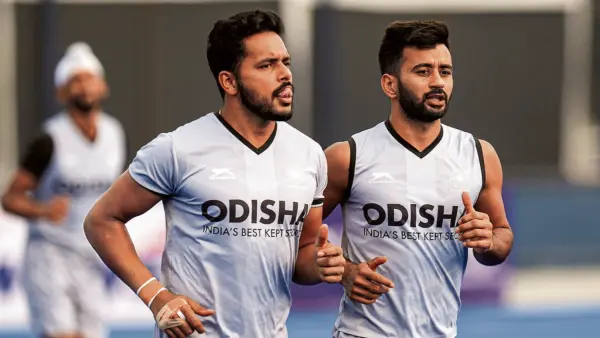
Bengaluru: Just before the Indian men’s hockey team checks into Amstelveen in the Netherlands for the Hockey World Cup starting on 15 August, they will make a very important pit stop in Switzerland.
Like they did before the Paris Olympics two years ago, the Indians will undergo a three-day high-intensity camp at renowned adventurer Mike Horn’s base camp in the Swiss Alps.
The camp, known to push the limits of the human body (both physically and mentally) and sought after by several teams and athletes ahead of high-profile events, will be overseen by mental conditioning coach Paddy Upton.
Apart from being a massive fan of Upton’s unique methods, the big reason why head coach Craig Fulton is repeating this punishing exercise is to strengthen the fortitude of the team ahead of an important two months.
Right after the World Cup, even before they can catch their breath, the team will be flying to Japan for the Asian Games, where a gold will punch their ticket for the Los Angeles Olympics in 2028.
But much more important is breaking the 51-year-old World Cup jinx, something that is weighing heavily on the team. Since winning the quadrennial extravaganza for the lone time in 1975 in Malaysia, the Indians have failed to scale the podium in the next 12 editions, including the last two, which were held in Odisha.
Their best has been fifth-place finishes in 1982 and 1994, the eight-time Olympics champions fluffing the lines inexplicably a vast majority of the time.
So, why has the World Cup been such a hard puzzle to solve when the Indians have won three Asian Games gold (1998, 2014, 2023) and two Olympics bronze medals (2021, 2024) since that magical night in Kuala Lumpur 51 years ago?
“As a former player, I still believe success is found through hard work and on-field performances, but I believe the World Cup has been a jinx for the Indian team over the years,” Jude Felix, former India captain and one of the finest players of his era in the 1990s, told DH.
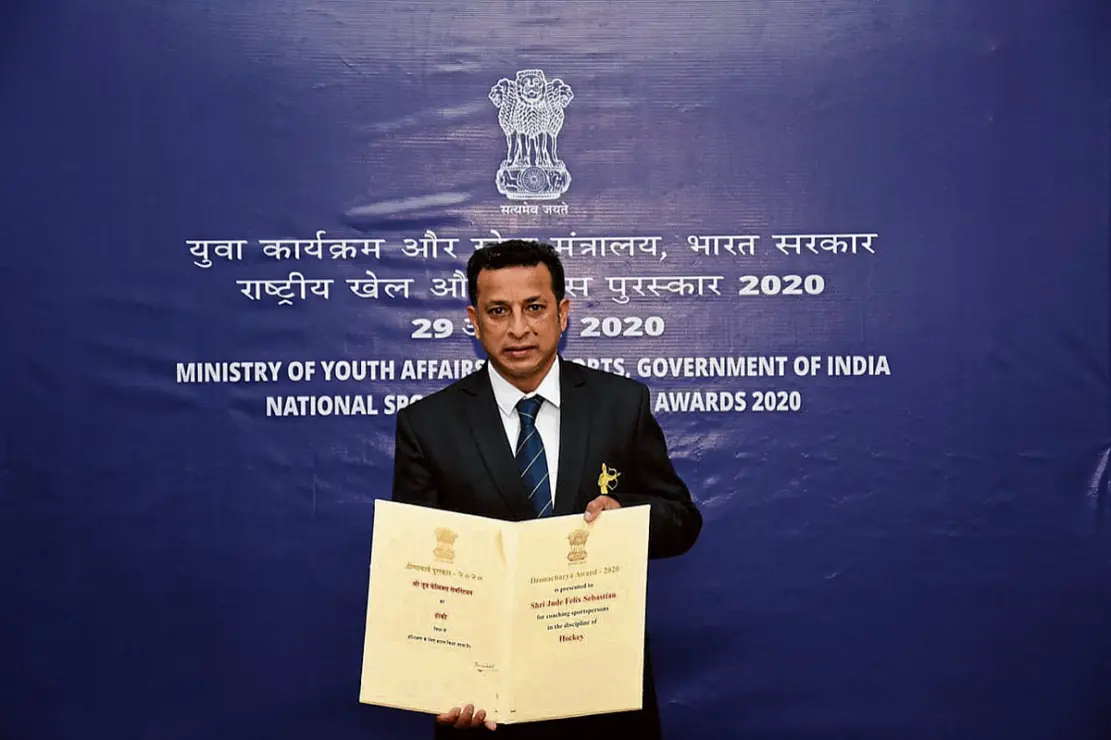
Jude Felix
“The teams that come to the Olympics are much stronger. The level of competition in the Asian Games has gone down with Pakistan’s decline and India’s resurrection as a continental power, but the two back-to-back bronze medals at the Olympics are a fabulous achievement given how strong hockey is at the top. So, I get a feeling the World Cup is a jinx.”
Well, jinx is one plausible way to describe it. But scratch that word and there are multiple reasons why Indians have struggled to crack the World Cup code for five decades. Initially, it was due to the Indian team’s slide down the ladder when artificial turf replaced natural grass in the immediate aftermath of their Malaysian triumph.
Known for their attacking brand of hockey, individual brilliance and eye-catching stick work, the Indians struggled for a long time to transition to synthetic surfaces. The Europeans were quick to adapt and the seemingly reluctant Indians just stagnated. While they did win a gold at the 1980 Moscow Olympics, hockey started to decline in the 1990s before starting to recover since the start of the previous decade.
As Indians returned to the modern-day demands, early adapters like Australia, the Netherlands and Germany had already taken a massive lead and had become the benchmarks.
Then came along Belgium, who thrust themselves into the elite by winning a silver medal at the 2016 Olympics before going on to claim gold at the World Cup two years later and finally securing the Olympic gold in Tokyo in 2021. Teams like Argentina, Spain and England have also made significant strides.
The Indians have also been found wanting in clutch moments and matches. Apart from skill, what wins you matches when they get chaotic, especially in knockouts, is temperament. Defence, which has long been India’s Achilles Heel, has often leaked goals at the death that have resulted in numerous heartbreaks.
Plus, Indians have depended too heavily on penalty corners for goals at times, and opponents have come prepared, often choking them out in the midfield and rarely allowing the wingers to make those vital circle penetrations. Those mistakes in main moments have cost them dear many times.
“Yes, tactically and technically, we have fluffed the lines in crunch matches at the World Cup,” Felix, a Dronacharya award winner who coached the junior and senior sides in various capacities, said. “Midfielders need to receive the ball much more. Forwards need to be scoring better. Defenders have to be much stronger. I would like to give the example of the France vs Spain FIFA World Cup semifinals. It was a midfield masterclass from Spain. Every time Spain lost possession, they immediately gained it. Plus, whenever a Spain midfielder had the ball, he had 2-3 options to pass it. But Spain’s marking and understanding was so great, the moment a France player got the ball, he had just one option. And Spain easily intercepted it.”
Former India player and current selector M M Somaya did admit mistakes have been made in the past but is confident of the current bunch breaking the jinx.
“At the Olympics and World Cup, you have to be on top of your game every match because all countries send their best teams. One mistake in a crunch game can spell doom. So I think that’s been one of the reasons why we may not have been able to get on the podium at the World Cups.”
Somaya, part of the 1980 Moscow Games gold-medal winning team (the last of India’s eight), however, felt rather than doing a post-mortem into past failures he wants to envision a brighter future.
“I would not like to look back. I would say that in tournaments like this, you have to capitalise on every chance that comes your way. You cannot afford to be lax at defence. Goalkeeping must be of the highest order. Short corner conversion must be excellent. I would say we need to be sharp in these three areas. Having said that, I would like to look ahead rather than analysing the past. We have picked a very good team and I’m hopeful they will do well.”
When India steps onto the field at the Wagener Hockey Stadium on Independence Day to take on Wales in their opening Pool D affair, they will feel the weight of the World Cup cross. It will start getting heavier as they progress.
Can they carry it successfully and end a 51-year podium drought, or fall under the massive weight of it? Time will tell.