New Delhi: As tensions in the Middle East disrupt global oil supply chains, the search for alternative fuels has gained urgency. The increasing cost and the insecurity due to major shipping routes have shown the extent to which many nations rely on imports of crude oil. It is against this background that a Chinese startup is making boasts about a significant breakthrough that is set to transform the production of fuel.
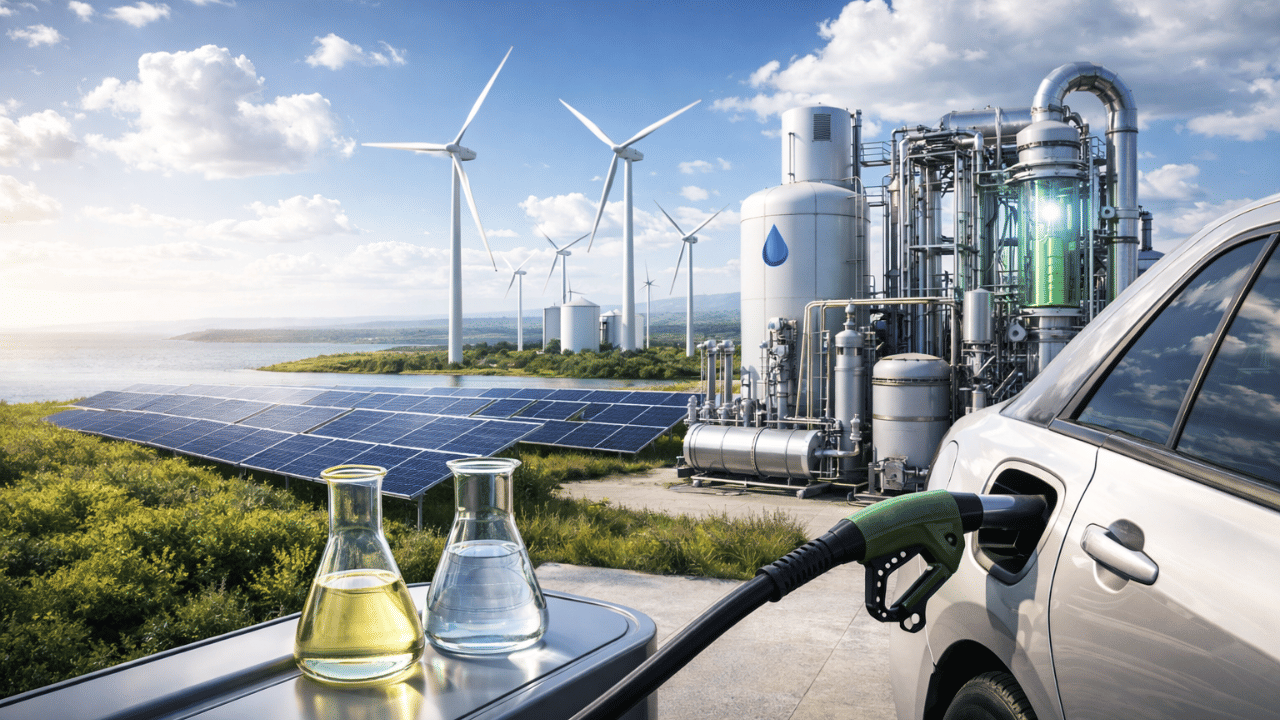
Carbonology, a company based in Shanghai that was co-founded by a former Tesla vice president, claims it has invented a technique of producing synthetic fuel by only using air, water, and renewable energy. The company attributes that its process has the capability to generate petrol, diesel, jet fuel and naphtha at competitive prices, and this represents the potential substitute to the traditional fossil fuels.
How the technology works
This is based on the Direct Air Capture (DAC) of carbon dioxide in the atmosphere. Renewable sources of energy like solar and wind are then used to split water into hydrogen and oxygen. The combination of these elements occurs by chemical reaction, such as Fischer-Tropsch synthesis, to produce liquid fuels that can be used by the current engines.
Why it matters now
China imports over 70 per cent of its oil, including the majority of the Middle East oil. Continuous geopolitical unrest has brought up the issue of supply breakages. Such technologies can be used to become less dependent on imports and enhance long-term energy security. The relocation is also in line with the overall trend by China in favour of cleaner forms of energy.
While the announcement sounds promising, experts remain cautious. Artificial fuels produced by carbon capture are yet costly and energy-consuming. The cost of production in certain instances is reported to be several times greater than the conventional petrol. Scalability and efficiency are also significant issues.
Carbonology claims that it will expand with a new plant in Shanghai. The company is also spending a lot of money on research to reduce its costs and enhance efficiency. The question of whether or not the technology can work globally is, however, in doubt. At this, it is a radical move in the direction of seeking substitutes for fossil fuels.