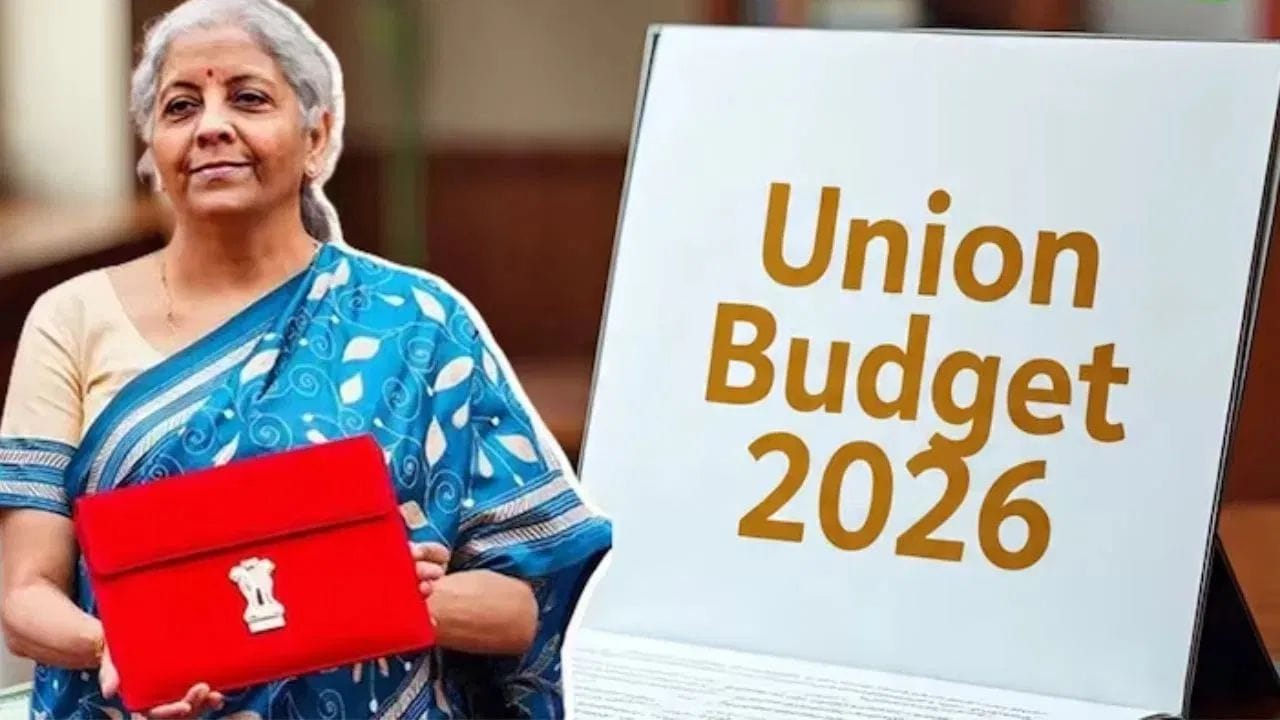
Finance Minister Nirmala Sitharaman is going to present the general budget of the country on 1 February 2026. Earlier, according to the survey of ET-PwC, to improve India’s competitiveness and investment environment, the first thing in the budget should be to implement a fast and systematic tax dispute resolution system. Along with this, early approval of Advance Pricing Agreement (APA) should also be a major priority to bring clarity in transfer pricing related matters.
44% of the people surveyed demanded early resolution of tax disputes and use of mediation, while 39% asked for speeding up the APA process. Apart from this, demand was also raised to simplify corporate tax incentives for manufacturing and ease the rules of withholding tax.
Mediation enforcement and appeals
According to the survey, all healthcare and pharma companies want better resolution of tax disputes, while 70% of infrastructure companies sought clarity in transfer pricing. 34% people said that officials making wrong and excessive tax assessments should be held accountable, and 32% wanted time-bound disposal of appeals. 83% of companies with turnover of ₹500-999 crore want strict accountability on high-pitched assessments. There is also a demand to formally implement mediation in tax disputes and lower pre-deposit for appeals. Companies with turnover of more than ₹5,000 crore want all these reforms to be included in the budget.
This survey is based on CFOs of 41 companies from different sectors, whose turnover ranges from less than ₹ 500 crore to more than ₹ 10,000 crore. The business world says that this budget should provide stability and at the same time, such targeted incentives should be given, which will increase private investment. The new Income Tax Act is going to come into force from April 1, 2026, so companies want the changes to be implemented easily, dispute resolution to be strengthened and the APA and safe harbor system to be improved. Tax exemptions for data centres, GCC, manufacturing and financial sectors can make India more attractive for investment. In indirect tax, the industry is hoping to simplify the custom duty structure, bring in a one-time scheme to resolve old disputes and make the customs process more digital.
GCC (Global Capability Center) Reforms
51% people in the survey said that for the expansion of GCC, transfer pricing safe harbor rules should be made clearer and stronger. 22% said to speed up the APA process. There are currently more than 1,750 GCCs in India and about 2,975 units are operational. Of these, more than 220 units are in Tier-2 and Tier-3 cities. According to Minister of State for IT Jitin Prasad, these GCCs generated revenue of $64.6 billion in FY25 and this market could reach $110 billion by 2030. It is estimated that by 2030 the number of GCC will increase to 2,400-2,550. In the last budget, the government had also said that a national framework will be created to promote GCC in tier-2 cities, which will guide the states in improving talent, infrastructure and regulations.
Indirect Tax and Custom Reforms
According to the survey, 39% people want the customs process to be completely digital. 34% people are demanding to simplify the MOOWR scheme, so that companies can import raw materials and machinery without paying duty. About 20% people demanded an amnesty scheme to settle old disputes, while only 7% wanted uniformization of custom and transfer pricing valuation. Companies in the infrastructure and technology sectors are demanding all these reforms. Digital process of customs is the biggest priority for companies with turnover of less than ₹500 crore, while medium-sized companies also want reforms in the MOOWR scheme and amnesty scheme.