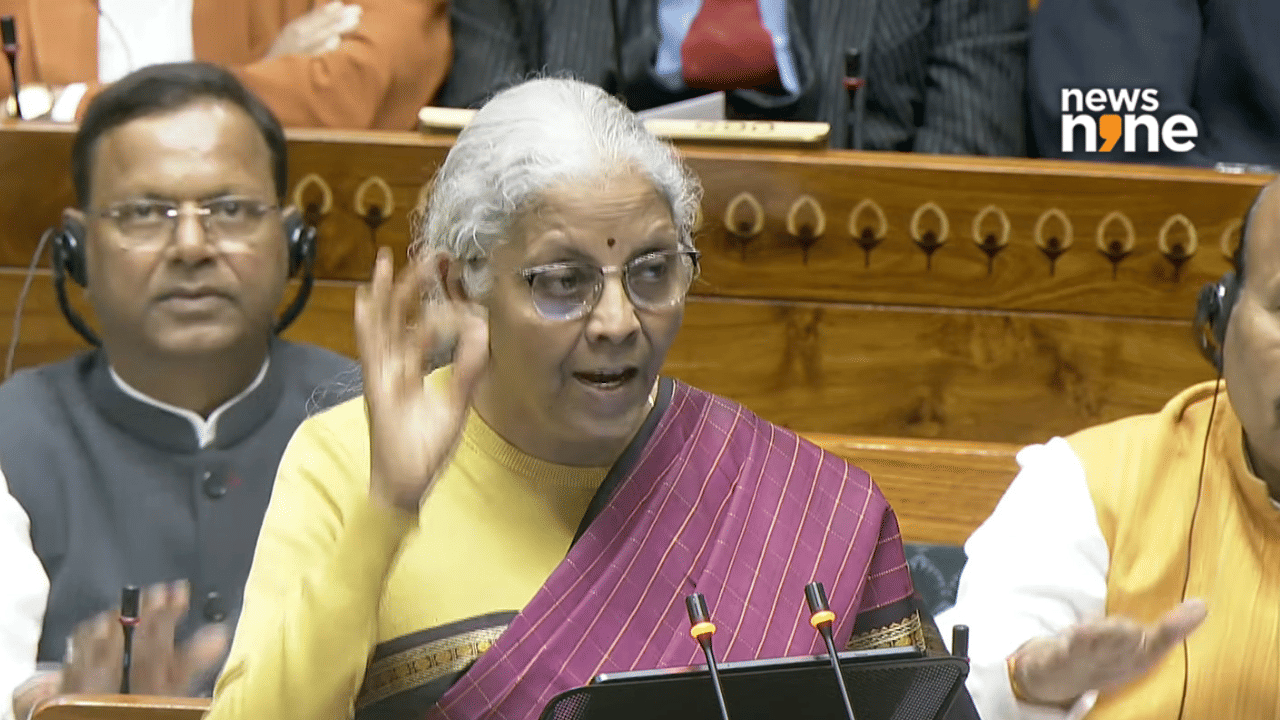
New Delhi: India’s Union Budget 2026 opened on an unusual note, with Finance Minister Nirmala Sitharaman presenting the country’s annual financial roadmap on a Sunday for the first time in parliamentary history. The session quickly turned into a technology and manufacturing-heavy address, with a clear focus on semiconductors, electronic components, rare-earth materials, and small business growth.
For anyone tracking India’s ambitions in chips, electronics, and critical minerals, the speech offered several headline-grabbing announcements. From a new phase of the semiconductor mission to fresh funding for biopharma and SMEs, the government signalled that deep-tech manufacturing and supply chain localisation remain central to its economic strategy.
India’s semiconductor mission 2.0 takes shape
Building on the existing programme, the government confirmed that it will launch India’s semiconductor mission 2.0. The aim is to expand beyond chip fabrication and into equipment, materials, and full-stack design.
“Building on the India’s semiconductor mission 1.0, the government will launch ISM 2.0 to produce equipment and materials, design full-stack Indian IT and fortify supply chains,” the finance minister said in her speech.
The move suggests a broader attempt to reduce dependence on imported chip-making tools and inputs, an area where India currently relies heavily on overseas suppliers.
Rs 40,000 crore push for electronic components manufacturing
One of the biggest numbers of the day came from electronics manufacturing.
“Electronic Components Manufacturing Scheme outlay increased to Rs 40,000 crore,” said Nirmala Sitharaman during the budget session.
This increase is expected to support domestic production of components used in smartphones, telecom gear, consumer electronics, and industrial hardware. For startups and mid-sized manufacturers, this could translate into more incentives and easier access to capital.
Dedicated rare-earth corridors for mineral-rich states
Rare earth elements and permanent magnets are critical for EV motors, wind turbines, and advanced electronics. The budget placed special emphasis here.
“Rare earth permanent scheme, Tamil Nadu to be supported for rare earth corridor among other states,” Sitharaman said.
She added that the government proposes to support mineral-rich states such as Odisha, Kerala, Andhra Pradesh, and Tamil Nadu to establish dedicated rare-earth corridors to promote mining, processing, research, and manufacturing.
Bio Pharma Shakti and SME growth fund announced
Beyond electronics and materials, the budget also introduced new support for biopharma and small businesses.
“I propose Bio Pharma Shakti with a proposal of Rs 10,000 crore for next 5 years,” Sitharaman said.
Another key announcement was a new fund for small and medium enterprises.
“Rs 10,000 Crore SME Growth Fund. The idea is to incentivise SMEs based on select criteria.”
Taken together, the announcements point to a budget that leans heavily into manufacturing, deep technology, and domestic capability building.