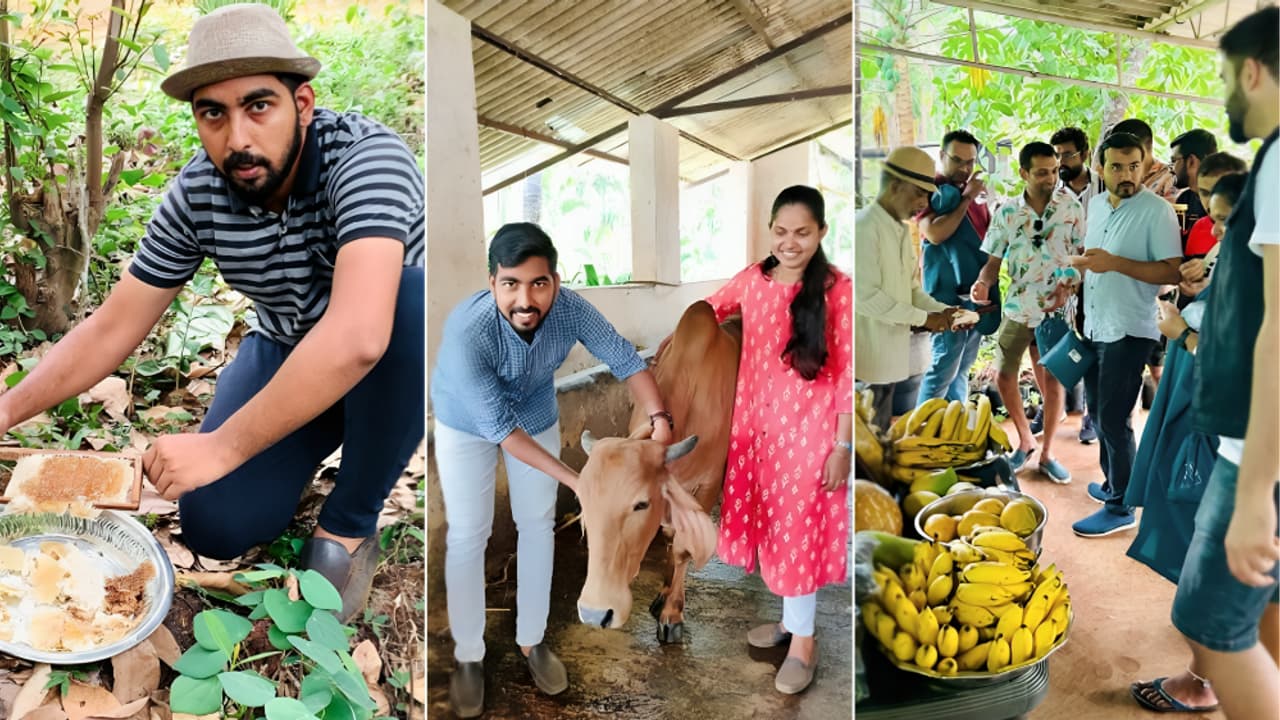
In Goa, Naik family turned 34 acres of long-abandoned land into RasRaj Goa Farms. Led by Vandit and supported by his parents Rajendra and Rasika, the farm uses organic methods, beekeeping and intercropping to grow 20,000 trees, vegetables and spices.
When Vandit and his parents began work on a neglected piece of land in Mollem, few people believed it could be brought back to life without chemicals. The land had been barren for about 40 years and was choked with weeds. Today the same land is RasRaj Goa Farms, a working, award-winning organic farm that visitors can stay at and tour, according to a report by The Better India.
A big family decision and a new life for the land
Vandit’s father, Rajendra, was a contractor for many years. In 2010 he decided to buy the Mollem property and take a chance on farming. It was a bold move. He was the family’s breadwinner and turning to farming meant a major change.
Vandit studied for a B.Sc. in Agriculture. He says those college years were some of his happiest. During the week he studied theory. On weekends he worked on the farm. Those practical hours helped him learn how land and crops behave in the real world.
For Vandit the work was also a return to childhood. He remembers spending long days with his grandmother at paddy plantations in Goa-Velha. His grandmother taught him many small but vital things, such as how to water brinjal plants only every three days. Vandit told The Better India such lessons are not found in books. They are the kind of practical knowledge that fits the soil and climate of Goa.
Organic methods and soil care
From the start the Naik family insisted on chemical-free farming. Priyanka, Vandit’s wife who also studied agriculture, explains the farm’s approach. They use organic manure and beneficial microorganisms to make nutrients available to plants. When soil is alive and fertile, it feeds crops naturally and reduces the need for chemical fertilisers.
They also use a traditional mixture called panchagavya. This is made from cow milk, curd, ghee, dung and cow urine, all from the farm dairy. The family adds jaggery, tender coconut water, banana and toddy. The mix ferments for 18 days, is filtered and used to nourish plants.
Vandit describes the first steps on the land. They cleared the weeds, mulched the soil and balanced the carbon-to-nitrogen ratio. They planted areca palms as a cash crop. Initially they planted about 5,000 palms. Today the number has grown to around 8,000. They also planted nine varieties of bananas and used intercropping with pineapples to make efficient use of space and nutrients.
Diversity: trees, vegetables and spices
RasRaj now boasts roughly 20,000 trees. The farm grows grapefruit (pomelo), rose apple, litchi, avocado, blackberries and plums. There are many mango varieties too, including mankurad, Ratnagiri, totapuri and Goan alphonso. Fruit pots hold large pomelos grown without a single drop of chemical input.
Vegetable plots produce tomatoes, chillies, brinjals and leafy greens. Spice plants such as cardamom and turmeric grow deep in the soil and tap into nutrients that reach lower layers. The farm’s design lets different root systems work together. Areca palms have shallow fibrous roots while spice plants root deeper. This variety helps the whole system stay healthy.
Animals, dairy and bees
The farm dairy houses 34 cows and buffalo. Rajendra says caring for the animals brings calm and satisfaction. The animals supply milk and the raw ingredients for panchagavya. The family also runs bee-keeping units. Bees help with pollination and add another income stream.
Visitors can try farm tasks such as milking a cow, learning beekeeping, or practicing grafting. The dairy and the animals are central to the farm’s daily rhythm.
Agri-tourism and education
RasRaj has recently added four cottages built with laterite stone, mud and lime. The family shifted into an agri-tourism model so visitors can stay, learn and eat local food. A farm tour includes a welcome snack, a herbal tea, a farm lunch, a river dip and lessons in vermicomposting, organic farming and bee-keeping.
The farm runs training for students and new farmers. Last year 126 schools, institutions and farmer groups visited RasRaj. The tours attract students, amateur gardeners and experienced farmers. People come to see practical organic farming and take ideas back to their own fields.
Awards, sales and self-reliance
In 2021 the Naik family won the Krishi Ratna Award, the highest state award for farmers in Goa. The prize gave them confidence and wider recognition.
The farm supplies about 95 per cent of the family’s food needs. Most produce sells quickly at the farm gate because visitors and locals buy fresh fruit and vegetables directly. Vandit says their pomelos are some of the biggest in Goa, and competition results have backed that claim.
A lesson from the grandmother
Vandit often recalls the lessons of his grandmother. She taught him how to care for plants by watching them over time. He says these lessons taught him to look, listen and adjust, not to follow blanket rules. That wisdom has helped RasRaj adapt practices to Goan soil and weather.
A stay at RasRaj offers simple comfort and many activities. Guests can tour the plantation, watch training sessions, taste farm produce and learn hands-on skills. The Naiks serve meals made mostly from farm produce and share stories about the hard work needed to turn the land green.
Evenings on the farm bring bird songs and bright colours across trees and vegetable beds. The place shows how patient work and care can heal land and create a living for a family.
RasRaj Goa Farms is a reminder that farming can be a chosen career, not a fallback. With knowledge, patience and respect for nature, a family turned a 34-acre wasteland into a thriving, chemical-free farm. The Naiks now teach others what they learned, showing that sustainable farming can be both profitable and life-giving.