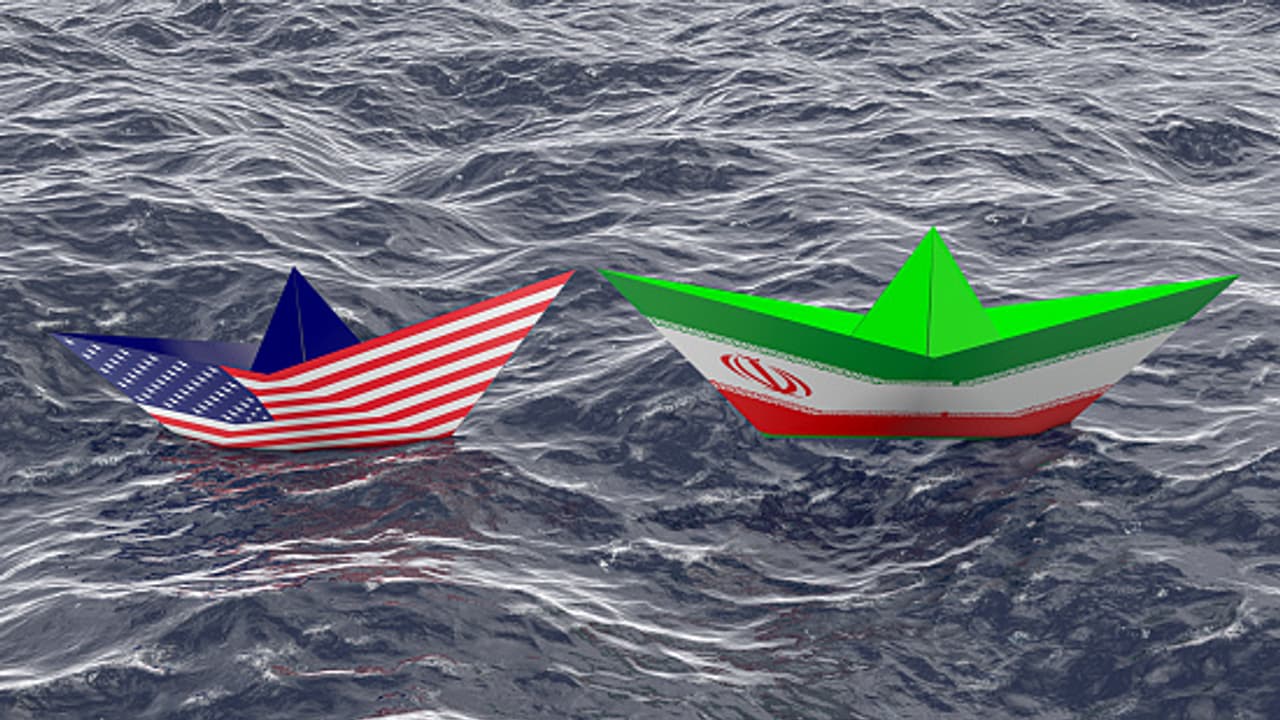
Tensions between the US and Iran have risen after failed talks, with President Donald Trump announcing a blockade of the Strait of Hormuz. He warned Iranian ships could be “eliminated” if they approach. Oil prices surged above $100, while global stocks fell amid fears of supply disruption and inflation. Iran has warned of strong retaliation.
Tensions between the United States and Iran have sharply increased after peace talks between the two sides collapsed. US President Donald Trump announced that the United States will begin a blockade of the Strait of Hormuz, one of the most important sea routes in the world. The talks, which were held in Islamabad, ended on Sunday without any agreement. The main issue between the two countries was Iran’s nuclear programme. The US demanded that Iran completely give up its nuclear weapons plans, but no deal could be reached.
Trump issues strong warning
After the talks failed, Trump issued a strong warning on social media. He said that any Iranian “fast attack ships” that come near the US blockade will be “immediately eliminated”.
He claimed that the US had already destroyed a large part of Iran’s navy and said the remaining smaller boats would also be targeted if they posed any threat. His message used very direct language and stressed that the US would act quickly and strongly.
Trump also made a wider threat. He warned that the US could strike Iran’s water systems, power plants and bridges if Tehran did not agree to US demands. This has raised fears of further escalation in the region.
Iran has been reacting strongly to Trump’s statements. The country’s Revolutionary Guards earlier said that any US warships trying to enforce a blockade would be seen as breaking the current ceasefire.
They warned that such a move would be answered firmly. This response shows that both sides are prepared for further confrontation, even though there had been recent efforts to reduce tensions.
Blockade to begin soon
The US military’s United States Central Command, also known as Centcom, said the blockade would begin on Monday at 10 am Eastern Time.
Officials explained that the blockade would mainly target ships travelling to and from Iranian ports. However, ships heading to ports in US-allied Gulf countries would be allowed to pass.
This means that the action is not a complete shutdown of the strait but is focused on limiting Iran’s ability to export oil and goods.
Why the Strait of Hormuz matters
The Strait of Hormuz is one of the most important shipping routes in the world. Around one-fifth of the world’s oil and gas passes through this narrow waterway.
Because of its importance, any disruption in this area can affect global energy supplies. Iran has long used its position near the strait as a way to influence global markets.
The US strategy appears to be aimed at reducing Iran’s control over this route. By limiting Iranian exports, Washington hopes to weaken Tehran’s influence.
Impact on oil and markets
The announcement of the blockade has already had a strong impact on global markets. Oil prices jumped sharply on Monday.
Brent crude oil rose by about seven percent to reach around $101 per barrel. US oil, known as West Texas Intermediate, also climbed to more than $103 per barrel.
At the same time, stock markets around the world fell. In New York, major indexes like the Dow Jones, S&P 500 and Nasdaq all opened lower. Similar declines were seen in London, Paris, Frankfurt and Tokyo.
Investors are worried that rising oil prices could increase costs for businesses and consumers. This could lead to higher inflation and slower economic growth.
Experts warn of inflation risks
Financial experts say that the situation could lead to ‘stagflation’. This is a condition where prices rise while economic growth slows down.
Russ Mould, an investment director at AJ Bell, said that global tensions are increasing pressure on the economy. Higher energy prices can make it more expensive to produce goods and transport them.
Recent data from the US showed that consumer prices rose to 3.3 percent in March, the highest level in nearly a year. This adds to concerns that inflation could worsen if oil prices continue to rise.
What the blockade aims to do
The US hopes that the blockade will reduce Iran’s ability to control the Strait of Hormuz. Iran has suggested that it wants to keep control of the route even after the current conflict ends.
It has also hinted at charging fees to ships passing through the strait. By blocking Iranian exports, the US wants to remove this advantage and force Iran to negotiate.
However, experts warn that such actions could also increase tensions and risk further conflict.
Trade and supply concerns
The Strait of Hormuz is not just important for oil. It is also a key route for other goods moving between Asia, Europe and the Middle East.
If the situation worsens, it could disrupt global trade. Countries that depend on oil imports may face higher costs and shortages.
This could affect fuel prices, electricity costs and even the price of everyday goods.
Global reactions and outlook
Leaders in other countries are closely watching the situation. Germany’s Chancellor Friedrich Merz warned that the energy shock from the conflict could have long-term effects on Europe’s economy.
He said that even if the war ends soon, the impact on energy prices could last for a long time. Governments may need to take steps to support people and businesses.
Meanwhile, some analysts believe the conflict may not last very long. They point out that oil prices for future delivery are lower than current prices. This suggests that traders expect the situation to improve in the coming months.
Markets show mixed signals
While many markets fell due to the news, there were some positive developments in other regions. In Hungary, stocks rose after a major political change in the country.
Experts say that economic reforms and stronger ties with the European Union could improve confidence in the Hungarian economy.
However, the main focus for global markets remains the situation in the Middle East.
A tense situation ahead
The coming days will be crucial as the blockade begins and both sides respond. The risk of further conflict remains high, especially with strong warnings from both the US and Iran.
For now, the world is watching closely. The situation in the Strait of Hormuz will play a key role in shaping global energy markets and economic conditions in the weeks ahead.