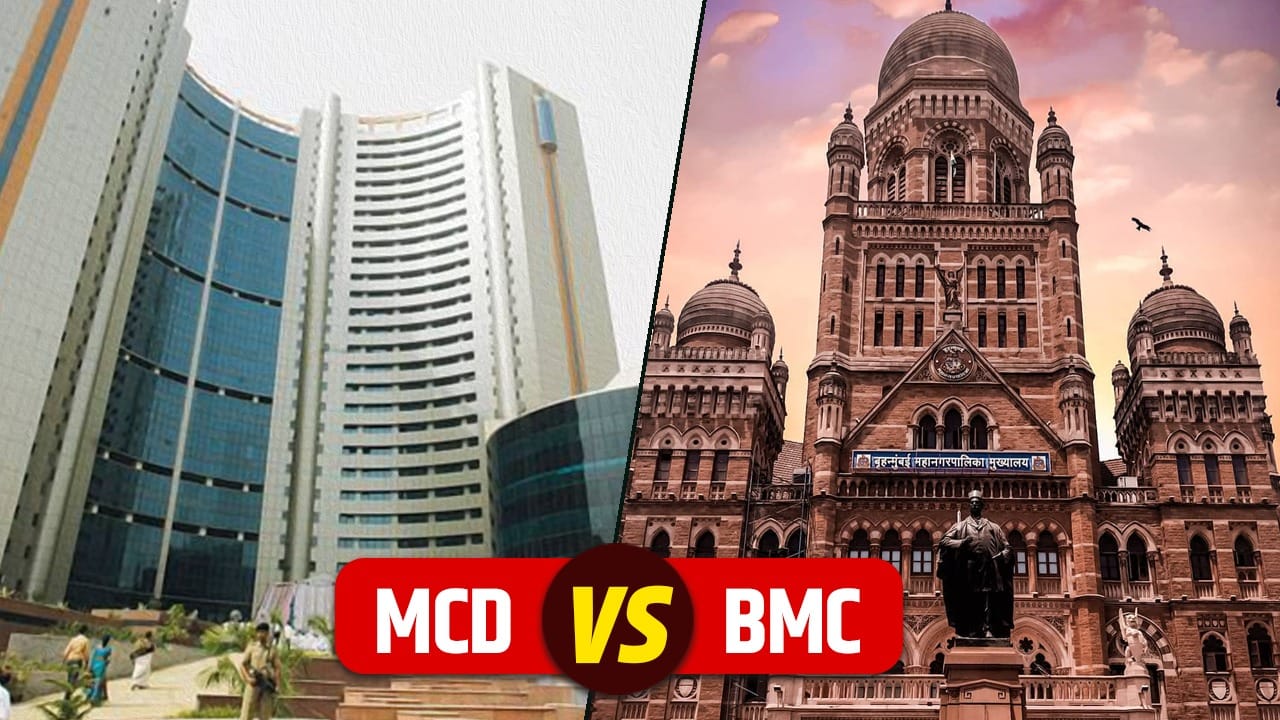
Voting ended on Thursday for 29 municipal corporations in Maharashtra including Mumbai.
Voting is being done for civic elections in Maharashtra. After the results, Mumbai will get a new mayor and Delhi will also get a new mayor in April. India’s two best-known municipal corporations—Mumbai’s Brihanmumbai Municipal Corporation (BMC) and Delhi’s Municipal Corporation (MCD)—are often seen as rich and large. Especially BMC is said to be the richest civic body of the country. But being the richest municipal corporation does not mean that its mayor will have the most executive power.
In most big cities in India, the real administrative power often rests with the Municipal Commissioner, while the role of the Mayor is mostly limited to running the House, representation and formal leadership. On this pretext, let us know the powers of the mayors of the municipal corporations of the country’s capital and the economic capital of the country? How are they selected? How many years is the tenure?
Mayor’s election and tenure: first big difference
- Mumbai (BMC): The mayor of Mumbai is not directly elected by the public. The elected councilors of the Municipal Corporation choose the Mayor from among themselves. Under the BMC Act, the tenure of the Mayor is two and a half years. Whereas councilors are elected for five years and they elect two mayors during their tenure. The main role of the Mayor is to preside over the meetings of the Municipal Corporation. It is also clearly stated in the policy analysis that the role of the Mayor in Mumbai is considered largely formal. Administrative and executive powers rest with the Commissioner.
- Delhi (MCD): In Delhi also the mayor is elected indirectly. Councillors, MPs, Rajya Sabha members, nominated MLAs etc. together elect the Mayor. Here the councilor can choose the mayor candidate of his choice. Anti-defection law is not applicable here. In Delhi, there is a rule that the tenure of the Mayor is one year. There is a system of electing the mayor at the beginning of every financial year i.e. in April. Its rotation is fixed. There will be a woman mayor for the first year. There will be a general for the second year, and SC mayor for the third year. Then in the fourth and fifth years, any person from the general category can be elected mayor.
In terms of stability of tenure, the Mayor of Mumbai may enjoy a little more continuity than the Mayor of Delhi, but this does not automatically increase power, because the real power structure is different.
Who has real executive power?
Not only in Delhi or Mumbai, the Mayor does not have executive powers in any municipal corporation of the country. Yes, the tenure of mayor can definitely vary. For example, in a state like UP, the mayor is directly elected by the public and has a full tenure of five years. But, when it comes to power, the commissioner plays a dominant role everywhere.
- Mumbai (BMC): In Mumbai the Municipal Commissioner, who is usually an IAS officer, has the real executive power to run the city. The Mayor presides over the House, representing the city, but administrative control rests with the Commissioner. This difference is clearly stated in the documents.
- Delhi (MCD): Even in Delhi, the real executive, financial and administrative powers generally rest with the Municipal Corporation Commissioner. The role of the Mayor remains formal and House-centric in many respects.
Thus, in the balance of power between Mayor versus Commissioner, in both Mumbai and Delhi, the Commissioner has the upper hand. Therefore, considering the mayor here as more powerful just by saying that BMC is rich would not be the right conclusion.
House, policy, agenda and power of representation
The most concrete role of the Mayor in any municipal corporation including Mumbai and Delhi is usually as follows. Yes, mayors of metropolitan cities get some importance in campaigning etc. Many times commissioners hold smaller posts here. For example, as the first citizen of the city, the Mayor can formally welcome the President, the Prime Minister or any special guest visiting the city. This is his prerogative. But basically the Mayor discharges the following responsibilities.
- Presiding over Municipal Corporation meetings
- steering the agenda
- Representing the city as the first citizen
- proposal, direction of debate
Who is more powerful, Mayor of Mumbai or Delhi?
The practical answer is that neither mayor is a super-executive. At both places, administrative power is divided between the Commissioner and institutional committees and procedures. In Mumbai, the longer tenure of the Mayor (2.5 years) may increase political continuity, but executive control is still assumed to rest with the Commissioner. Due to the short tenure of the Mayor in Delhi, the power of the Mayor appears diluted.
In terms of executive and administrative power, the Mayor is weak and the Commissioner is very strong. The role of the Mayor is strong in both House operations, protocol, representation etc. Both of them are the first citizens of the city. Because of the role of the Standing Committee in Delhi, the space of the Mayor appears more limited. On this basis, it can be said that there is not much difference between the two Mayors on the scale of executive power, because in both the models the administrative officers/institutions are powerful rather than the Mayor.
What is the difference between the two?
Without a section-by-section comparison of the laws and rules, it would be unfair to tell the exact difference, but a practical way is to divide the powers into 3 categories.
- Ceremonial/Representative: Mumbai, Delhi both high
- Legislative/House Control: Mumbai, Delhi both House-centric
- Executive/Administrative Control: Commissioner Chief in both Mumbai and Delhi
What is the annual budget of Mumbai and Delhi?
The annual budget of Mumbai Municipal Corporation for the year 2025-26 is more than Rs 74427 crore. In this way, it has become the largest local body not only in the country but also in Asia. Earlier, the annual budget of Mumbai was around Rs 60 thousand crores. Similarly, Delhi Municipal Corporation has presented a budget of more than Rs 16530 crore for 2026-27. It was presented in the House by the Commissioner in December 2025. Comparing the two clearly shows that Mumbai is indeed a rich city.
Also read: Iran Vs Kashmir, which saffron is the best, how is it decided? Know the answer amid violent protests