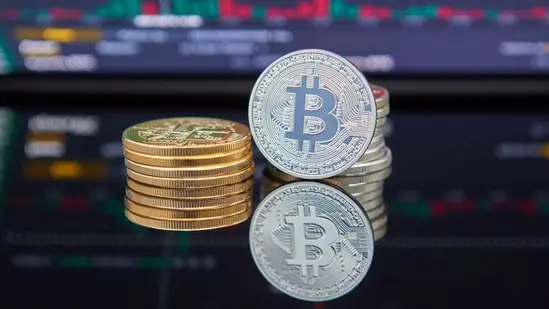
US-listed spot Bitcoin ETFs have received about $273 million in fresh investor money over the last two weeks, according to data from SoSoValue.
This is important because it ends an eight-week period when investors kept pulling money out of Bitcoin ETFs. During those eight weeks, investors withdrew more than $8 billion from Bitcoin ETFs.
In the first week of the recovery, Bitcoin ETFs received about $197.4 million in new investments, according to SoSoValue data. In the second week, the funds attracted another $75.7 million, taking the total for two weeks to about $273 million. Even though investors added money during the week, they also pulled out $424.7 million in one day after fresh military tensions between the US and Iran.
Bitcoin ETF inflows
Despite that big one-day withdrawal, the ETFs still finished the week with positive inflows. Experts say this could mean investor confidence in Bitcoin is slowly coming back. Richard Galvin, Executive Chairman of crypto investment firm DACM, said the inflows may be a sign that Bitcoin prices are finding a bottom, according to Bloomberg. Galvin said Bitcoin ETFs have become a good way to understand overall investor mood because many large investors use them. He added that two straight weeks of inflows after eight weeks of withdrawals is a positive sign for the crypto market.
Bitcoin ETFs allow people to invest in Bitcoin without buying or storing the cryptocurrency directly. Because of this, ETF inflows are often seen as a sign that institutional investors like investment firms and large funds are returning to Bitcoin. Bitcoin’s price has also become more stable recently, trading mostly between $64,000 and $65,000, according to CoinDesk.
Bitcoin price outlook
Bloomberg reported that Bitcoin has also moved back above its 200-week moving average of around $63,300. Many traders see the 200-week moving average as an important level that can show whether Bitcoin is in a long-term bullish or bearish trend. Bitcoin has spent several weeks trading between $60,000 and $65,000 because of uncertainty in the global economy.
Bitcoin briefly climbed above $65,000 during Asian trading even after fresh US strikes on Iran. Some analysts said this showed Bitcoin was holding up well despite geopolitical tensions. However, experts warned that the US-Iran conflict could increase inflation. Higher inflation could push the US Federal Reserve to raise interest rates.
Higher interest rates usually make risky investments like Bitcoin less attractive, according to Damien Loh, Chief Investment Officer at Ericsenz Capital, quoted by Bloomberg. Loh said uncertainty over interest rates may still be stopping many large institutional investors from fully returning to Bitcoin, according to Bloomberg. He also said the proposed US Clarity Act could become a positive trigger for Bitcoin if Congress passes it before its August break.
US crypto rules
The Clarity Act is a bill that aims to create clearer rules for the US cryptocurrency market. Loh said Bitcoin has shown strong support even while other risky assets have struggled and tensions in the Middle East have increased. Bitcoin is still down about 10% since the beginning of June.
One reason for the decline was that Strategy Inc. sold part of its Bitcoin holdings, something the company had not done since 2022. Strategy founder Michael Saylor had earlier promised that the company would keep buying Bitcoin and not sell it. However, Bloomberg reported that falling Bitcoin prices made it harder for Strategy to meet its dividend obligations. The company later showed it was more willing to sell Bitcoin if needed.
Institutional Bitcoin demand
On July 6, Strategy disclosed that it had sold another $216 million worth of Bitcoin, much more than its earlier $2.5 million sale. While many crypto investors are celebrating the recent ETF inflows, CoinDesk said the numbers are still very small compared with the huge outflows seen over the previous two months.
CoinDesk pointed out that the recent $273 million inflow is only slightly bigger than the smallest weekly outflow during the eight-week selling streak, which was about $226.8 million. This means it took two weeks of fresh buying to recover only about one week’s worth of the earlier selling. Because of this, some analysts believe it is still too early to say institutional investors have fully returned to Bitcoin.
Crypto research firm BRN said investors should watch whether ETF inflows stay positive for several more weeks before calling it a real recovery. Ecoinometrics also said ETF flows have become healthier, but the positive trend needs to continue to confirm a lasting market recovery, according to CoinDesk. For now, analysts say the heavy selling appears to have stopped, but Bitcoin still needs stronger and more consistent investor demand before experts can say the market has fully recovered.