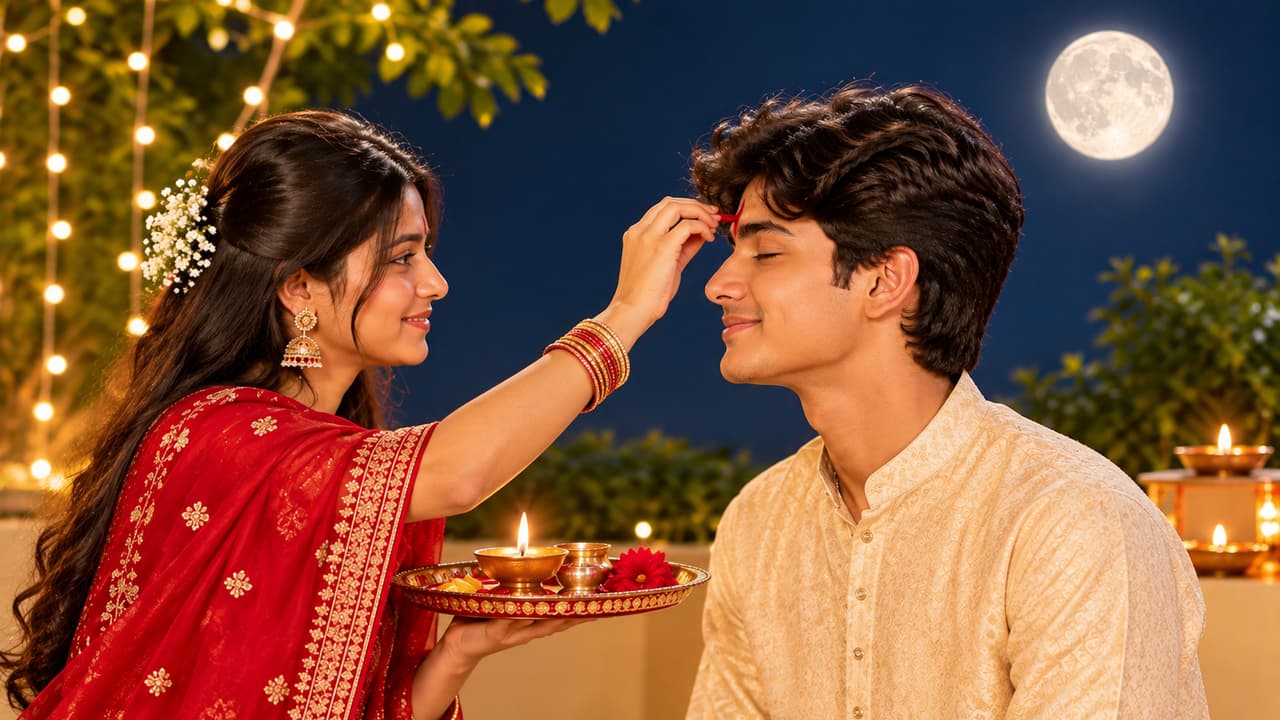
Bhai Dooj celebrates the special bond between brothers and sisters. Along with traditional rituals, some women worship the Moon God as a symbolic brother and pray for his well-being.
Bhai Dooj is one of the important Hindu festivals that celebrates the special relationship between brothers and sisters. In 2026, the festival will be observed on November 11. On this day, sisters apply tilak on their brothers’ foreheads, perform aarti and pray for their happiness, prosperity and long life.
However, an interesting tradition followed in some parts of India is the worship of the Moon God, also known as Chandra Dev. The practice has a special significance, particularly for women who do not have brothers.
Why Is the Moon Worshipped on Bhai Dooj?
According to regional traditions, women who do not have a biological brother worship the Moon as their symbolic brother on Bhai Dooj. They offer prayers, perform rituals and seek blessings for protection, happiness and well-being.
In Indian culture, the Moon is affectionately called ‘Chanda Mama’. This familiar relationship gives the Moon a special place in family traditions. By worshipping Chandra Dev, women can celebrate the festival and express their sibling-like affection even without having a biological brother.
Some women also follow this custom when their brothers live far away and they cannot perform the usual rituals with them.
What Is the Religious Significance of Moon Worship?
The tradition reflects the belief that sibling relationships are not limited to biological connections. Worshipping the Moon as a brother symbolises love, care, protection and emotional bonding.
Bhai Dooj is also associated with the story of Lord Yama and his sister Goddess Yamuna. According to Hindu mythology, Yama visited Yamuna on Dwitiya, who welcomed him with a tilak and prayed for his well-being. Pleased with her affection, Yama blessed her and declared the day auspicious for brothers and sisters.
Although Moon worship is not a universal Bhai Dooj ritual, it remains a meaningful regional custom that highlights the festival’s message of love and togetherness.