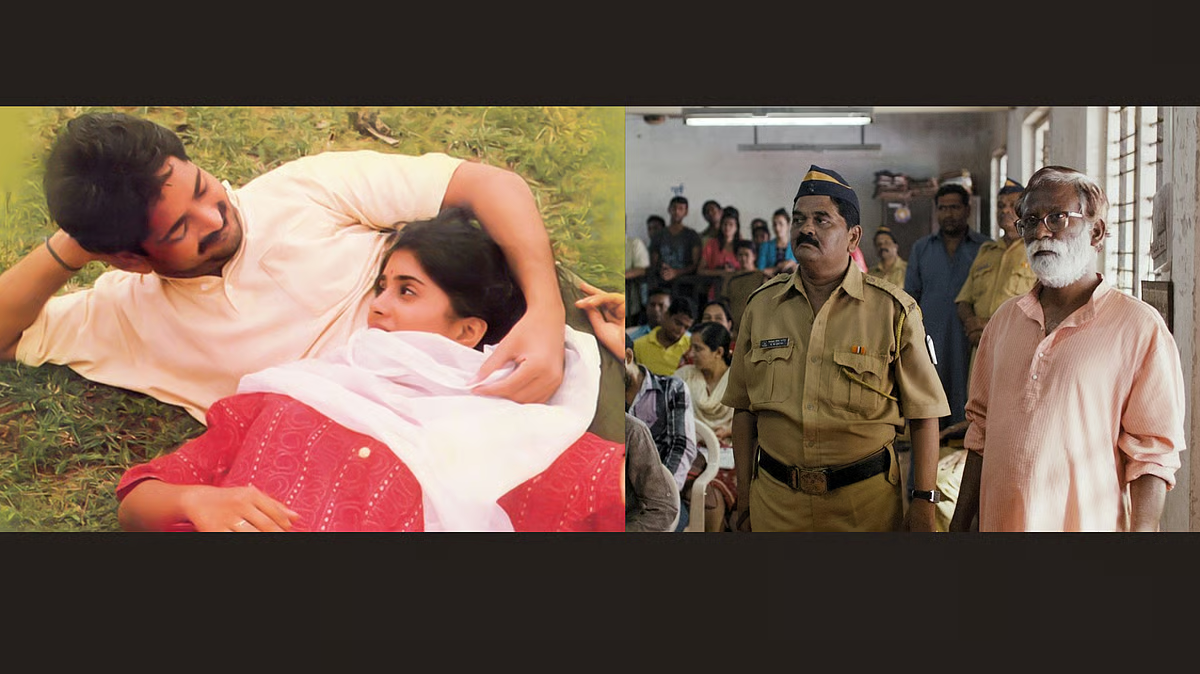
Picture this! Star-crossed families of a young couple in love seem to relent to the wishes of the lovers and allow them to run away into the sunset as intriguingly emotional music reaches the heavens in a screaming prayer to allow love to succeed amidst a plethora of challenges.
Cut to a sleepy, mundane, little Mumbai courtroom in Chaitanya Tamhane’s film Court as one of the most boring public prosecutors rattles of several archaic laws that could even put the judge to sleep without even realising the gravity of what she is doing to the activist’s life by condemning his life to the gallows. The sleepy camera movements clearly indicate how justice is not blind, but has slept off because the system is as apathetic as it shuffles the papers.
The Mandarinism grinds on, indifferent and bureaucratic, exposing the profound class and cultural politics of a deeply divided metropolis. It is a cinematic chill that is found again within the claustrophobia of T.J. Gnanavel direted Tamil masterpiece Jai Bhim, where the legal system operates not as a shield for the vulnerable, but as an actively weaponised maze meant to crush the disenfranchised.
It is this exact willingness to look structural oppression dead in the eye that has turned independent regional cinema into India’s most potent teller of socially inclusive, deeply human stories. While Bollywood commands global headlines with star-driven spectacles, a quiet revolution has been brewing in Maharashtra’s smaller towns and Tamil Nadu’s rural heartlands. Filmmakers are moving away from comfortable, urban-centric formulas to give voice to communities long pushed to the fringes—rural, Dalit, nomadic, and marginalised lives.
For decades, mainstream cinema operated under a selective amnesia. “In our movies, a hero is a hero. He has no caste,” observes trailblazing filmmaker Nagraj Manjule. “But in reality, your identity catches up with you. Why brush it under the carpet to create a happy illusion that it doesn’t exist?”
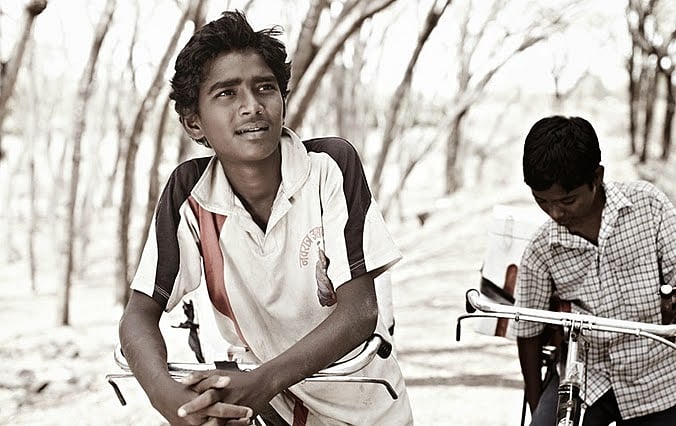 Fandry |
Manjule’s own masterpiece, Fandry, shattered that illusion using the simplest of human interactions. In one of the film’s most visceral sequences, a young boy named Jabya is forced by his family’s caste-ordained labour to chase a stray pig across his school grounds. His upper-caste classmates look on, jeering and mocking his humiliation. A decade later, Mari Selvaraj echoed this animal motif on a massive political canvas in the Tamil film Maamannan. In it, the pig is no longer a tool of public shaming forced upon a frantic boy; instead, the protagonist Veera (played by Udhayanidhi Stalin) raises pigs with absolute dignity, treating them as a symbol of independent identity and livelihood. When the dominant-caste antagonist’s hunting hounds brutally slaughter these pigs, the act transcends plot—it exposes the raw, unprovoked violence inflicted on underrepresented lives simply for asserting their right to exist and occupy space.
“We need to talk about caste, so that there is a dialogue and it eventually ends,” Manjule emphasises. “The irony is, if you talk about caste, you’re called casteist. If we pretend that nothing wrong is happening, the sickness will only increase.”
This disruptive ethos has fundamentally changed the commercial landscape. Tamil filmmaker Pa Ranjith notes how deeply this shift resonated across borders: “Sairat changed the way we look at love and caste on screen. It broke the glass ceiling by proving that a story about an oppressed-caste protagonist could be both politically uncompromising and a massive box-office hit.”
Ranjith didn’t just observe this shift; he actively engineered it through his own filmography. Through hard-hitting directorial ventures like Madras, which deconstructed urban subaltern spaces, and the massive scale of Kabali and Kaala, he subverted mainstream superstar tropes to place Dalit assertion and subaltern pride at the dead centre of commercial cinema with films like Sarpatta Parambarai, Natchathiram Nagargiradhu, Thangalaan, and Pariyerum Perumal—consistently providing the blueprint for politically unapologetic cinema. While Pariyerum Perumal was remade as Dhadak 2, Sairat was remade as Dhadak, both by producer Karan Johar with Shazia Iqbal and Shashank Khaitan doing the honours.
This inclusive wave didn’t emerge from a vacuum into Marathi cinema. It is built on a rich legacy of brave filmmakers who dared to interrogate society. Way back in 1994, veteran director Jabbar Patel made Mukta, tracing the complex relationship between a wealthy Maratha girl and a Dalit youth. Patel would later direct the monumental biopic Dr. Babasaheb Ambedkar, humanising an icon. “We have a very traumatic, very humiliating childhood,” Patel reflected on Ambedkar’s early years. “Then we have his very great task and the hardship which he took for education, and then his emerging as the leader of the depressed classes. We have a very personal life and also his public life.”
Yet, for a long time, these narratives were exceptions. The present dearth of films focusing on the realities of subjugated sections stems largely from a lack of representation within the industry itself. When slums are depicted, the conversation is often reduced to a simple binary of wealth versus poverty. “We make it all about class, we simplify it,” Manjule notes. “My attempt is to go into details… to show the pride of Babasaheb Ambedkar on screen.”
Today, the tide is turning rapidly. A potent combination of state subsidies, institutional support, and global critical acclaim is allowing independent regional voices to reach prestigious international film festivals. By rooting their stories in the hyper-local realities of small towns and rural heartlands, a new generation of filmmakers is finding a universal resonance.
Under schemes like the Darjedar Marathi Chitrapat Arthsahaya Yojna, films are evaluated by a panel and graded. Top-tier “A” grade movies are benefitted by cash subsidies of up to ₹40 lakh, which doubles for National Award winners. A 100% entertainment tax exemption for Marathi films apart from a proposed 50% discount—for filming at state-owned locations like Goregaon Film City is also on the anvil.
This sort of incentivisation also helps filmmakers as bold as the protagonists of their films now are to take on the system and make the kind of films the world refused to show earlier.
This momentum is carrying forward into a highly anticipated wave of upcoming releases that refuse to compromise on their politics:
Dhasal: A highly anticipated biographical drama starring Lalit Prabhakar, set to bring the fiery, rebellious life of Dalit Panther co-founder and radical poet Namdeo Dhasal to the big screen, charting a raw and uncompromising journey against systemic oppression.
Jayanti 2: Director Shailesh Narwade follows up his impactful debut with a sequel that dives straight into contemporary campus politics, exploring institutional discrimination and the power of oppressed students reclaiming their agency. But then the first part Jayanti was different. Jayanti shatters the trope that marginalised characters are helpless victims requiring an upper-caste saviour. Pallavi (Titeeksha Tawade) is a highly educated, sharp, and vocal Dalit-Buddhist woman who rejects the protagonist’s advances because he lacks social consciousness. demands that he read history and break his mental slavery. The film directly reflects Dr. B.R. Ambedkar’s core tenant—”Educate, Agitate, Organize”—by framing reading and critical thinking as the ultimate tools for revolution.
This Side of Paradise: An extraordinary Indo-German co-production directed by FTII alumnus Ramesh Holbole. Rooted in Holbole’s own journey from a tin-roofed shanty in Nanded to Europe, the film focuses intensely on the invisible struggles and quiet dignity of India’s working class.
By shifting the lens from a polished “happy illusion” to the gritty, detailed realities of the human condition, these filmmakers are proving that the most disruptive thing cinema can do is simply tell the truth.