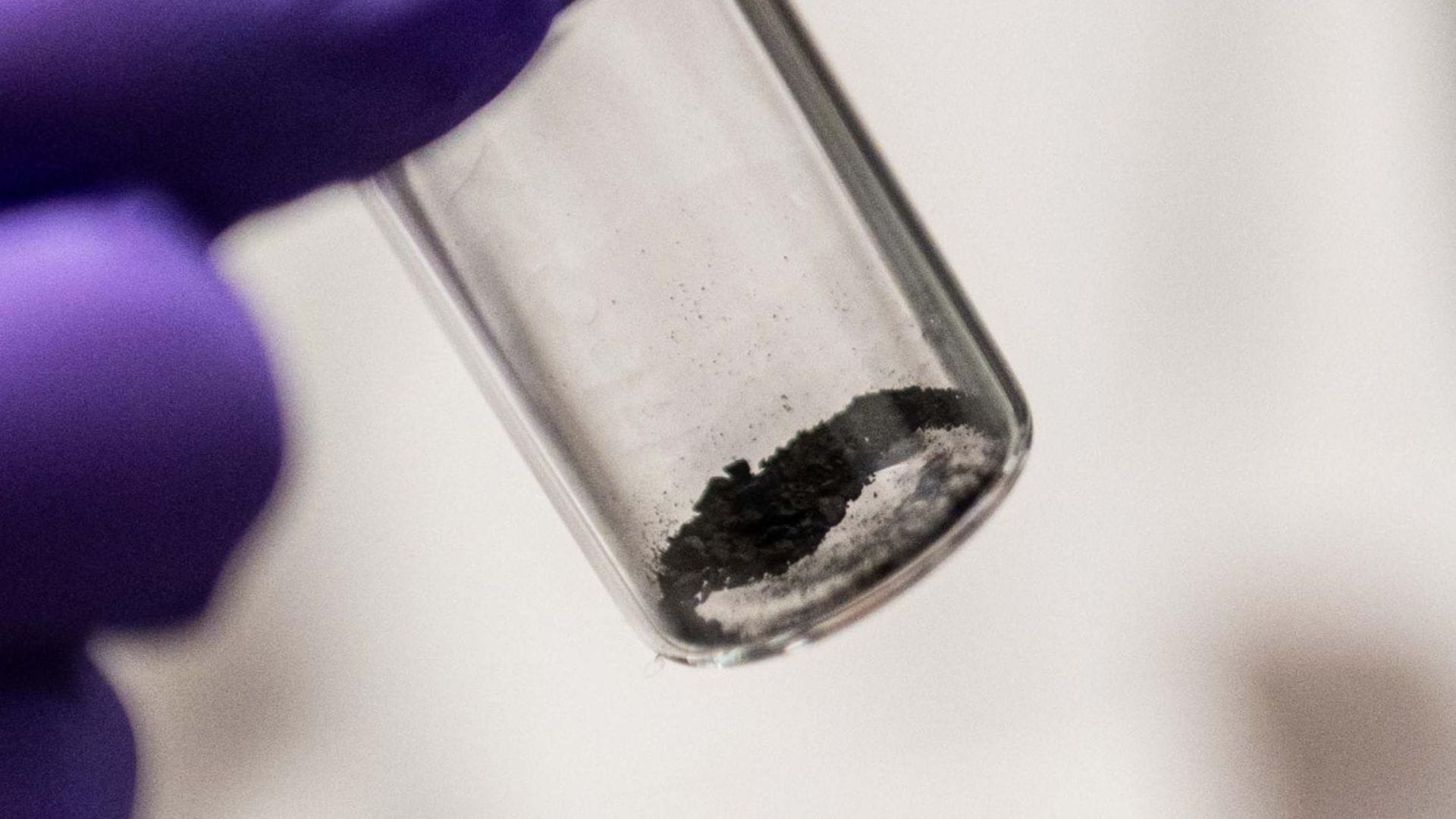
New Delhi: Scientists have new ways in which amino acids can form in the cold, outer reaches of the Solar System. Amino acids are molecules that link up to form proteins, and are essential for life by driving a number of processes, including catalysing reactions, building tissues, defending the body and regulating its functions. New research, based on the samples returned from the asteroid Bennu by NASA’s OSIRIS-REx mission in September 2023, has indicated multiple formation pathways for amino acids in the early Solar System.
For the study, the researchers focused on the simplest amino acid, glycine, which was also found in in the Murchison meteorite, that landed in Australia in 1969, loaded with 70 amino acids. Previous research had indicated that the glycine found in the Murchison meteorite had originated in a warm, wet place. The new results hint that the glycine from Bennu was formed in frozen ice exposed to radiation in the outer reaches of the early Solar System. A paper describing the research has been published in the Proceedings of the National Academy of Sciences.
The Lost World of Bennu
Co-lead author of the paper, Allison Baczynski says, “Our results flip the script on how we have typically thought amino acids formed in asteroids. It now looks like there are many conditions where these building blocks of life can form, not just when there’s warm liquid water. Our analysis showed that there’s much more diversity in the pathways and conditions in which these amino acids can be formed.” The research indicates that the amino acids can form through photochemical process of cold, primordial ices, that allowed the signatures to survive later aqueous alternations on the surface body of Bennu, a long-lost world that may have been battered to bits in the chaotic infancy of the Solar System.
The prelimnary analysis of the samples returned from Bennu revealed that the material was rich in carbon, phosphate and organic molecules, the ingredients necessary for life. Further examination revealed 14 oamino acids and all five nucleobases, the building blocks of biomolecules. Scientists also discovered a history of salt water, one that could have provided a broth for organic compounds to interact and combine. The amino acids discovered on Bennu are both right-handed and left-handed, unlike Earth which are primarily left-handed. This discovery supports the RNA world hypothesis, suggesting that the first self-replicating organisms were based on RNA rather than DNA and proteins.
A changing paradigm for life
Scientists had previously suspected that a wide range of biologically relevant chemistry takes place in the heat gradient surrounding forming and newly formed stars. There are complex interactions between gases, ices and dust going through multiple phase transitions at various distances from an embryonic star, from the hot interior of the accretion disk to the cold fringes. Then there is the impact of photochemistry as well, and it is possible in theory, for a nearby supernova explosion to wipe out all amino acids of a particular chirality.
The findings based on sample return missions, as well as observations of circumstellar disks around newborn stars where planets are assembled, are pushing scientists to think of life increasingly as an astrophysical process rather than a geological one. The story of life does not need to begin on a warm little pond or a hydrothermal vent deep beneath an ice shell, or indeed in a hydrocarbon lakes with temperatures too cold for water to act as a solvent. The story of life may in-fact begin in the cold fringes of circumstellar disks where gas, ice and dust interact under the distant light of stars.