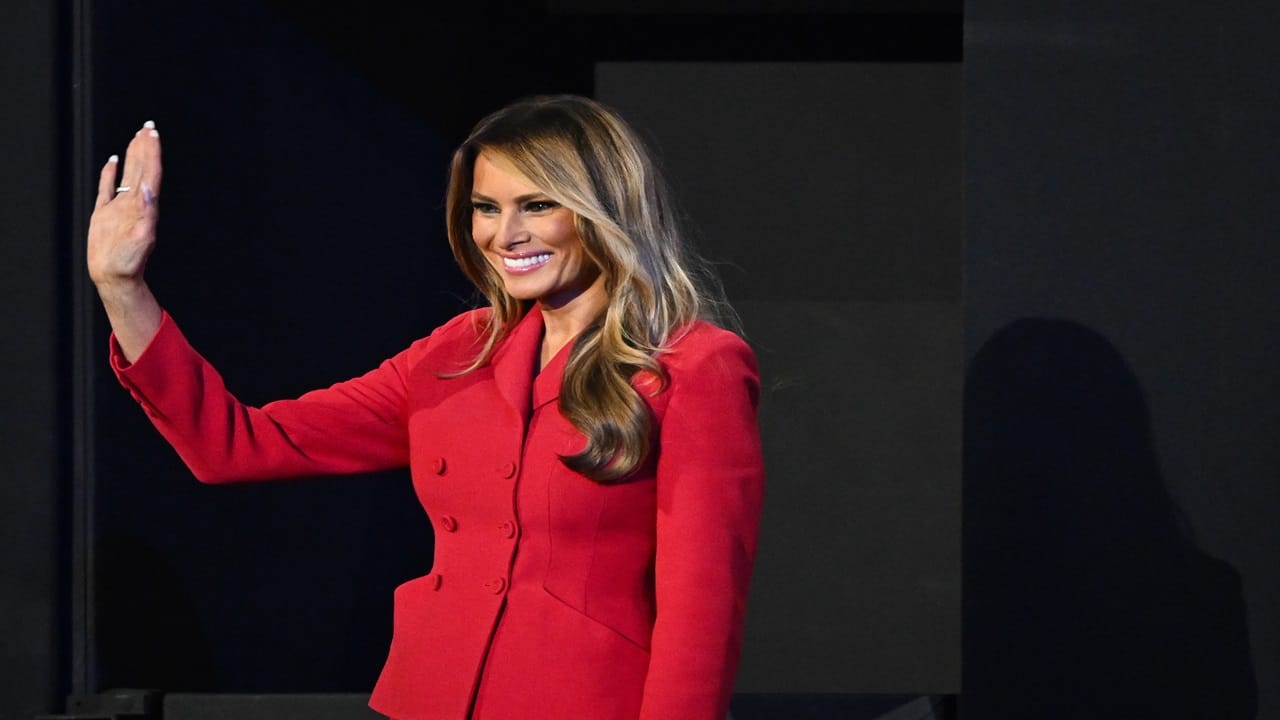
New Delhi: A humanoid robot took centre stage at the White House during a global summit, offering a glimpse into how artificial intelligence is moving into public life. This figure 3 robot followed Melania Trump and conversed with foreigners, which is a symbolic step in the increased involvement of AI in diplomacy.
The demonstration was part of the “Fostering the Future Together” initiative, which brought together first spouses and global representatives to discuss the future of technology. The event underscored the fact that AI is no longer limited to the laboratory or the device but is now becoming a part of the real-world environment as well as the policy discussion at the higher level.
“Figure 03” AI-powered robot accompanies first lady Melania Trump to a White House summit on empowering children with educational technology. pic.twitter.com/RShdfvEG38
— CSPAN (@cspan) March 25, 2026
Humanoid robot greets leaders in multiple languages
Figure 3, which was created by Figure AI, was the opening of the summit, where it welcomed the participants in 11 languages. These were English, Spanish, French, Arabic, Japanese and Bengali. The ‘Swagatam’ used by the robot attracted attention because it received the guests with a wave and human gestures.
The multilingual interaction was used to demonstrate the capability of the robot to interact across cultures in real-time. It showed the development of AI systems to interact with various audiences instead of responding to some programmed directions.
Designed for everyday tasks and human interaction
As the creators of Figure 3 claim, this device is designed to help with everyday household tasks. It has the ability to load dishwashers, fold clothes, and pick items using cameras on its hands and its high-tech touch sensors.
The design of the robot is orientated towards work in the human environment. Its mesh-like design and motorial flexibility are indicative of a wider trend of functionality, real-life robotics, which can be incorporated into an everyday lifestyle.
Melania Trump highlights AI’s next phase
In her speech, Melanie Trump highlighted the increasing role of artificial intelligence in education and the economy. She named personalised learning, home assistants that use AI, and humanoid systems as the aspects that the future will bring about.
She observed that AI is taking the shape and role of humans. She believes that the innovation stage will be the technology becoming more tangible, with screens no longer the focus but instead physical and human forms of technology that bring physical utility to life.
The summit highlighted the rising trend of governments viewing artificial intelligence as an economic experience and an area of strategic interest. Such a high-level event that incorporates a humanoid robot is an indicator that the perception of AI is changing.
With the cooperation of policymakers and individual enterprises, technologies such as Figure 3 are likely to be more influential in influencing industries, governmental services, and international interaction.