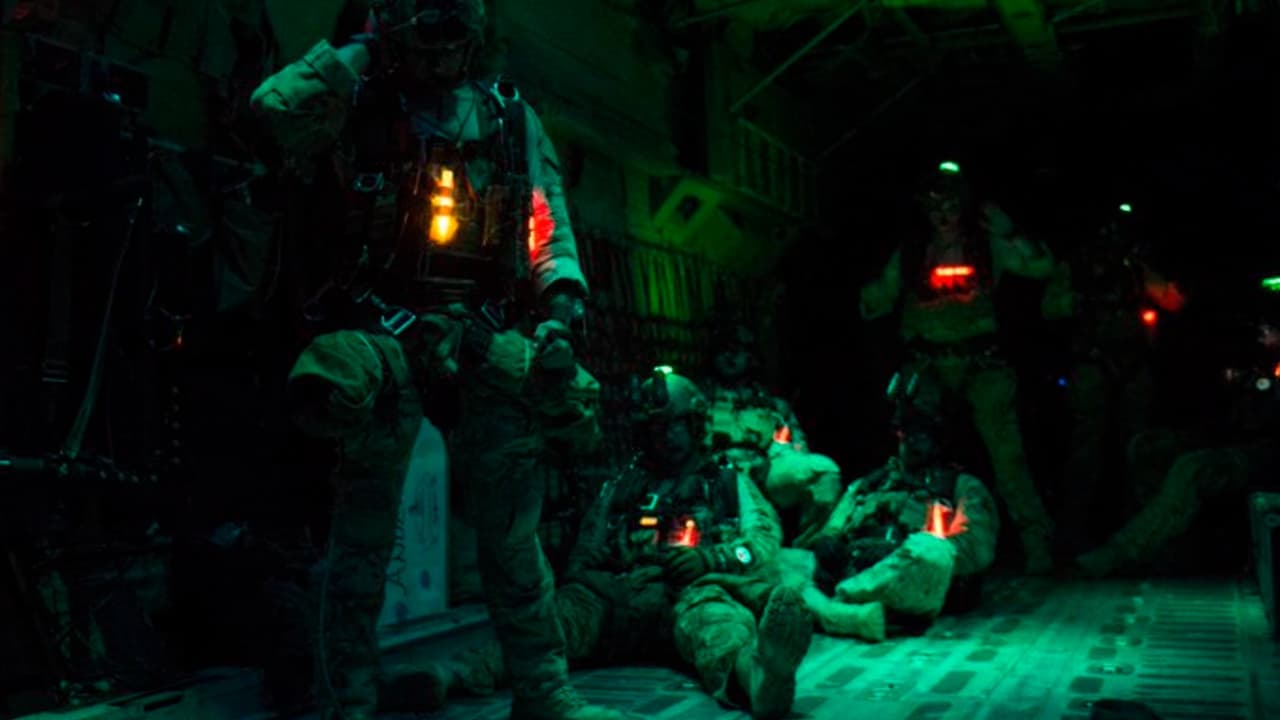
An American airman, downed over Iran, survived for nearly two days by using military training to evade a massive search in mountainous terrain. While he hid, US intelligence used deception tactics to mislead Iranian forces, creating an opportunity for a rescue.
A dramatic survival story has emerged from the ongoing US-Iran conflict, detailing how a downed American airman managed to evade capture deep inside Iranian territory for nearly two days before being rescued in a high-risk military operation.
After ejecting from his F-15 fighter jet, the officer—identified as a senior colonel—found himself stranded in hostile terrain with minimal equipment. According to reports, he had only a handgun, survival rations, a locator beacon, and a secure communication device to rely on while navigating the dangerous landscape.
Survival Instincts Kick In
Following standard military survival training, the airman immediately moved away from the crash site to avoid detection. Enemy forces typically converge on wreckage zones first, making it critical to create distance. He sought cover in rugged mountainous terrain, eventually hiding in a crevice to stay out of sight.
At one point during his escape, the officer undertook a physically demanding climb up a ridgeline rising nearly 7,000 feet. The elevation provided both concealment and a vantage point, but also made rescue efforts significantly more challenging. The harsh terrain became both a shield and an obstacle in the unfolding mission.
Also Read: US Unleashes Most Lethal JASSM-ER Missiles as Iran War Enters Critical Phase
Evading a Massive Search Hunt
As the airman struggled to survive, Iranian forces—including the Islamic Revolutionary Guard Corps (IRGC) and allied units—launched an extensive search operation. Authorities even urged civilians to help locate the “enemy pilot,” turning the hunt into a widespread effort.
Despite the danger, the officer used his emergency beacon sparingly to avoid detection, as such signals could be intercepted. Instead, he relied heavily on encrypted communication systems to maintain contact with US forces, allowing them to track his approximate location without exposing him.
The airman’s ability to remain undetected under such pressure highlights the effectiveness of Survival, Evasion, Resistance, and Escape (SERE) training, designed to help personnel survive behind enemy lines.
Deception and Intelligence at Play
While the airman remained in hiding, US intelligence agencies launched a parallel operation to mislead Iranian forces. Reports indicate that a deception strategy was used to create the impression that the missing officer had already been located and moved elsewhere.
This tactic helped divert enemy attention away from his actual position, buying crucial time for US forces to plan and execute the rescue mission. Intelligence teams also used advanced capabilities to refine his location, eventually pinpointing his exact coordinates.
As Iranian units moved closer, US aircraft reportedly carried out strikes on approaching convoys, preventing them from reaching the airman’s hiding spot. The situation remained highly volatile, with the risk of capture looming at every stage.
Also Read: Iran claims ‘bitter defeat’ for US after Trump hails rescue mission
High-Risk Extraction Mission
Once the airman’s position was confirmed, a large-scale rescue operation was launched involving special forces, aircraft, and multiple layers of military support. Elite units, including Navy SEAL Team Six, were reportedly involved in extracting the officer from the mountainous region.
President Donald Trump later described the operation as “one of the most daring Search and Rescue Operations in US History.”
During the mission, US forces engaged in combat to keep Iranian troops at bay, with reports indicating that strikes were carried out in the area. Iranian media claimed casualties during the operation, though details remain contested.
The airman was eventually secured and transported out of Iran, ending a tense and high-stakes ordeal. Despite injuries sustained during ejection and evasion, officials confirmed that he was expected to recover.
A Story of Survival and Strategy
The episode underscores both the human and tactical dimensions of modern warfare. From a lone officer surviving in extreme conditions to a complex, multi-layered rescue mission involving deception, intelligence, and firepower, the operation highlights the lengths militaries go to recover personnel.
It also reflects the increasing risks in the ongoing US-Iran conflict, where contested airspace, advanced defence systems, and rapid escalation have made every mission more dangerous.
Ultimately, the airman’s survival—through endurance, training, and coordination—stands as a striking example of resilience behind enemy lines, and a reminder of the high stakes involved in modern combat operations.
(With inputs from agencies)