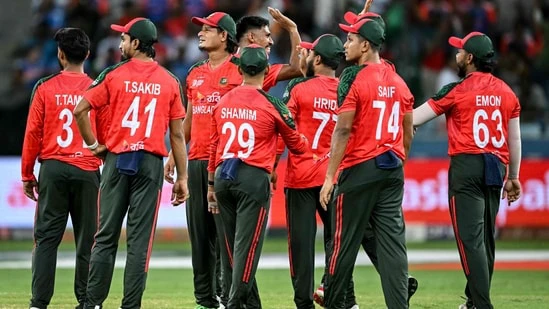
ICC T20 World Cup 2026’s Group C was designed with a familiar tension: two heavyweights who expect to qualify, one full-member capable of ambushes, and two underdogs hoping to turn one night into a tournament.
Take Bangladesh out and you don’t just remove a team – you remove the group’s most important middle layer.
And here’s the clean way to understand it: competition changes in two different directions depending on how Bangladesh exit. If they’re replaced, the cricket stays intact but the group softens. If fixtures become forfeits, the group stops behaving like a sporting contest and starts behaving like an admin outcome.
If Bangladesh are replaced, Group C becomes easier to script
A replacement keeps the group functional: everyone still plays the same number of matches, qualification stays on the field, and the tournament doesn’t have to rewire its structure. But the competitive feel changes immediately because Bangladesh occupy a specific role in this pool.
For England and West Indies, Bangladesh are the danger game – the one that can go sideways if you get a sticky surface, lose early wickets, or misread match-ups. Remove that and the top two get one fewer match where they’re forced to adapt under stress. The group can become more predictable at the top, more routine in the middle, and less likely to produce that early-week shock that defines a World Cup.
There’s a second-order effect too: net run rate starts to matter more. When big teams face weaker opponents, the table often tilts towards margin-chasing. It’s still a competition, but it’s a different type of competition: less about solving problems, more about how hard you can win when you’re already expected to win.
For Nepal and Italy, a replacement can look like an opportunity. The odds of grabbing a win may improve. But the quality of the opportunity changes: beating Bangladesh is a statement win that can reshape the group’s psychology. Beating a replacement can feel like survival rather than an earthquake. Your route to belonging becomes harder to prove even if your route to points becomes easier.
If Bangladesh fixtures become forfeits, the competition level drops sharply
This is the ugly version, because a forfeit isn’t a contest – it’s a result without a match.
If one fixture turns into an admin win, the group loses a full night of cricket. That matters not only for entertainment but for fairness: teams don’t get the same kind of chances to correct mistakes, build rhythm, or improve their net run rate through actual play.
It can also create a warped points race. Two points handed out without overs bowled can make the table feel unearned early, and it changes pressure patterns for everyone else. Suddenly one team is ahead without having been tested, and another is chasing with fewer real matches left to fix a bad day. That’s not high competition – that’s tournament math taking the wheel.
This scenario also hurts the underdogs in a subtle way. Smaller teams don’t just need points; they need game time against high-quality opponents to grow into the tournament. A walkover robs them of the one thing they can’t manufacture: real World Cup exposure.
What it ultimately means for England, West Indies, Nepal and Italy
If Bangladesh are replaced, England and West Indies likely get a smoother qualification runway and the group leans more towards net-run-rate margins. Nepal and Italy may see a slightly clearer path to a win, but fewer chances for a proper signature upset that echoes beyond the table.
If matches become forfeits, the entire group becomes less of a cricket contest and more of a distorted race shaped by admin outcomes. The number of meaningful overs decreases, the pressure becomes uneven, and the best teams may qualify with fewer tests while the rest fight a table that doesn’t reflect equal cricketing chances.
Bangladesh missing doesn’t just change who qualifies. It changes what qualifying from this group even means.