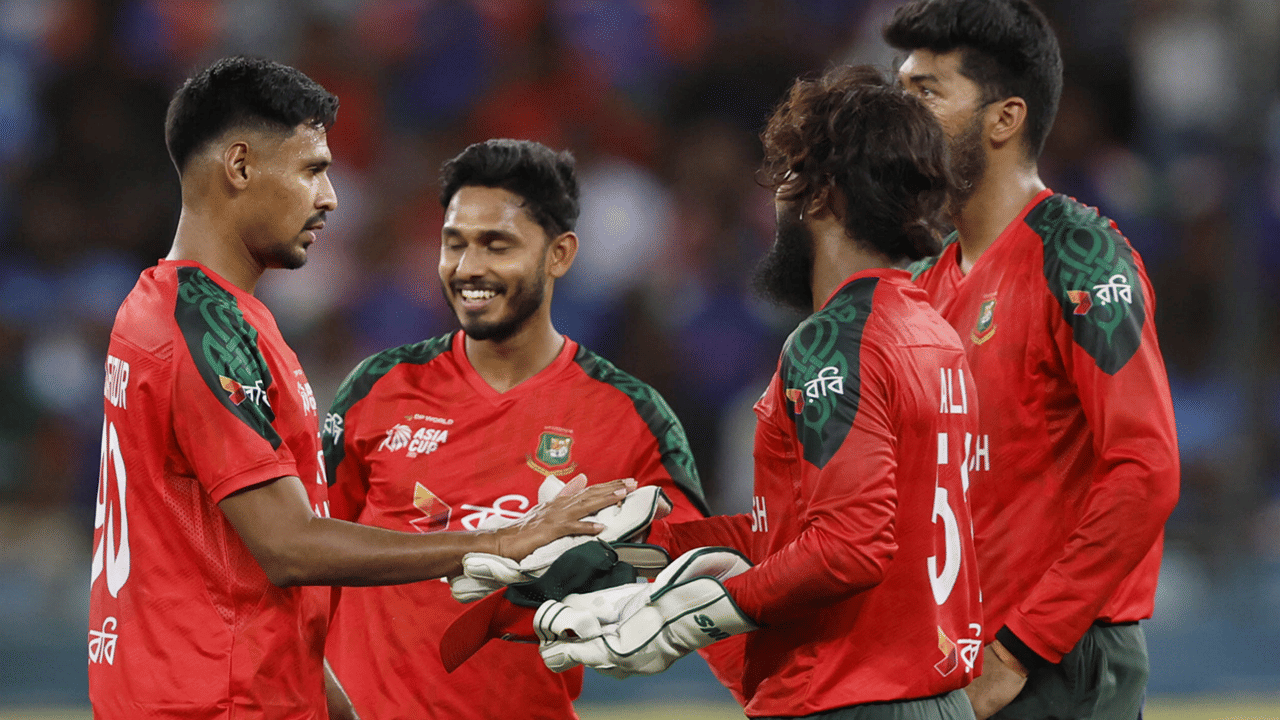
New Delhi: Bangladesh appear all but set to be replaced in the T20 World Cup 2026 after refusing to change their stance on not travelling to India for the tournament. The Bangladesh Cricket Board (BCB) on Friday reiterated that it won’t send the men’s national team to India, citing unresolved security concerns.
The development came after the International Cricket Council (ICC) gave the BCB a 24-hour deadline to communicate their final decision amid the uncertainty surrounding their participation in the tournament. ICC’s deadline to the BCB was at the Bangladesh board’s request after ICC members voted in favour of replacing them in the T20 World Cup.
Scotland are likely to replace Bangladesh in the tournament after the BCB refused to change its stance. Amid their uncompromising stand, former BCB general secretary and ex-chief executive officer of the Asian Cricket Council (ACC), Syed Ashraful Haque slammed the board and the current interim, unelected government in power.
Sharing his views on the ongoing crisis in Bangladesh cricket, Haque said the BCB shouldn’t have bowed down to a government that he feels might not be in power in a few weeks, with elections scheduled in the country. He also insisted the players should have been given the right to decide for themselves rather than the government imposing their decision on them.
“Very unfortunate that the present board is totally subservient to decision of a government that won’t be around after a few weeks, but the damage left behind and possible seclusion from the international cricket community will have far reaching consequences as Bangladesh will be considered as potential trouble monger in cricket circles,” Haque was quoted as saying by Cricbuzz.
“Any self-respecting cricket board would have spread out the ICC security measures to the team and asked the players to take a call, if they felt insecure then by all means don’t go, but the call should have been from the players, not from the government or the board. They have deprived the players of their lifetime ambitions of playing a World Cup, just to suit a questionable agenda,” he added.
The BCB had asked ICC for 24 hours to consult with the government. On Friday, Bangladesh government’s sports advisor Asif Nazrul confirmed that the government refused to change its stance. He also held a meeting with the current Bangladesh national team players, where he informed them about the government’s decision.
While players were expected to have a say during the meeting, they were reportedly mere spectators as the government’s decision was conveyed to them by Nazrul. The cricketers were not allowed to give their consent but were informed that their World Cup dream was all but over.
Bangladesh won political war, but lost the war in cricket: Haque
While insisting that the players, the biggest stakeholders in the game, should have had the final say, Haque said Bangladesh might have won a war on the political front with India, but Bangladesh cricket stood at loss. He also explained how BCB’s decision to boycott the T20 World Cup can invite sanctions from the ICC.
“They could, because we’ve signed an agreement. We signed an agreement with them, and I’m sure there’s a clause that security aspects will be overseen by the ICC. I’m sure it’s there and we used to do it when I was at the ACC. I haven’t seen that specific document yet, but this is bad,” said the former BCB general secretary on the chances of Bangladesh getting sanctioned by the ICC.
“We might have won a political fight with India, but we’ve lost the war in cricket,” he added.
The former ACC executive office also agreed that the Bangladesh Cricket Board failed to convince the government to send the team to India for the T20 World Cup 2026. Haque insisted the current government, which assumed power after the fall of the Sheikh Hasina-led Awami League government last year, is in power only for a temporary period.
Haque is hopeful that a newly elected government in Bangladesh after the elections in February this year might try to mend the strained relations with India and bring Bangladesh cricket back on track. He said the next government will have to make amends or else it might lead to the ‘death’ of Bangladesh cricket.
“I hope so. They have to. Otherwise, it’s the death of Bangladesh cricket,” he concluded.