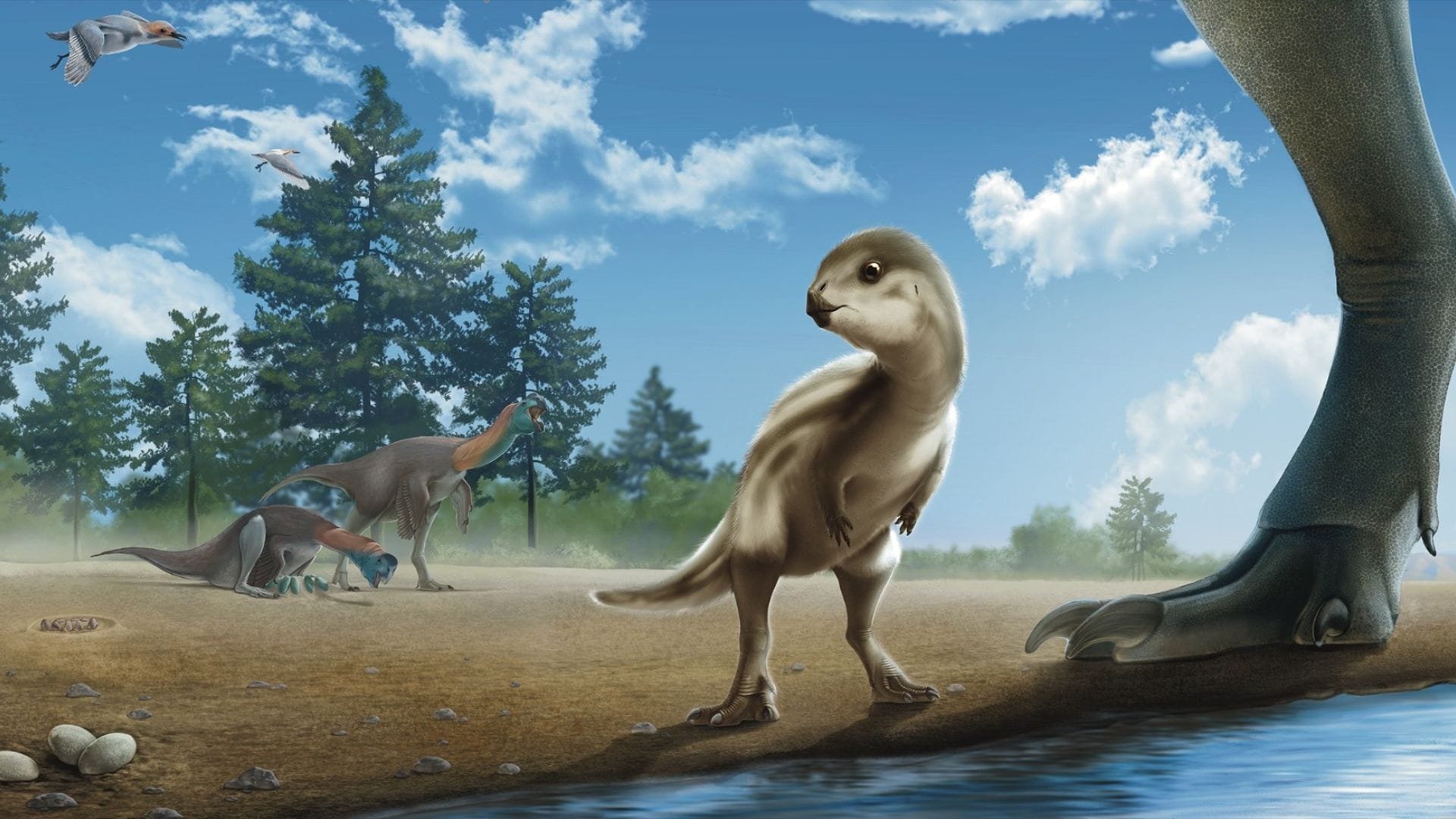
New Delhi: Researchers from The University of Texas at Austin and the Korean Dinosaur Research Centre have discovered a new species of dinosaur from the Alphae Island of South Korea. The remains are of a baby dinosaur of the first new species discovered in Korea in 15 years, and the first Korean dinosaur fossil ever discovered with portions of the skull. The skull bones were revealed when the fossil underwent a micro-CT scan in the High-Resolution X-ray Computed Tomography facility at the University of Texas. This is the first facility in the world to make the technology available to the academic research community.
When the specimen was first examined, the researchers initially saw some leg bones and vertebrae, and did not expect to find portions of the skull along with many other bones. The dinosaur has been named Doolysaurus huhmini, after a mischievous cartoon dinosaur popular among kids in South Korea, called Dooly. The species name huhmini honours the Korean palaeontologist Min Huh, who studied Korean dinosaurs over the past three decades, founded the dinosaur centre, and worked with UNESCO to preserve dinosaur fossil sites in Korea. The fossil was discovered in 2023 by Hyemin Jo, one of the researchers at the dinosaur centre.
Fossil enclosed in Hard Rock
The fossil is estimated to be about two years old, and is about the size of a turkey. Scientists estimate that a fully grown Doolysaurus may have grown twice the size. The coat was covered in fuzzy filaments. The fossil is enclosed in hard rock, and can take close to a decade to excavate by hand. Analysis by the micro-CT scan revealed the full extent of the fossil. The researchers spent more than a year studying the anatomy of the dinosaurs. Doolysaurus lived between 113 and 94 million years ago, during the mid-Cretaceous. There are dozens of gastroliths in the stomach, indicating that the dinosaur may have been an omnivore, eating insects and small animals. A paper describing the research has been published in Fossil Record.