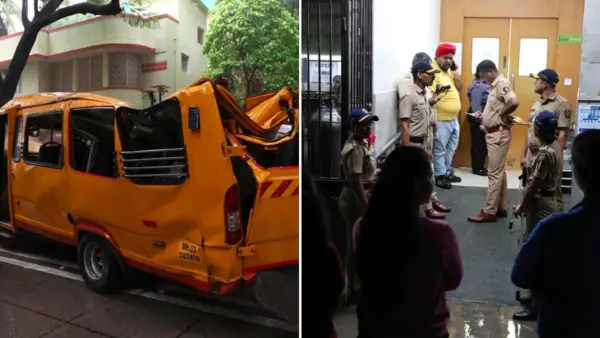
The unspeakably tragic death of sprightly 11-year-old Vihaan Srivastava after a tall peepal tree fell on his school bus in Mumbai’s Chembur locality should prompt the average citizen to ask why public officials are never really answerable.
If visuals of the fallen tree, with its atrophied roots, are any indication, the disaster was waiting to happen. Residents have complained that municipal officials ignored complaints of the precarious state of the tree, although official claims have been made about routine pruning having been done.
In Bengaluru, a 53-year-old finance company employee slipped into a coma after being struck by a dry tree branch that fell on him as he passed underneath on a scooter. There, too, residents said they had asked civic officials to intervene, without success.
It is useful to remember that a peepal tree develops a deep taproot and extensive secondary and lateral roots, which give it tremendous stability and access to moisture.
Shockingly, the tree in Chembur stood on a small street with the edges mindlessly paved over right up to its trunk, a chokehold that most likely caused it to fall in the monsoon, unfortunately snuffing out a young life.
The familiar official playbook of an inquiry, suspension of a few officials and high-sounding promises of inspections has been deployed. Far-reaching change, however, is unlikely given the sclerotic and unprofessional nature of India’s civic governance and the lack of accountability of high officials.
Citizen initiatives to bring about transformative change are also hamstrung by Mumbai’s ‘too big to fail’ image, which creates high tolerance for urban dysfunction.
What offers hope is the recent jurisprudence on extending Article 21’s right to life and liberty to such matters as freedom to walk, access to footpaths, road safety and access to trauma care, including restitution of citizens’ rights.
Need For Strict Accountability
Should citizens decide to hold the government’s feet to the fire and diligently pursue public safety and standards in their neighbourhoods through sustained legal measures, there is every reason to think they can succeed.
In a two-decade-old case in Nagpur, where a policeman died inside the Collector’s official compound when a tree fell on him, the court rejected the government’s contention that it owed no compensation to the family because the tree was green and not dead and it was an act of God.
The principle of strict liability was invoked, and the Bombay High Court referenced the Supreme Court’s rejection of a challenge, upholding the same principle. Low judicial tolerance for laissez-faire civic governance and bureaucratic indifference must be accompanied by liberal awards of exemplary compensation to victims and deterrent punishment for public servants.
Another lacuna is that deaths in accidents in public places are mostly recorded, but not injuries caused by bad civic infrastructure. Mumbai’s public-spirited citizens can memorialise Vihaan through a vigorous campaign to ensure safety and civilise public power.