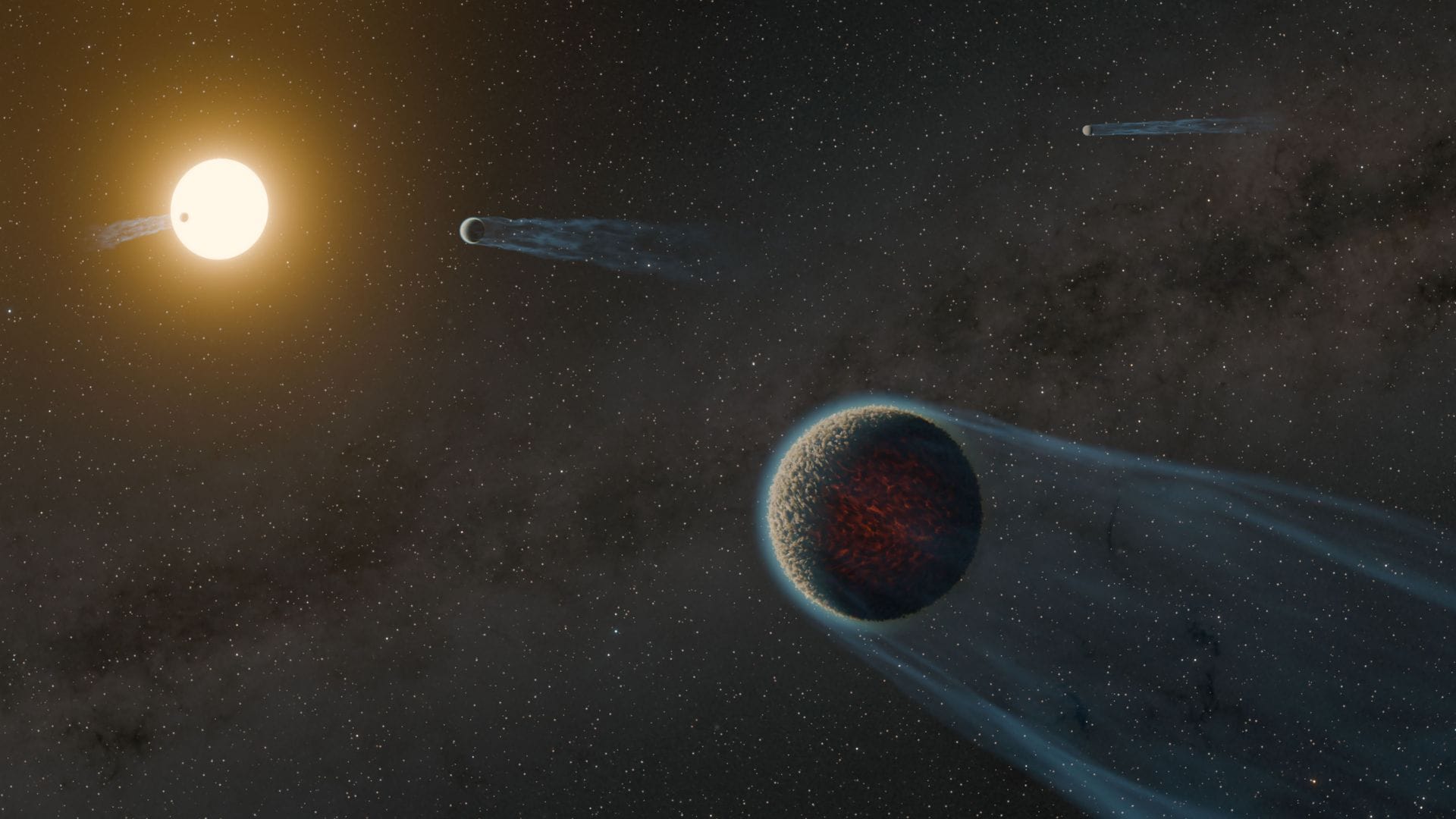
New Delhi: Humans know of over 6,000 exoplanets, with most of these straddling the mass gap between Earth and Neptune. While there are no such worlds in the Solar System, Sub-Neptunes or planets smaller than Neptune and Super-Earths, or rocky worlds larger than Earth make up most of the planets in the galaxy. The formation of such planets has remained mysterious. Now, an international team of astronomers have discovered four newborn planets in the V1298 Tau system, that are all likely to contract into either Super-Earths or Sub-Neptunes. These are the clearest observations yet of such worlds in their formative years.
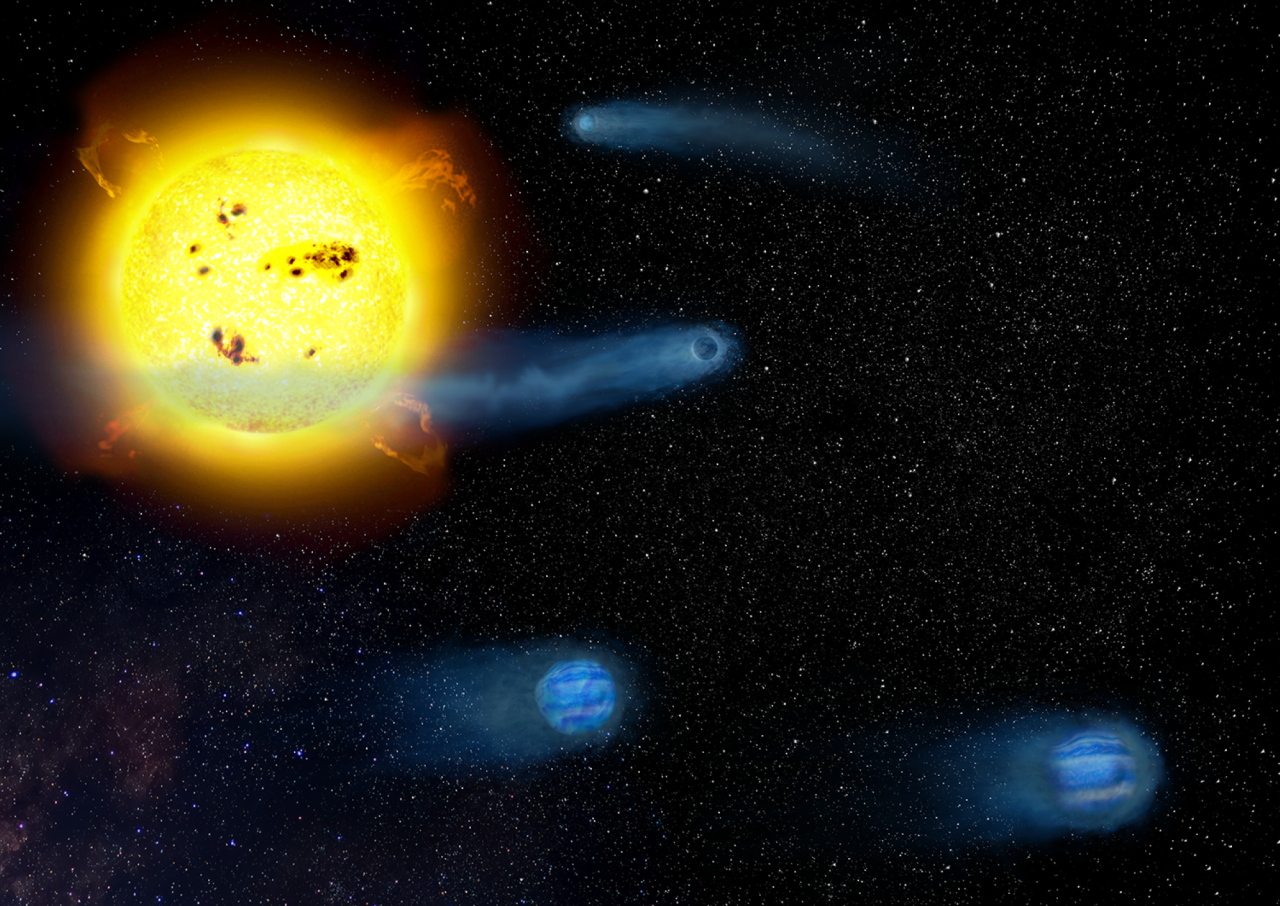
Another illustration of the V1298 Tau system. (Image Credit: Astrobiology Center, NINS).
Planets are assembled in the debris disk surrounding newborn stars, that are energetic and often shrouded by dusty gas disks. Studying newborn worlds is challenging, with the researchers using an ingenious new technique based on the mutual gravity between the worlds. These planets are inflated, and are expected to contract in the future. The host star, V1298 Tau is at a distance of 354 lightyears from the Earth and is only 20 million years old. For comparison, the Sun is 4.5 billion years old. There are four giant planets all presently between the sizes of Neptune and Jupiter. The system is a direct ancestor of compact, multi-planet systems found throughout the galaxy.
A missing link
The observations were conducted over a decade, using an number of ground and space-based telescopes to observe each planet as it passed in front of the host-star, in events known as transits. Their orbital configuration and gravity caused them to tug on each other, resulting in tiny shifts in timings, known as transit timing variations (TTVs), that allowed the astronomers to measure the masses of the planets for the first time. Despite being between five and ten times the radius of the Earth, these worlds only contain between five and 15 times the mass of the Earth. The puffiness indicates that the planets are losing their atmosphere and cooling rapidly. A paper describing the research has been published in Nature.